


Failed biliary cannulation: clinical and technical outcomes after tertiary referral endoscopic retrograde cholangiopancreatography
- PMID: 22174549
- PMCID: PMC3236589
- DOI: 10.3748/wjg.v17.i45.4993
Failed biliary cannulation: clinical and technical outcomes after tertiary referral endoscopic retrograde cholangiopancreatography
Abstract
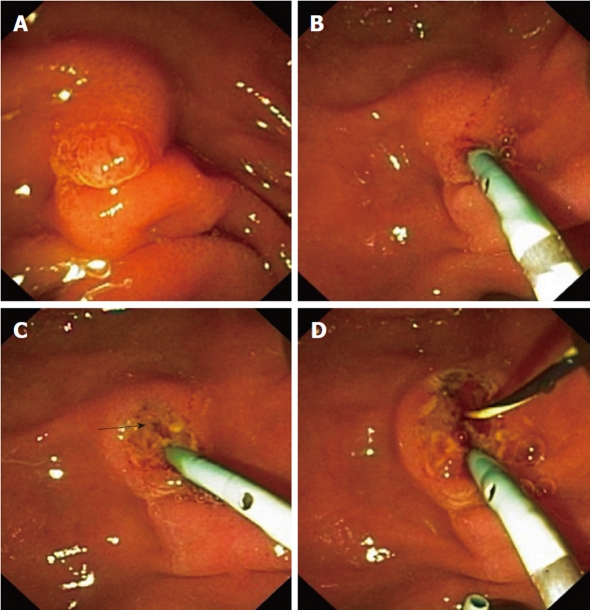
Aim: Prospective evaluation of repeat endoscopic retrograde cholangiopancreatography (ERCP) for failed Schutz grade 1 biliary cannulation in a high-volume center.
Methods: Prospective intention-to-treat analysis of patients referred for biliary cannulation following recent unsuccessful ERCP.
Results: Fifty-one patients (35 female; mean age: 62.5 years; age range: 40-87 years) with previous failed biliary cannulation were referred for repeat ERCP. The indication for ERCP was primarily choledocholithiasis (45%) or pancreatic malignancy (18%). Successful biliary cannulation was 100%. The precut needle knife sphincterotomy (NKS) rate was 27.4%. Complications occurred in 3.9% (post-ERCP pancreatitis). An identifiable reason for initial unsuccessful biliary cannulation was present in 55% of cases. Compared to a cohort of 940 naïve papilla patients (female 61%; mean age: 59.9 years; age range: 18-94 years) who required sphincterotomy over the same time period, there was no statistical difference in the cannulation success rate (100% vs 98%) or post-ERCP pancreatitis (3.1% vs 3.9%). Precut NKS use was more frequent (27.4% vs 12.7%) (P = 0.017).
Conclusion: Referral to a high-volume center following unsuccessful ERCP is associated with high technical success, with a favorable complication rate, compared to routine ERCP procedures.
Keywords: Biliary cannulation; Failed biliary cannulation; Failed endoscopic retrograde cholangiopancreatography; Needle knife sphincterotomy; Post endoscopic retrograde cholangiopancreatography pancreatitis; Precut sphincterotomy; Tertiary referral endoscopic retrograde cholangiopancreatography; Unsuccessful biliary cannulation.
Figures
References
-
- Williams EJ, Taylor S, Fairclough P, Hamlyn A, Logan RF, Martin D, Riley SA, Veitch P, Wilkinson M, Williamson PJ, et al. Are we meeting the standards set for endoscopy? Results of a large-scale prospective survey of endoscopic retrograde cholangio-pancreatograph practice. Gut. 2007;56:821–829. - PMC - PubMed
-
- Baron TH, Petersen BT, Mergener K, Chak A, Cohen J, Deal SE, Hoffman B, Jacobson BC, Petrini JL, Safdi MA, et al. Quality indicators for endoscopic retrograde cholangiopancreatography. Gastrointest Endosc. 2006;63:S29–S34. - PubMed
-
- Schlup MM, Williams SM, Barbezat GO. ERCP: a review of technical competency and workload in a small unit. Gastrointest Endosc. 1997;46:48–52. - PubMed
-
- Loperfido S, Angelini G, Benedetti G, Chilovi F, Costan F, De Berardinis F, De Bernardin M, Ederle A, Fina P, Fratton A. Major early complications from diagnostic and therapeutic ERCP: a prospective multicenter study. Gastrointest Endosc. 1998;48:1–10. - PubMed
-
- Kaffes AJ, Bourke MJ, Ding S, Alrubaie A, Kwan V, Williams SJ. A prospective, randomized, placebo-controlled trial of transdermal glyceryl trinitrate in ERCP: effects on technical success and post-ERCP pancreatitis. Gastrointest Endosc. 2006;64:351–357. - PubMed
MeSH terms
LinkOut - more resources
Full Text Sources
