Mining the LIPG allelic spectrum reveals the contribution of rare and common regulatory variants to HDL cholesterol
- PMID: 22174694
- PMCID: PMC3234219
- DOI: 10.1371/journal.pgen.1002393
Mining the LIPG allelic spectrum reveals the contribution of rare and common regulatory variants to HDL cholesterol
Abstract
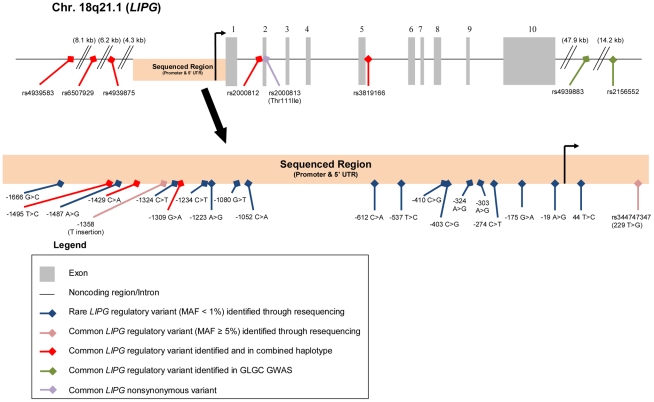
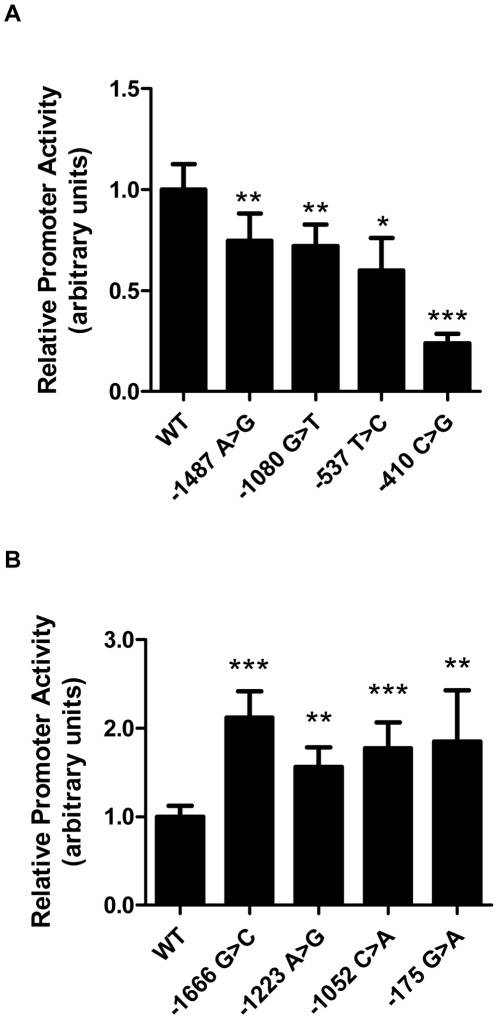
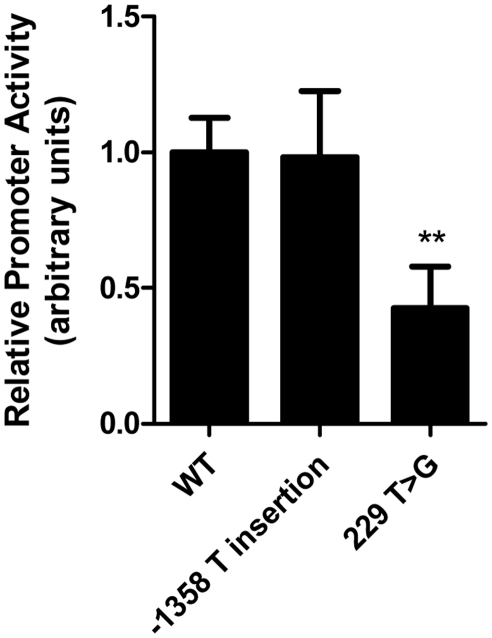
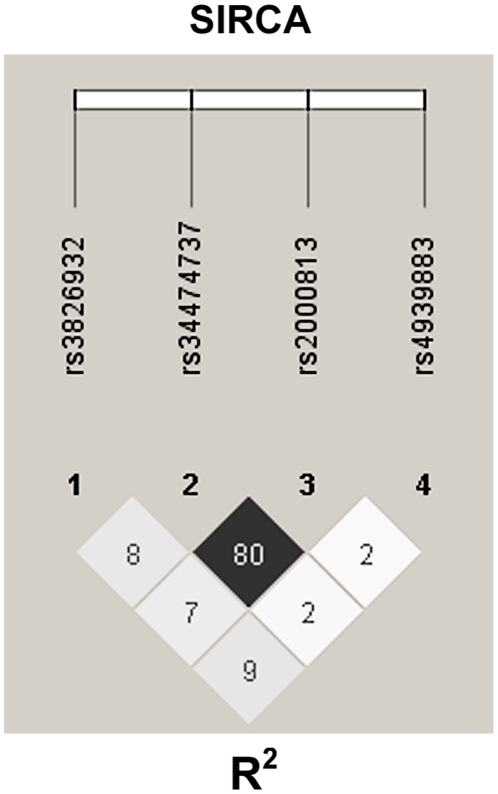
Genome-wide association studies (GWAS) have successfully identified loci associated with quantitative traits, such as blood lipids. Deep resequencing studies are being utilized to catalogue the allelic spectrum at GWAS loci. The goal of these studies is to identify causative variants and missing heritability, including heritability due to low frequency and rare alleles with large phenotypic impact. Whereas rare variant efforts have primarily focused on nonsynonymous coding variants, we hypothesized that noncoding variants in these loci are also functionally important. Using the HDL-C gene LIPG as an example, we explored the effect of regulatory variants identified through resequencing of subjects at HDL-C extremes on gene expression, protein levels, and phenotype. Resequencing a portion of the LIPG promoter and 5' UTR in human subjects with extreme HDL-C, we identified several rare variants in individuals from both extremes. Luciferase reporter assays were used to measure the effect of these rare variants on LIPG expression. Variants conferring opposing effects on gene expression were enriched in opposite extremes of the phenotypic distribution. Minor alleles of a common regulatory haplotype and noncoding GWAS SNPs were associated with reduced plasma levels of the LIPG gene product endothelial lipase (EL), consistent with its role in HDL-C catabolism. Additionally, we found that a common nonfunctional coding variant associated with HDL-C (rs2000813) is in linkage disequilibrium with a 5' UTR variant (rs34474737) that decreases LIPG promoter activity. We attribute the gene regulatory role of rs34474737 to the observed association of the coding variant with plasma EL levels and HDL-C. Taken together, the findings show that both rare and common noncoding regulatory variants are important contributors to the allelic spectrum in complex trait loci.
Conflict of interest statement
The authors have declared that no competing interests exist.
Figures
References
-
- Natarajan P, Ray KK, Cannon CP. High-density lipoprotein and coronary heart disease: current and future therapies. J Am Coll Cardiol. 55:1283–1299. - PubMed
-
- Assmann G, Schulte H, von Eckardstein A, Huang Y. High-density lipoprotein cholesterol as a predictor of coronary heart disease risk. The PROCAM experience and pathophysiological implications for reverse cholesterol transport. Atherosclerosis. 1996;124(Suppl):S11–20. - PubMed
-
- Castelli WP, Garrison RJ, Wilson PW, Abbott RD, Kalousdian S, et al. Incidence of coronary heart disease and lipoprotein cholesterol levels. The Framingham Study. JAMA. 1986;256:2835–2838. - PubMed
-
- Curb JD, Abbott RD, Rodriguez BL, Masaki K, Chen R, et al. A prospective study of HDL-C and cholesteryl ester transfer protein gene mutations and the risk of coronary heart disease in the elderly. J Lipid Res. 2004;45:948–953. - PubMed
Publication types
MeSH terms
Substances
Grants and funding
- N01-HC-25195/HC/NHLBI NIH HHS/United States
- R01 HL055323/HL/NHLBI NIH HHS/United States
- R01 HL089309/HL/NHLBI NIH HHS/United States
- R37 HL055323/HL/NHLBI NIH HHS/United States
- N01 HC025195/HL/NHLBI NIH HHS/United States
- HL55323/HL/NHLBI NIH HHS/United States
- DK19525/DK/NIDDK NIH HHS/United States
- F30 HL094050/HL/NHLBI NIH HHS/United States
- K23 HL74967-01A1/HL/NHLBI NIH HHS/United States
- K23 HL074967/HL/NHLBI NIH HHS/United States
- 5F30HL094050-03/HL/NHLBI NIH HHS/United States
- P30 DK019525/DK/NIDDK NIH HHS/United States
LinkOut - more resources
Full Text Sources
Medical