


Antimony resistance in leishmania, focusing on experimental research
- PMID: 22174724
- PMCID: PMC3235892
- DOI: 10.1155/2011/695382
Antimony resistance in leishmania, focusing on experimental research
Abstract
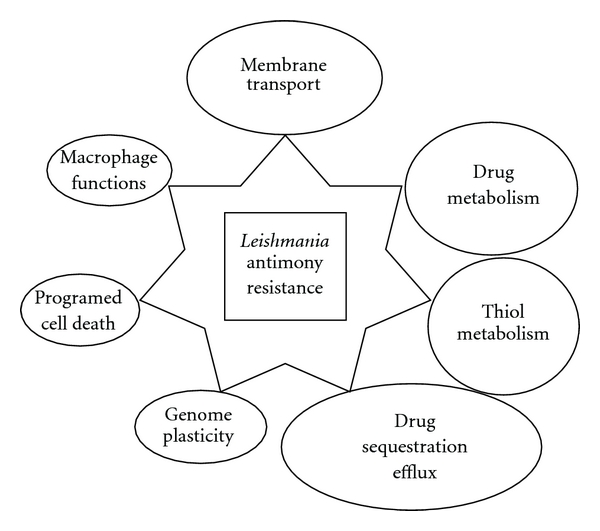
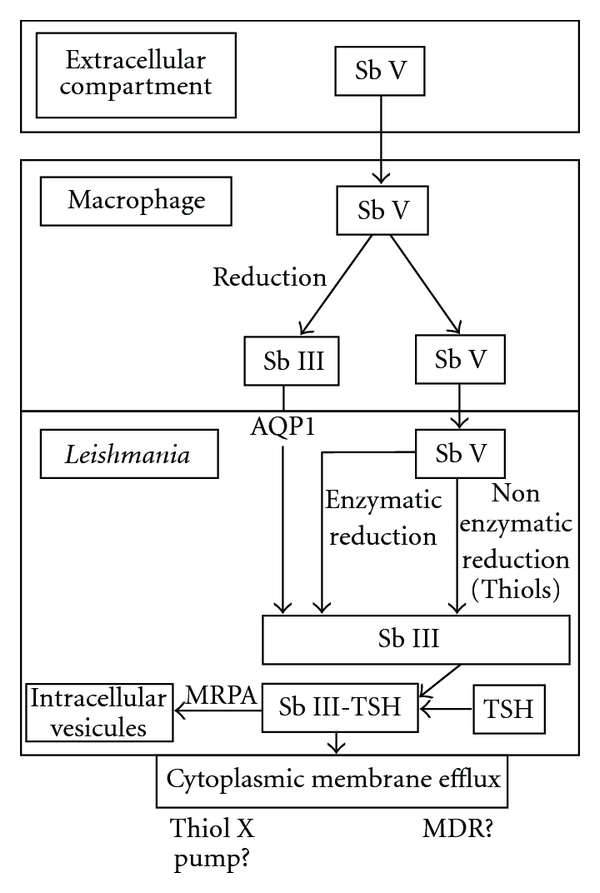
Leishmaniases are parasitic diseases that spread in many countries with a prevalence of 12 million cases. There are few available treatments and antimonials are still of major importance in the therapeutic strategies used in most endemic regions. However, resistance toward these compounds has recently emerged in areas where the replacement of these drugs is mainly limited by the cost of alternative molecules. In this paper, we reviewed the studies carried out on antimonial resistance in Leishmania. Several common limitations of these works are presented before prevalent approaches to evidence antimonial resistance are related. Afterwards, phenotypic determination of resistance is described, then confronted to clinical outcome. Finally, we detail molecular mechanisms and targets involved in resistance and already identified in vitro within selected mutant strains or in clinical isolates.
Figures
References
-
- World Health Organization. Control of the leishmaniases. World Health Organization Technical Report Series. 2010;(949):1–186. - PubMed
-
- Palatnik-de-Sousa CB. Vaccines for leishmaniasis in the fore coming 25 years. Vaccine. 2008;26(14):1709–1724. - PubMed
-
- Desjeux P. The increase in risk factors for leishmaniasis worldwide. Transactions of the Royal Society of Tropical Medicine and Hygiene. 2001;95(3):239–243. - PubMed
-
- Chappuis F, Sundar S, Hailu A, et al. Visceral leishmaniasis: what are the needs for diagnosis, treatment and control? Nature Reviews Microbiology. 2007;5(11):873–882. - PubMed
LinkOut - more resources
Full Text Sources
