


Premature decline of serum total testosterone in HIV-infected men in the HAART-era
- PMID: 22174826
- PMCID: PMC3235128
- DOI: 10.1371/journal.pone.0028512
Premature decline of serum total testosterone in HIV-infected men in the HAART-era
Abstract
Background: Testosterone (T) deficiency remains a poorly understood issue in men with Human Immunodeficiency Virus (HIV). We investigated the gonadal status in HIV-infected men in order to characterize T deficiency and to identify predictive factors for low serum T.
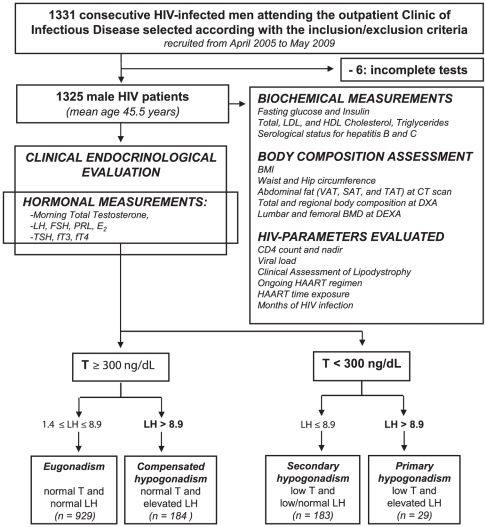
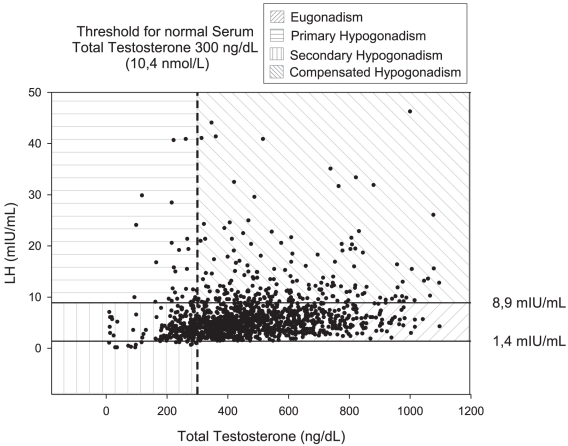
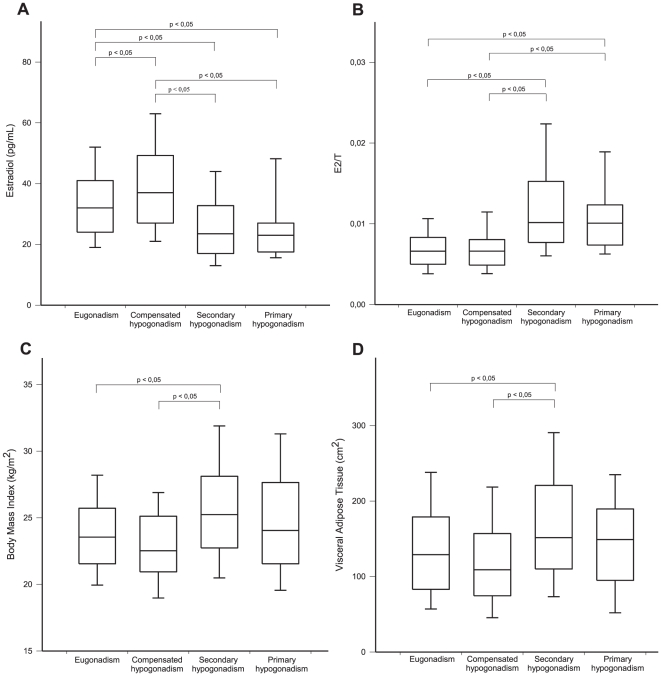
Methodology/principal findings: We performed a cross-sectional, observational study on 1325 consecutive HIV male outpatients, most of them having lipodystrophy. Serum total T<300 ng/dL was used as the threshold for biochemical T deficiency. Morning serum total T, luteinizing hormone (LH), estradiol, HIV parameters, and body composition parameters by CT-scan and Dual-Energy-X-ray-Absorptiometry were measured in each case. Sexual behavior was evaluated in a subset of 247 patients. T deficiency was found in 212 subjects, especially in the age range 40-59, but was frequent even in younger patients. T deficiency occurred mainly in association with low/normal serum LH. Adiposity was higher in subjects with T deficiency (p<0.0001) and both visceral adipose tissue and body mass index were the main negative predictors of serum total T. Osteoporosis and erectile dysfunction were present in a similar percentage in men with or without T deficiency.
Conclusions/significance: Premature decline of serum T is common (16%) among young/middle-aged HIV-infected men and is associated with inappropriately low/normal LH and increased visceral fat. T deficiency occurs at a young age and may be considered an element of the process of premature or accelerated aging known to be associated with HIV infection. The role of HIV and/or HIV infection treatments, as well as the role of the general health state on the gonadal axis, remains, in fact, to be elucidated. Due to the low specificity of signs and symptoms of hypogonadism in the context of HIV, caution is needed in the diagnosis of hypogonadism in HIV-infected men with biochemical low serum T levels.
Conflict of interest statement
Figures
References
-
- Harman SM, Metter EJ, Tobin JD, Pearson J, Blackman MR. Baltimore Longitudinal Study of Aging. Longitudinal effects of aging on serum total and free testosterone levels in healthy men. Baltimore Longitudinal Study of Aging. J Clin Endocrinol Metab. 2001;86:724–731. - PubMed
-
- Kaufman JM, Vermeulen A. Declining gonadal function in elderly men. Baillieres Clin Endocrinol Metab. 1997;11:289–309. - PubMed
-
- Tajar A, Forti G, O'Neill TW, Lee DM, Silman AJ, et al. Characteristics of Secondary, Primary, and Compensated Hypogonadism in Aging Men: Evidence from the European Male Ageing Study. J Clin Endocrinol Metab. 2010;95:1810–1818. - PubMed
-
- Schneider HJ, Sievers C, Klotsche J, Böhler S, Pittrow D, et al. Prevalence of low male testosterone levels in primary care in Germany: cross-sectional results from the DETECT study. Clin Endocrinol. 2009;70:446–454. - PubMed
