


Mitochondria-ros crosstalk in the control of cell death and aging
- PMID: 22175013
- PMCID: PMC3235816
- DOI: 10.1155/2012/329635
Mitochondria-ros crosstalk in the control of cell death and aging
Abstract
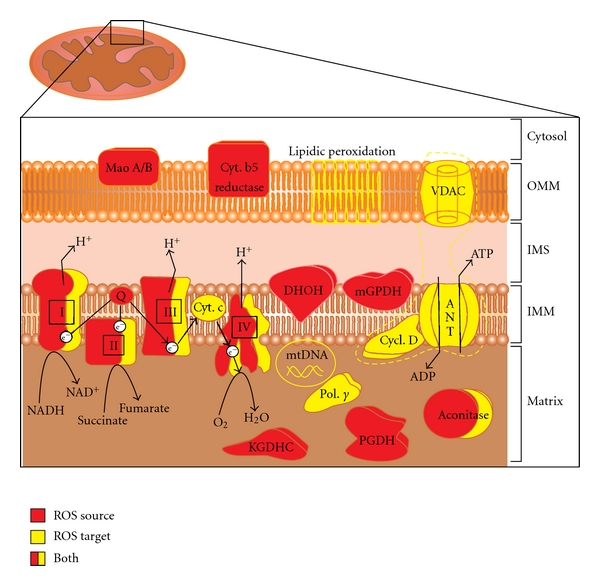
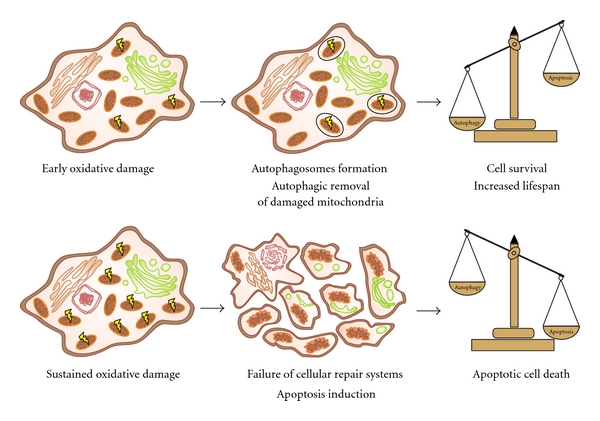
Reactive oxygen species (ROS) are highly reactive molecules, mainly generated inside mitochondria that can oxidize DNA, proteins, and lipids. At physiological levels, ROS function as "redox messengers" in intracellular signalling and regulation, whereas excess ROS induce cell death by promoting the intrinsic apoptotic pathway. Recent work has pointed to a further role of ROS in activation of autophagy and their importance in the regulation of aging. This review will focus on mitochondria as producers and targets of ROS and will summarize different proteins that modulate the redox state of the cell. Moreover, the involvement of ROS and mitochondria in different molecular pathways controlling lifespan will be reported, pointing out the role of ROS as a "balance of power," directing the cell towards life or death.
Figures
References
-
- Palade GE. An electron microscope study of the mitochondrial structure. Journal of Histochemistry and Cytochemistry. 1953;1(4):188–211. - PubMed
-
- Fulda S, Galluzzi L, Kroemer G. Targeting mitochondria for cancer therapy. Nature Reviews Drug Discovery. 2010;9(6):447–464. - PubMed
-
- Jezek P, Hlavata L. Mitochondria in homeostasis of reactive oxygen species in cell, tissues, and organism. International Journal of Biochemistry & Cell Biology. 2005;37(12):2478–2503. - PubMed
-
- Muller FL, Liu Y, van Remmen H. Complex III releases superoxide to both sides of the inner mitochondrial membrane. Journal of Biological Chemistry. 2004;279(47):49064–49073. - PubMed
LinkOut - more resources
Full Text Sources
