


The neural underpinnings of prosody in autism
- PMID: 22176162
- PMCID: PMC3461129
- DOI: 10.1080/09297049.2011.639757
The neural underpinnings of prosody in autism
Abstract
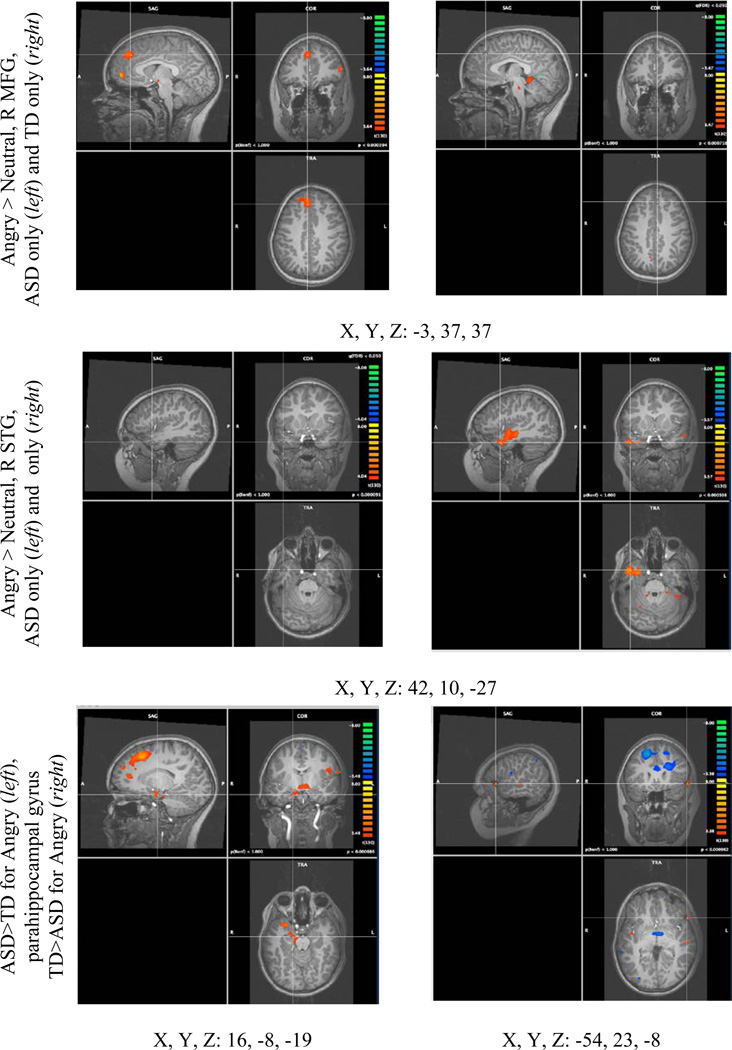
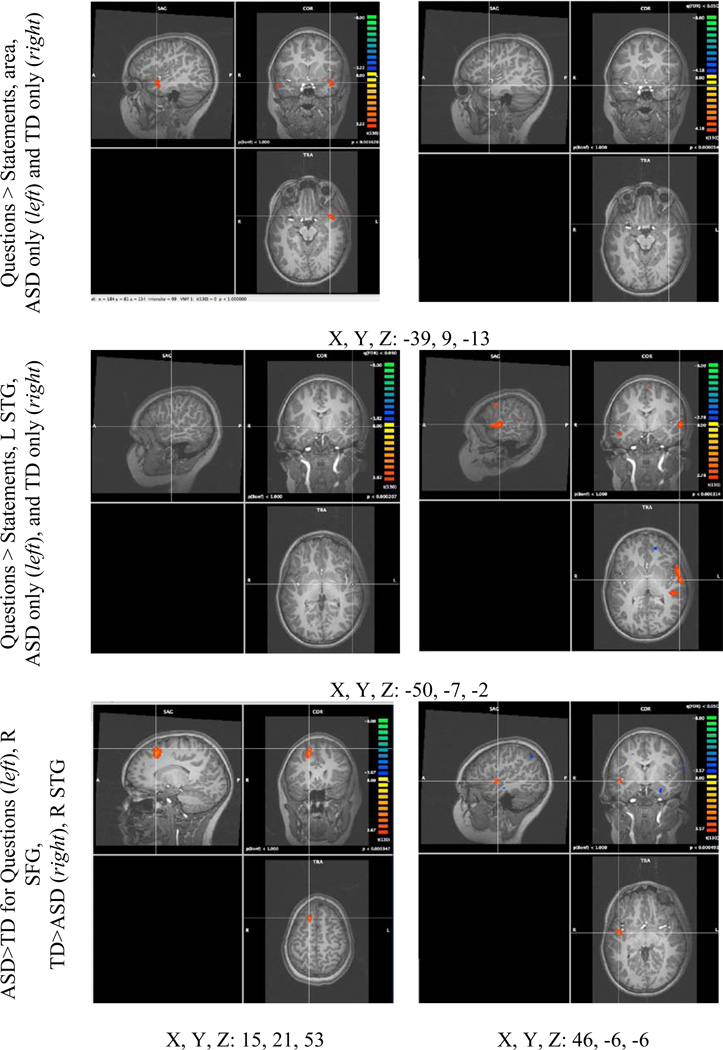
This study examines the processing of prosodic cues to linguistic structure and to affect, drawing on fMRI and behavioral data from 16 high-functioning adolescents with autism spectrum disorders (ASD) and 11 typically developing controls. Stimuli were carefully matched on pitch, intensity, and duration, while varying systematically in conditions of affective prosody (angry versus neutral speech) and grammatical prosody (questions versus statement). To avoid conscious attention to prosody, which normalizes responses in young people with ASD, the implicit comprehension task directed attention to semantic aspects of the stimuli. Results showed that when perceiving prosodic cues, both affective and grammatical, activation of neural regions was more generalized in ASD than in typical development, and areas recruited reflect heightened reliance on cognitive control, reading of intentions, attentional management, and visualization. This broader recruitment of executive and "mind-reading" brain areas for a relative simple language-processing task may be interpreted to suggest that speakers with high-functioning autism (HFA) have developed less automaticity in language processing and may also suggest that "mind-reading" or theory of mind deficits are intricately bound up in language processing. Data provide support for both a right-lateralized as well as a bilateral model of prosodic processing in typical individuals, depending upon the function of the prosodic information.
Figures
References
-
- Aizenstein H, Stenger V, Cochran J, Clark K, Johnson M, Nebes R, et al. Regional brain activation during concurrent implicit and explicit sequence learning. Cerebral Cortex. 2004;14(2):199–208. - PubMed
-
- American Psychiatric Association. DSM-5 Development, A 09 Autism Spectrum Disorder Proposed Revision. 2011 Jan; Retrieved from http://www.dsm5.org/ProposedRevisions/Pages/proposedrevision.aspx?rid=94.
-
- Baltaxe CA. Use of contrastive stress in normal, aphasic, and autistic children. Journal of Speech and Hearing Research. 1984;24:97–105. - PubMed
-
- Baltaxe CA, D'Angiola N. Cohesion in the discourse interaction of autistic, specifically language-impaired, and normal children. Journal of Autism and Developmental Disorders. 1992;22(1):1–21. - PubMed
Publication types
MeSH terms
Grants and funding
LinkOut - more resources
Full Text Sources
