


Similar pattern of peripheral neuropathy in mouse models of type 1 diabetes and Alzheimer's disease
- PMID: 22178988
- PMCID: PMC3268846
- DOI: 10.1016/j.neuroscience.2011.11.032
Similar pattern of peripheral neuropathy in mouse models of type 1 diabetes and Alzheimer's disease
Erratum in
-
Corrigendum to "Similar pattern of peripheral neuropathy in mouse models of type 1 diabetes and Alzheimer's disease" [Neuroscience 202 (2012) 405-412].Neuroscience. 2025 May 24;575:94. doi: 10.1016/j.neuroscience.2025.04.017. Epub 2025 Apr 18. Neuroscience. 2025. PMID: 40252257 No abstract available.
Abstract
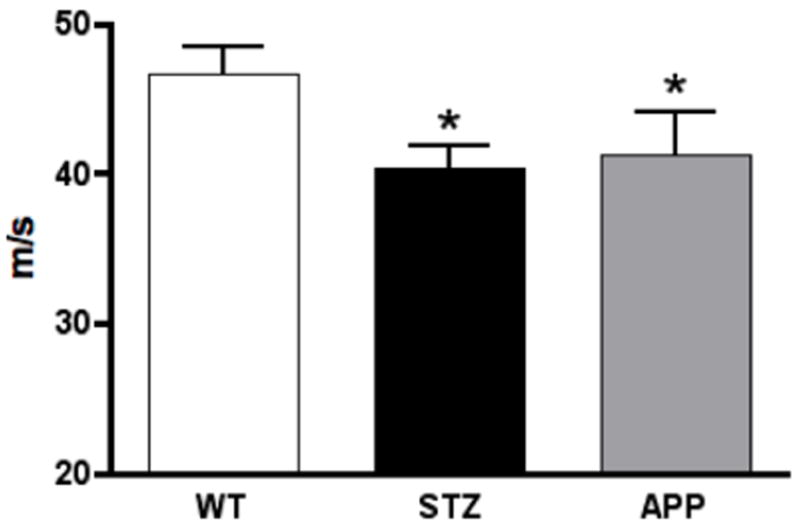
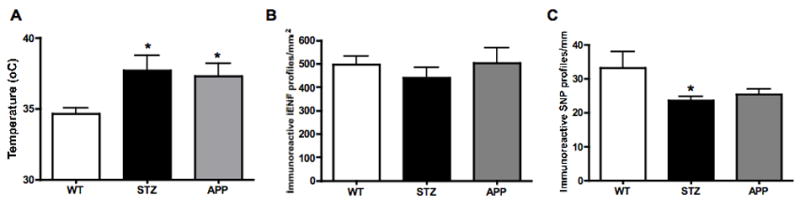
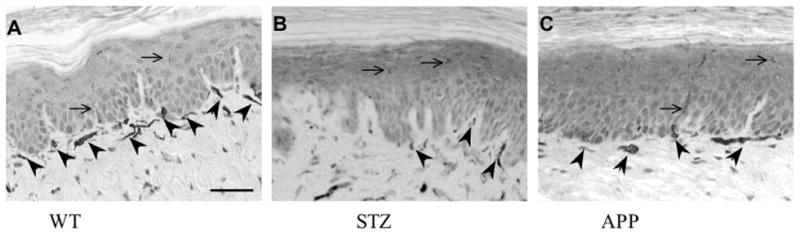
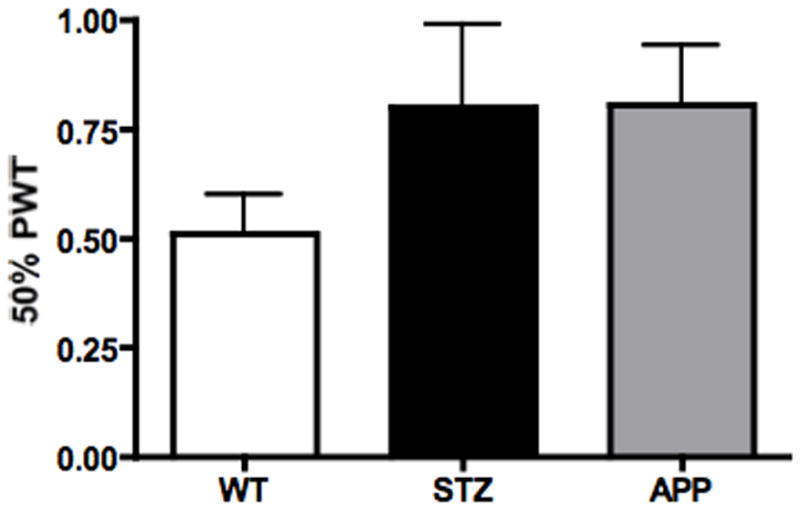
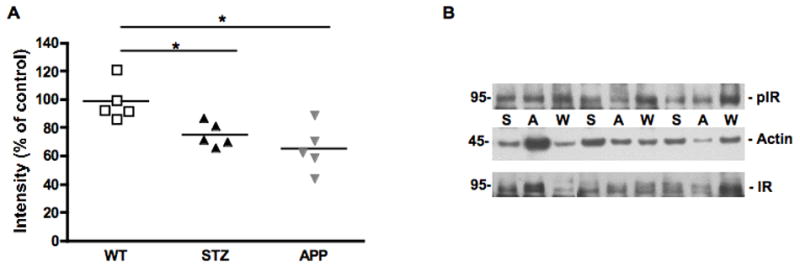
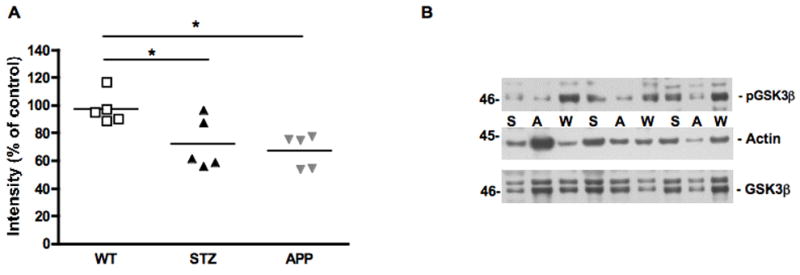
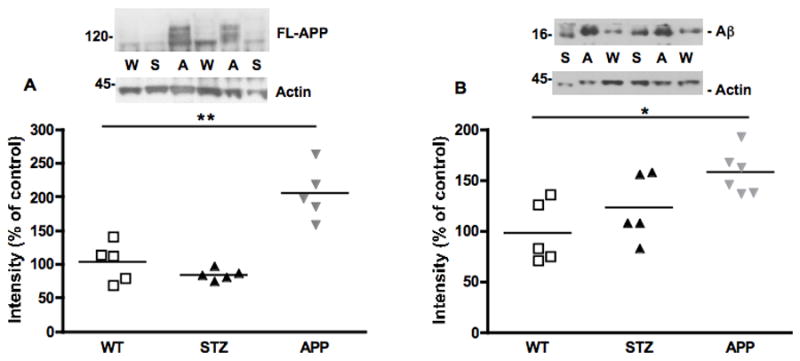
There is an increasing awareness that diabetes has an impact on the CNS and that diabetes is a risk factor for Alzheimer's disease (AD). Links between AD and diabetes point to impaired insulin signaling as a common mechanism leading to defects in the brain. However, diabetes is predominantly characterized by peripheral, rather than central, neuropathy, and despite the common central mechanisms linking AD and diabetes, little is known about the effect of AD on the peripheral nervous system (PNS). In this study, we compared indexes of peripheral neuropathy and investigated insulin signaling in the sciatic nerve of insulin-deficient mice and amyloid precursor protein (APP) overexpressing transgenic mice. Insulin-deficient and APP transgenic mice displayed similar patterns of peripheral neuropathy with decreased motor nerve conduction velocity, thermal hypoalgesia, and loss of tactile sensitivity. Phosphorylation of the insulin receptor and glycogen synthase kinase 3β (GSK3β) was similarly affected in insulin-deficient and APP transgenic mice despite significantly different blood glucose and plasma insulin levels, and nerve of both models showed accumulation of Aβ-immunoreactive protein. Although diabetes and AD have different primary etiologies, both diseases share many abnormalities in both the brain and the PNS. Our data point to common deficits in the insulin-signaling pathway in both neurodegenerative diseases and support the idea that AD may cause disorders outside the higher CNS.
Copyright © 2011 IBRO. Published by Elsevier Ltd. All rights reserved.
Figures
References
-
- Belin C, Gatt MT. Pain and dementia. Psychol Neuropsychiatr Vieil. 2006;4:247–254. - PubMed
-
- Biessels GJ, Deary IJ, Ryan CM. Cognition and diabetes: a lifespan perspective. Lancet Neurol. 2008;7:184–190. - PubMed
-
- Brussee V, Cunningham FA, Zochodne DW. Direct insulin signaling of neurons reverses diabetic neuropathy. Diabetes. 2004;53:1824–1830. - PubMed
-
- Calcutt NA. Modeling diabetic sensory neuropathy in rats. Methods Mol Med. 2004;99:55–65. - PubMed
Publication types
MeSH terms
Substances
Grants and funding
LinkOut - more resources
Full Text Sources
Other Literature Sources
Medical
Molecular Biology Databases
Miscellaneous
