


Epidemiologic aspects of an emerging focus of visceral leishmaniasis in Tbilisi, Georgia
- PMID: 22180796
- PMCID: PMC3236723
- DOI: 10.1371/journal.pntd.0001415
Epidemiologic aspects of an emerging focus of visceral leishmaniasis in Tbilisi, Georgia
Abstract
Background: Over the last 15 years, visceral leishmaniasis (VL) has emerged as a public health concern in Tbilisi, the capital of Georgia.
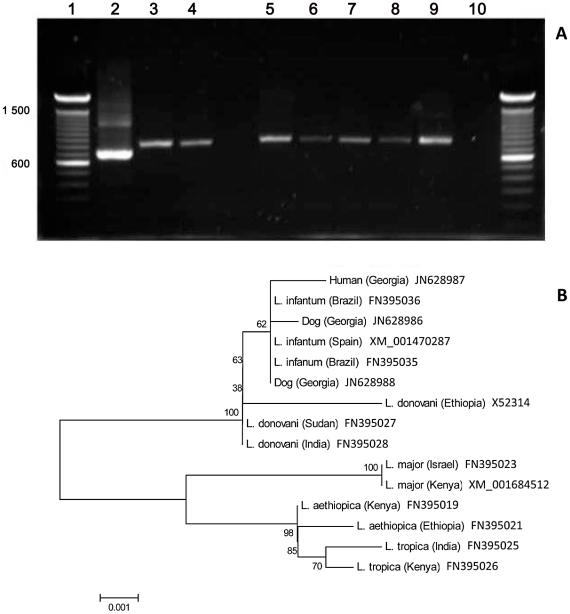
Methodology/principal findings: Seroepidemiological surveys were conducted to determine the prevalence and incidence of infection in children and dogs within the main focus of VL, and to identify risk factors associated with human infection. Of 4,250 children investigated, 7.3% were positive by direct agglutination test in a baseline survey; an apparent incidence rate of 6.0% was estimated by one year follow-up. None of the seropositive children progressed to VL during the survey. Increased seropositivity at one year was predicted by presence at baseline of clustered flying insects (OR = 1.49; P = 0.001), perceived satisfactory sanitation (OR = 1.65; P<0.001), stray dogs (OR = 1.33; P = 0.023), and by persistent fever during the 6 months prior to baseline survey (OR = 14.2; P<0.001). Overall, 18.2% (107/588) of domestic and 15.3% (110/718) of stray dogs were seropositive by the rk39 dipstick test. Clinical VL signs were found in 1.3% of domestic and 2.9% of stray, seropositive dogs. Parasites isolated from human and dog samples were identified by PCR and phylogenetic analysis of the Leishmania 70 kDa heat-shock protein (HSP70) gene as Leishmania infantum.
Conclusions/significance: There is an active focus of L. infantum transmission in Tbilisi with a high prevalence of human and canine infections.
Conflict of interest statement
The authors have declared that no competing interests exist.
Figures
References
-
- World Health Organization (WHO) Manual of Visceral Leishmaniasis Control. Division of Control of Tropical Diseases. Geneva, Switzerland: WHO; 1996.
-
- Dereure J, El-Safi SH, Bucheton B, Boni M, Kheir MM, et al. Visceral leishmaniasis in eastern Sudan: parasite identification in humans and dogs; host-parasite relationships. Microbes Infect. 2003;5:1103–1108. - PubMed
Publication types
MeSH terms
LinkOut - more resources
Full Text Sources
