


Assessment of a two-year school-based physical activity intervention among 7-9-year-old children
- PMID: 22185086
- PMCID: PMC3257198
- DOI: 10.1186/1479-5868-8-138
Assessment of a two-year school-based physical activity intervention among 7-9-year-old children
Abstract
Background: Physical activity (PA) in children has declined in recent decades, highlighting the need for effective intervention programs for school-aged children. The main objective of this study was to assess to what extent PA during and after school hours changed among children who received a progressive two-year long intervention vs. that of children who only received general curriculum-based PA.
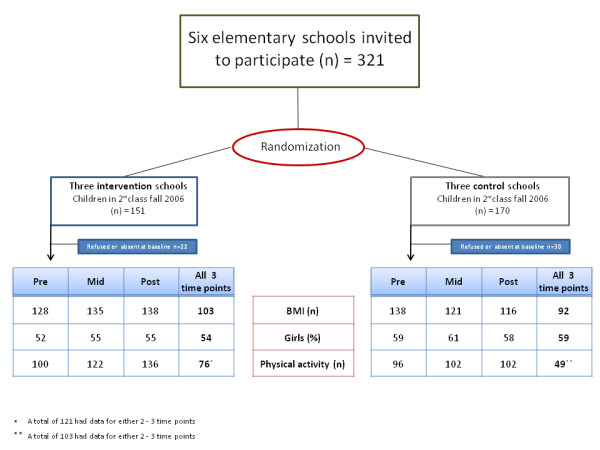
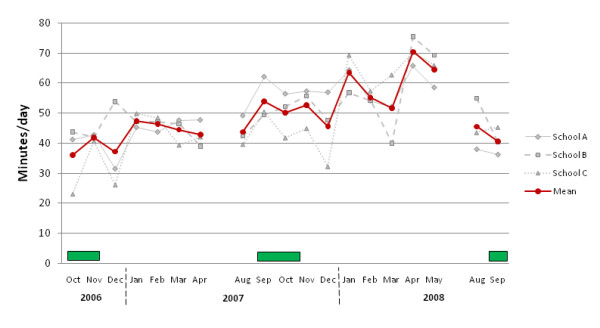
Methods: A cluster randomized intervention study was conducted and six elementary schools randomly assigned to serve as control- or intervention schools. All children attending second grade (mean age = 7.4 years - born in 1999) were invited to participate in the fall of 2006 (N = 320, 82% participated), again in 2007 (midpoint) and 2008 (end of intervention). The intervention consisted of multi-component PA-intervention during school hours and was conducted by teachers at each intervention school. PA was assessed by means of accelerometers and subjectively at the intervention schools via teachers' PA log-books.
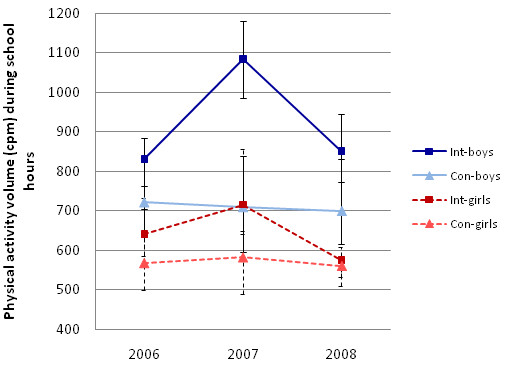
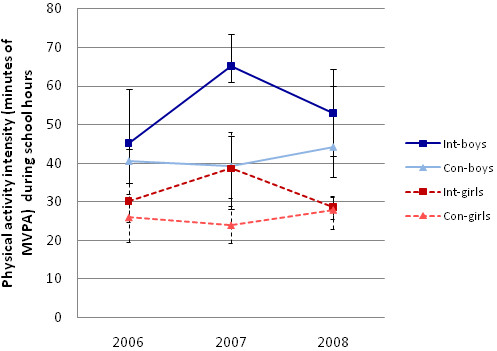
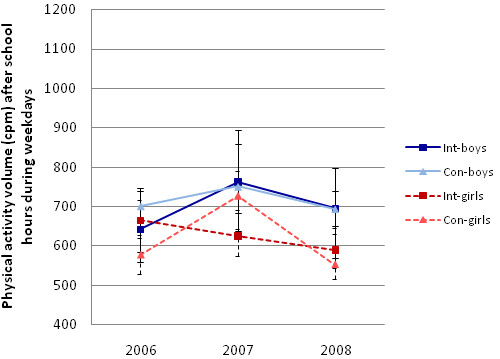
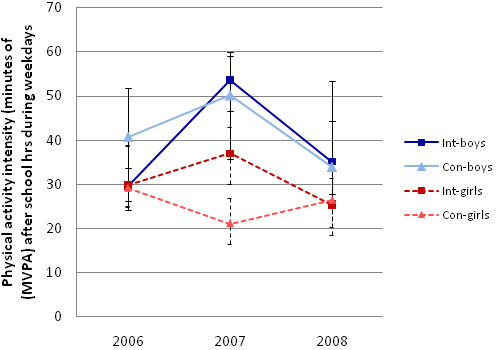
Results: There was no difference in PA intensity (minutes of moderate-to-vigorous physical activity - min of MVPA) between the two study groups at baseline, but children in the intervention schools were more physically active at moderate-to-vigorous intensity compared to those in control schools after one year of intervention (mean difference of MVPAlog-minutes: 0.61, 95%CI: 0.02, 1.20, p = 0.04). Moreover, the model for minutes of MVPA during school hours, showed a significant three-way interaction between time at mid-point, group and gender (mean difference of MVPAlog-minutes: 1.06, 95%CI: 0.15, 1.97, p = .02), indicating a significantly greater increase among the boys in the intervention schools compared to girls. No difference in PA was detected between the study groups at the end of the study period after two years of intervention.
Conclusions: The results suggest that the objective of increasing PA at school was met after one year of intervention, and it was more pronounced among boys. The lack of increase at the end of the study period suggested that any increase in PA during school may highly depend on both motivation and training of general teachers. Boys may respond better to PA interventions such as the one described in this study.
Figures
References
-
- World Health Organization. Global strategy on diet, physical activity and health. World Health Organization (WHO); 2004.
-
- Magnusson KTAS, Sveinsson S, Johannsson E. Líkamshreyfing 9 og 15 ára íslenskra barna í ljósi lýðheilsumarkmiða. Laeknabladid. 2011. - PubMed
Publication types
MeSH terms
LinkOut - more resources
Full Text Sources
Medical
Miscellaneous
