


Direct detection and sequencing of damaged DNA bases
- PMID: 22185597
- PMCID: PMC3264494
- DOI: 10.1186/2041-9414-2-10
Direct detection and sequencing of damaged DNA bases
Abstract
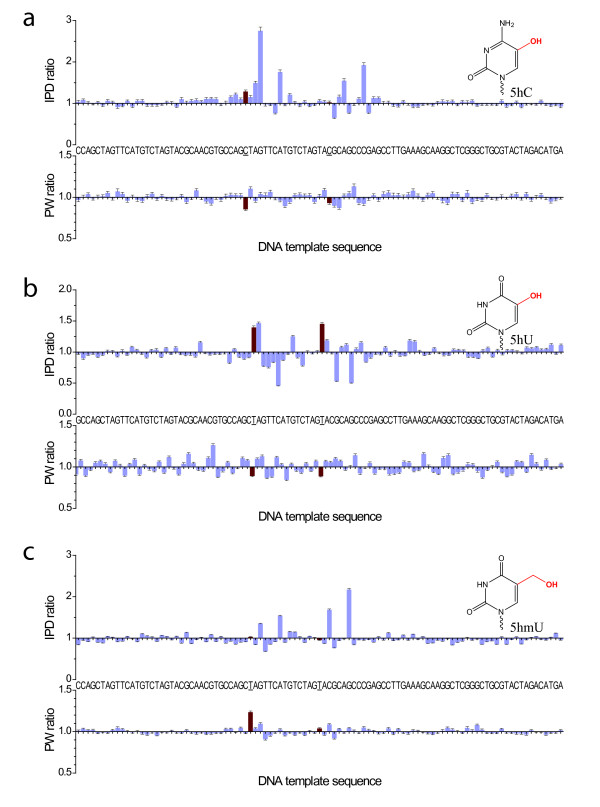
Products of various forms of DNA damage have been implicated in a variety of important biological processes, such as aging, neurodegenerative diseases, and cancer. Therefore, there exists great interest to develop methods for interrogating damaged DNA in the context of sequencing. Here, we demonstrate that single-molecule, real-time (SMRT®) DNA sequencing can directly detect damaged DNA bases in the DNA template - as a by-product of the sequencing method - through an analysis of the DNA polymerase kinetics that are altered by the presence of a modified base. We demonstrate the sequencing of several DNA templates containing products of DNA damage, including 8-oxoguanine, 8-oxoadenine, O6-methylguanine, 1-methyladenine, O4-methylthymine, 5-hydroxycytosine, 5-hydroxyuracil, 5-hydroxymethyluracil, or thymine dimers, and show that these base modifications can be readily detected with single-modification resolution and DNA strand specificity. We characterize the distinct kinetic signatures generated by these DNA base modifications.
Figures



References
-
- Geacintov NE, Broyde S. The Chemical Biology of DNA Damage. Wiley-VCH Verlag GmbH & Co. KGaA; 2010.
-
- Kelley MR. DNA Repair in Cancer Therapy: Molecular Targets and Clinical Applications. Elsevier Science; 2011.
-
- Kumari S, Rastogi RP, Singh KL, Singh SP, Sinha RP. DNA Damage: Detection Strategies. EXCLI J. 2008;7:44–62.
LinkOut - more resources
Full Text Sources
Other Literature Sources