


Health care expenditures for Medicaid-covered males with haemophilia in the United States, 2008
- PMID: 22188641
- PMCID: PMC4684173
- DOI: 10.1111/j.1365-2516.2011.02713.x
Health care expenditures for Medicaid-covered males with haemophilia in the United States, 2008
Abstract
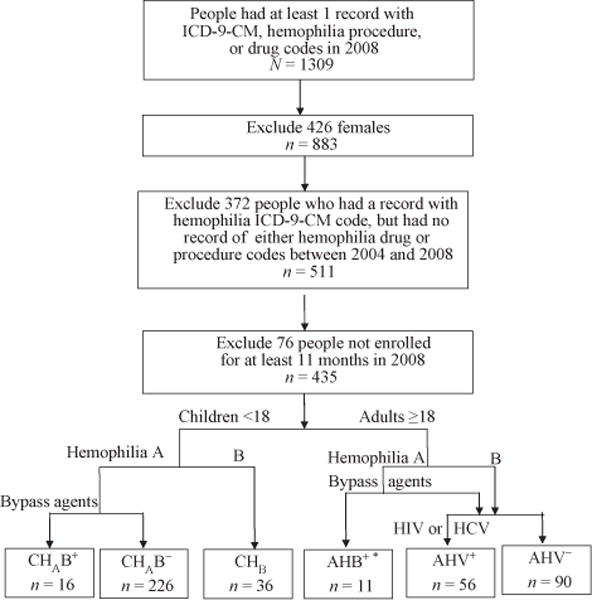
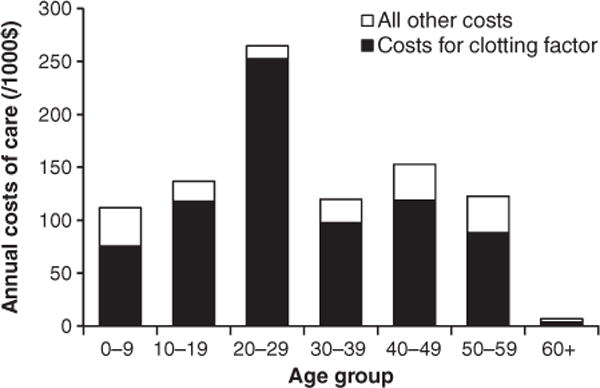
Although haemophilia is an expensive disorder, no studies have estimated health care costs for Americans with haemophilia enrolled in Medicaid as distinct from those with employer-sponsored insurance (ESI). The objective of this study is to provide information on health care utilization and expenditures for publicly insured people with haemophilia in the United States in comparison with people with haemophilia who have ESI. Data from the MarketScan Medicaid Multi-State, Commercial and Medicare Supplemental databases were used for the period 2004-2008 to identify cases of haemophilia and to estimate medical expenditures during 2008. A total of 511 Medicaid-enrolled males with haemophilia were identified, 435 of whom were enrolled in Medicaid for at least 11 months during 2008. Most people with haemophilia qualified for Medicaid based on 'disability'. Average Medicaid expenditures in 2008 were $142,987 [median, $46,737], similar to findings for people with ESI. Average costs for males with haemophilia A and an inhibitor were 3.6 times higher than those for individuals without an inhibitor. Average costs for 56 adult Medicaid enrollees with HCV or HIV infection were not statistically different from those for adults without the infection, but median costs were 1.6 times higher for those treated for blood-borne infections. Haemophilia treatment can lead to high costs for payers. Further research is needed to understand the effects of public health insurance on haemophilia care and expenditures, to evaluate treatment strategies and to implement strategies that may improve outcomes and reduce costs of care.
Published 2011. This article is a U.S. Government work and is in the public domain in the USA.
Conflict of interest statement
SM is currently an employee of Biogen Idec. CMK receives research funding (paid directly to his university with his salary set aside) from Octapharma, Baxter Immuno, Grifols, Pfizer, Bayer and NovoNordisk. He has received honoraria as a consultant on advisory boards for Octapharma, Baxter Immuno, Bayer, CSL Behring, NovoNordisk and Pfizer. All other authors have declared no conflicting interests.
Figures
References
-
- Soucie JM, Nuss R, Evatt B, et al. Mortality among males with hemophilia: relations with source of medical care. Blood. 2000;96:437–42. - PubMed
-
- Bohn RL, Aledort LM, Putnam KG, et al. The economic impact of factor VIII inhibitors in patients with haemophilia. Haemophilia. 2004;10:63–8. - PubMed
-
- Baker JR, Riske B, Voutsis M, Cutter S, Preslet P. Effect of insurance on hometherapy and prophylaxis among youth in the United States with severe hemophilia. 2011 Unpublished manuscript. - PubMed
-
- Healthcare Cost and Utilization Project (HCUP) database. Agency for Healthcare Research and Quality; Available at: http://www.hcup-us.ahrq.gov/databases.jsp. Accessed 15 March 2011. - PubMed
-
- Medical Expenditure Panel Survey [online] Available at: http://www.meps.ahrq.gov/mepsweb/data_stats/download_data_files.jsp. Accessed 14 July 2011.
MeSH terms
Substances
Grants and funding
LinkOut - more resources
Full Text Sources
Medical
