


Gap junction dysfunction in the prefrontal cortex induces depressive-like behaviors in rats
- PMID: 22189291
- PMCID: PMC3306892
- DOI: 10.1038/npp.2011.319
Gap junction dysfunction in the prefrontal cortex induces depressive-like behaviors in rats
Abstract
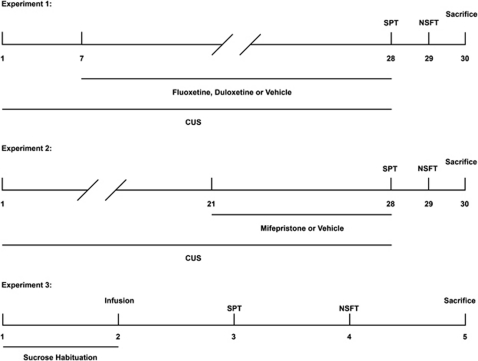
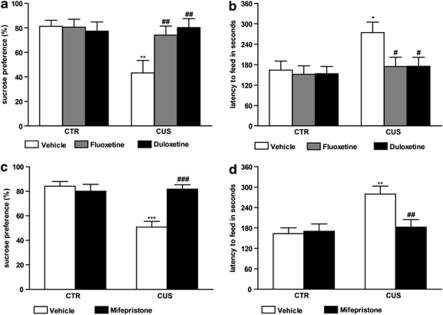
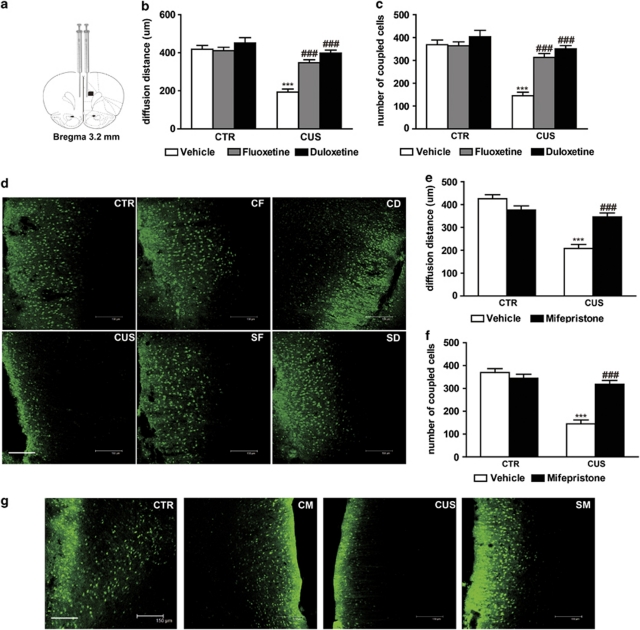
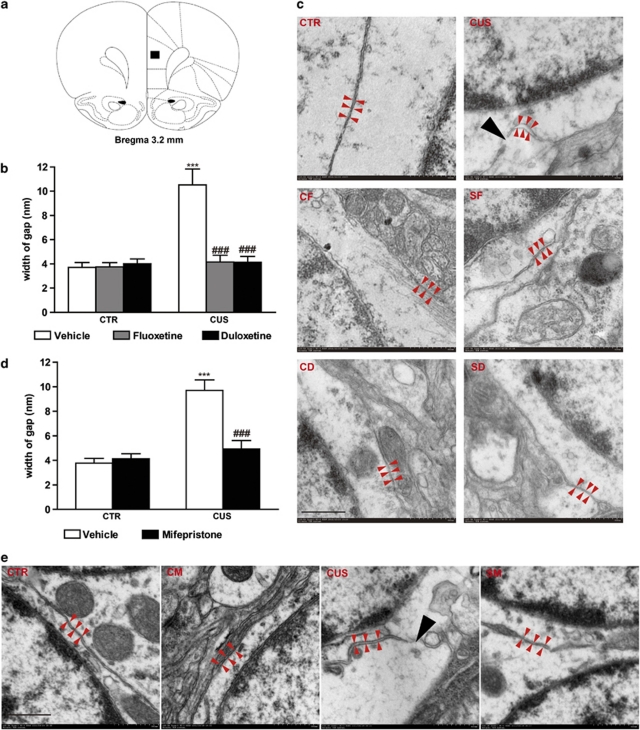
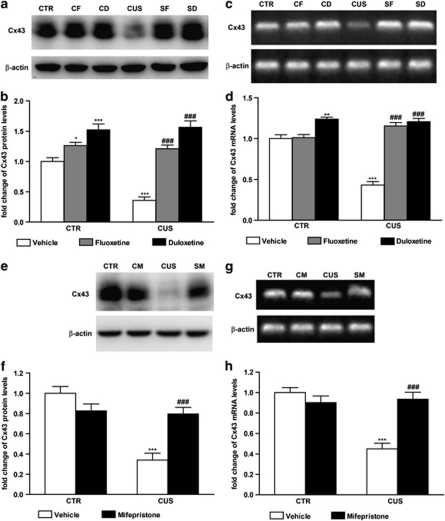
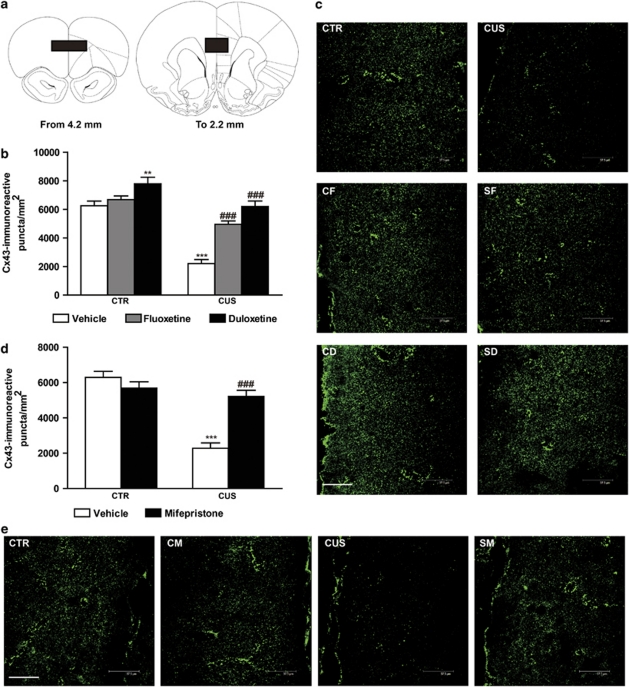
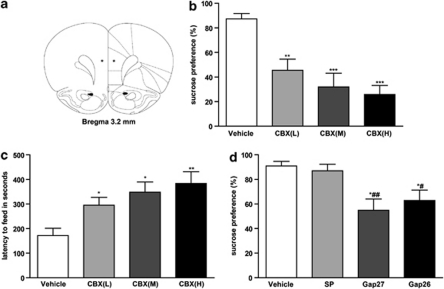
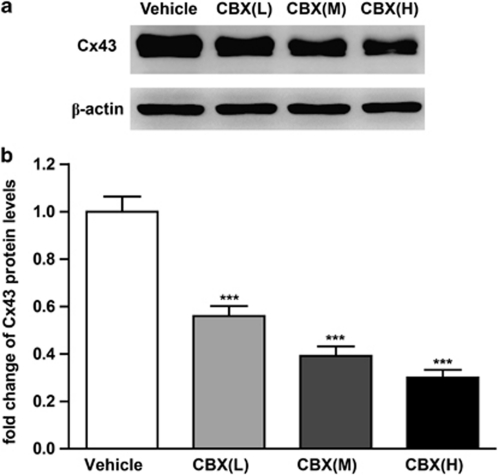
Growing evidence has implicated glial anomalies in the pathophysiology of major depression disorder (MDD). Gap junctional communication is a main determinant of astrocytic function. However, it is unclear whether gap junction dysfunction is involved in MDD development. This study investigates changes in the function of astrocyte gap junction occurring in the rat prefrontal cortex (PFC) after chronic unpredictable stress (CUS), a rodent model of depression. Animals exposed to CUS and showing behavioral deficits in sucrose preference test (SPT) and novelty suppressed feeding test (NSFT) exhibited significant decreases in diffusion of gap junction channel-permeable dye and expression of connexin 43 (Cx43), a major component of astrocyte gap junction, and abnormal gap junctional ultrastructure in the PFC. Furthermore, we analyzed the effects of typical antidepressants fluoxetine and duloxetine and glucocorticoid receptor (GR) antagonist mifepristone on CUS-induced gap junctional dysfunction and depressive-like behaviors. The cellular and behavioral alterations induced by CUS were reversed and/or blocked by treatment with typical antidepressants or mifepristone, indicating that the mechanism of their antidepressant action may involve the amelioration of gap junction dysfunction and the cellular changes may be related to GR activation. We then investigated the effects of pharmacological gap junction blockade in the PFC on depressive-like behaviors. The results demonstrate that carbenoxolone (CBX) infusions induced anhedonia in SPT, and anxiety in NSFT, and Cx43 mimetic peptides Gap27 and Gap26 also induced anhedonia, a core symptom of depression. Together, this study supports the hypothesis that gap junction dysfunction contributes to the pathophysiology of depression.
Figures
References
-
- Araque A, Parpura V, Sanzgiri RP, Haydon PG. Tripartite synapses: glia, the unacknowledged partner. Trends Neurosci. 1999;22:208–215. - PubMed
-
- Ayensu WK, Pucilowski O, Mason GA, Overstreet DH, Rezvani AH, Janowsky DS. Effects of chronic mild stress on serum complement activity, saccharin preference, and corticosterone levels in Flinders lines of rats. Physiol Behav. 1995;57:165–169. - PubMed
-
- Banasr M, Valentine GW, Li XY, Gourley SL, Taylor JR, Duman RS. Chronic unpredictable stress decreases cell proliferation in the cerebral cortex of the adult rat. Biol Psychiatry. 2007;62:496–504. - PubMed
Publication types
MeSH terms
Substances
LinkOut - more resources
Full Text Sources
Other Literature Sources
Medical
Miscellaneous
