


The prevalence of and factors associated with chronic atrial fibrillation in Medicare/Medicaid-eligible dialysis patients
- PMID: 22189842
- PMCID: PMC3891593
- DOI: 10.1038/ki.2011.416
The prevalence of and factors associated with chronic atrial fibrillation in Medicare/Medicaid-eligible dialysis patients
Abstract
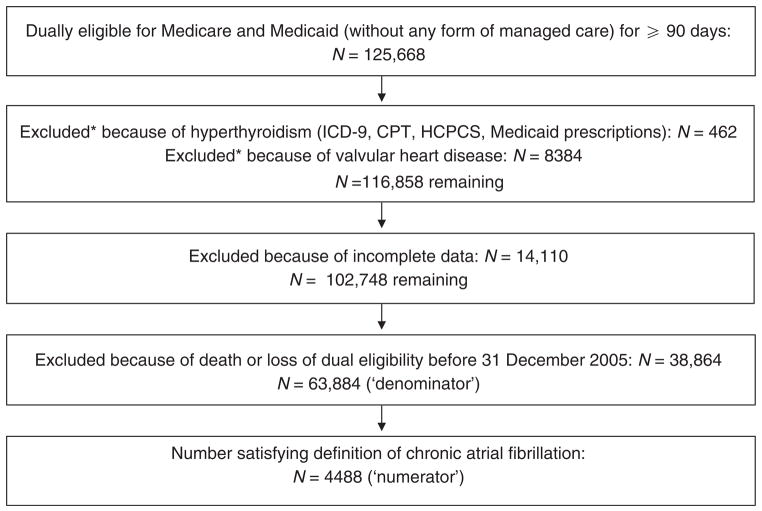
Atrial fibrillation is an important comorbidity with substantial therapeutic implications in dialysis patients but its prevalence varies in different studies. We used a database that includes patients in the United States on hemodialysis who were eligible for government assistance with prescription drugs. We then used ICD-9 codes from billing claims in this database to identify patients with chronic atrial fibrillation. Multivariable logistic regression was used to determine adjusted prevalence odds ratios for associated factors. Of 63,884 individuals, the prevalence of chronic atrial fibrillation was 7%. The factors of age over 60 years, male, Caucasian, body mass index over 25 kg/m(2), coronary artery disease, and heart failure were all significantly associated with chronic atrial fibrillation. Prevalence rates, particularly in younger patients, were far higher than those reported in an age group-matched nondialysis population. Thus, given its clinical impact, future efforts are needed to examine risk factors for adverse outcomes in chronic atrial fibrillation, and to identify appropriate management strategies for this disorder, as well as opportunities for quality improvement in this vulnerable population.
Conflict of interest statement
All the authors declared no competing interests.
Figures
Comment in
-
Atrial fibrillation: the beat is faster than the answers.Kidney Int. 2012 Mar;81(5):432-3. doi: 10.1038/ki.2011.430. Kidney Int. 2012. PMID: 22333744
References
-
- Foley RN, Parfrey PS, Harnett JD, et al. Clinical and echocardiographic disease in patients starting end-stage renal disease therapy. Kidney Int. 1995;47:186–192. - PubMed
-
- United States Renal Data System. USRDS. Annual Data Report: Atlas of End-Stage Renal Disease in the United States. National Institutes of Health, National Institute of Diabetes and Digestive and Kidney Diseases; Bethesda, MD: 2005. 2005.
-
- Abe S, Yoshizawa M, Nakanishi N, et al. Electrocardiographic abnormalities in patients receiving hemodialysis. Am Heart J. 1996;131:1137–1144. - PubMed
-
- Vazquez E, Sanchez-Perales C, Borrego F, et al. Influence of atrial fibrillation on the morbido-mortality of patients on hemodialysis. Am Heart J. 2000;140:886–890. - PubMed
-
- Atar I, Konas D, Acikel S, et al. Frequency of atrial fibrillation and factors related to its development in dialysis patients. Int J Cardiol. 2006;106:47–51. - PubMed
Publication types
MeSH terms
Grants and funding
LinkOut - more resources
Full Text Sources
Medical
