


Daily profiles of energy and nutrient intakes: are eating profiles changing over time?
- PMID: 22190135
- PMCID: PMC3389619
- DOI: 10.1038/ejcn.2011.210
Daily profiles of energy and nutrient intakes: are eating profiles changing over time?
Abstract
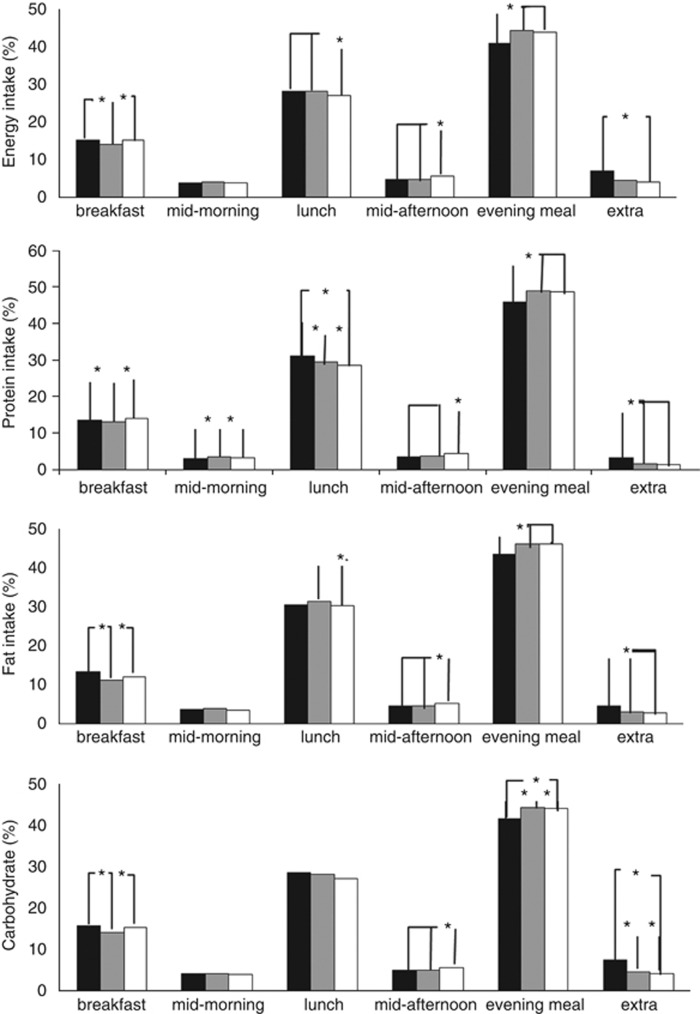
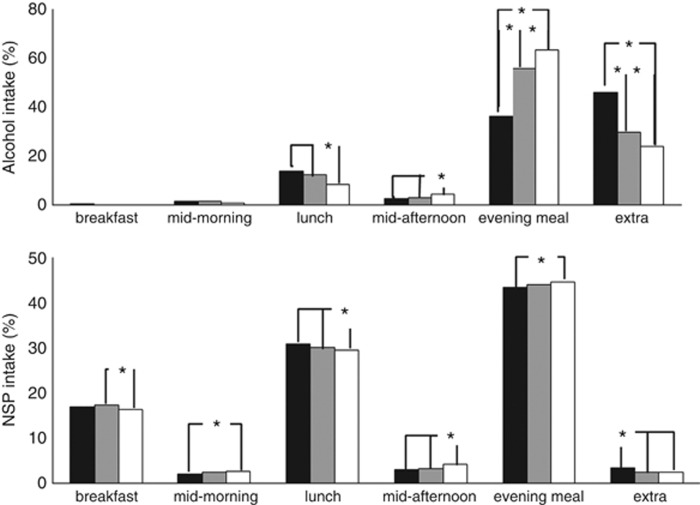
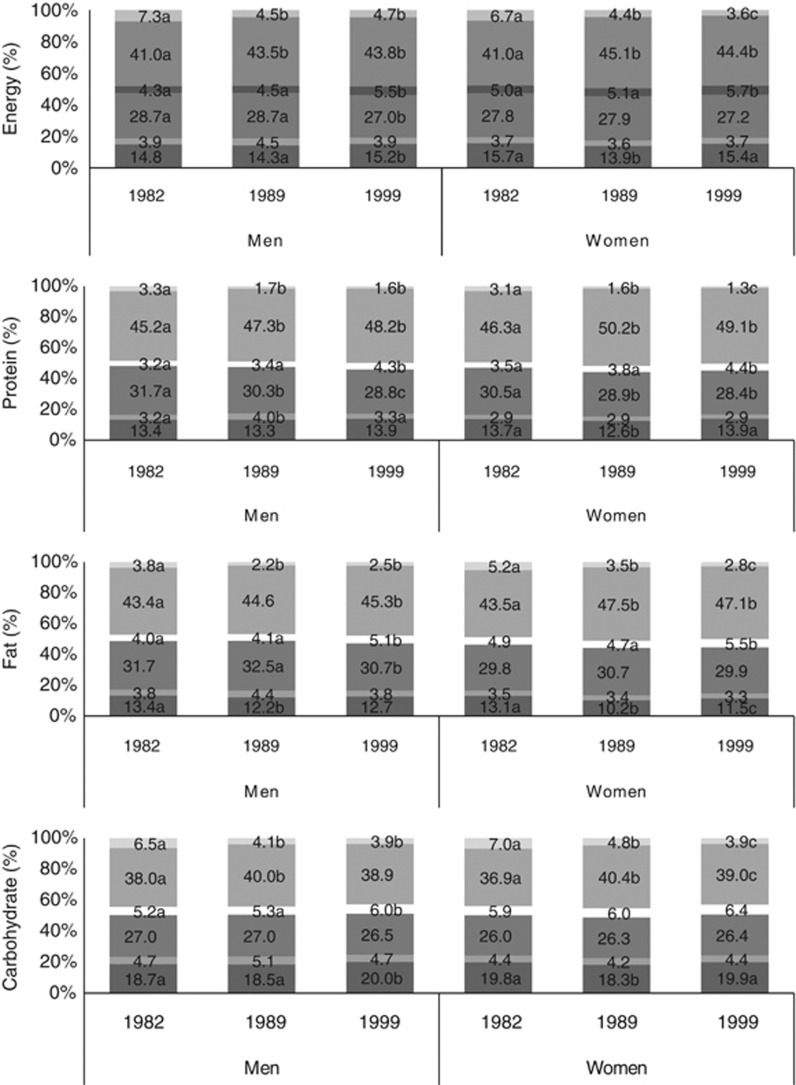
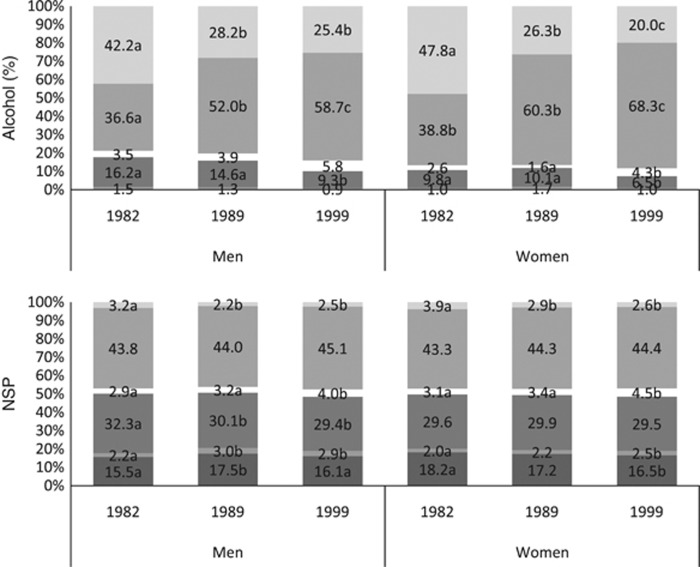
Background/objectives: Associations between timing of eating occasions and their nutrient composition and health have been described in interventional and cross-sectional studies. However, data from longitudinal data are limited. This study examined 17-year changes in energy and macronutrient intake across eating occasions in the 1946 British birth cohort.
Subjects/methods: Data were obtained from the 1946 British birth cohort. Cohort members completed 5d-estimated diaries at ages 36 (1982), 43 (1989) and 53 years (1999). Data from subjects who provided dietary data at all three time points were analysed (n = 1253). Repeated-measures analysis of variance with post hoc Bonferroni's adjustment was used to examine changes in energy and macronutrient at breakfast, mid-morning, lunch, mid-afternoon, evening and extra meal slots between 1982 and 1999. Analyses were stratified by sex and social class.
Results: The proportion of energy and macronutrients consumed at lunch declined between 1982 and 1999, which was compensated by a greater intake in the mid-afternoon and evening. This trend was seen across sex and social class, although women and adults with a non-manual occupation reported greater energy, carbohydrate and non-starch polysaccharide intake at breakfast in 1982 and had a higher protein intake in the evening compared with men and adults with a manual occupation.
Conclusions: The timing of energy and nutrient intake has shifted slightly over time, with a greater proportion of intake later in the day. The association between the observed sex and occupational social class differences in eating profiles and chronic disease warrants investigation.
Figures
 ), 1989 (
 ) and 1999 (
 ).
).
 ), 1989 (
 ) and 1999 (
 ).
).
 ), evening (
 ), mid-afternoon (
 ), lunch (
 ), mid-morning (
 ) and breakfast (
 ).
).
 ), evening (
 ), mid-afternoon (
 ), lunch (
 ), mid-morning (
 ) and breakfast (
 ).
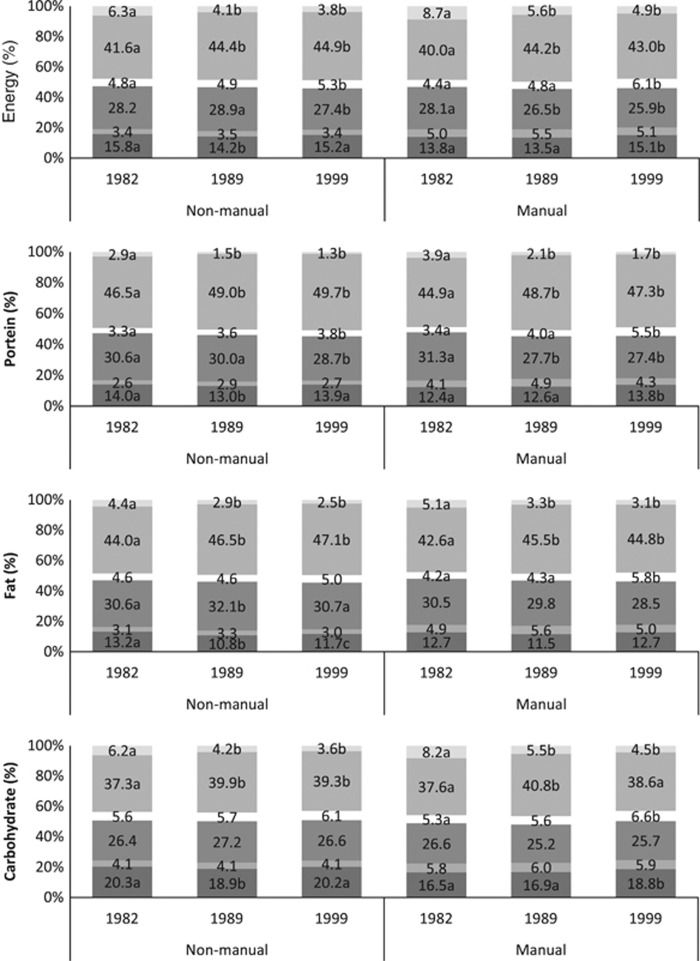
).
 ), evening (
 ), mid-afternoon (
 ), lunch (
 ), mid-morning (
 ) and breakfast (
 ).
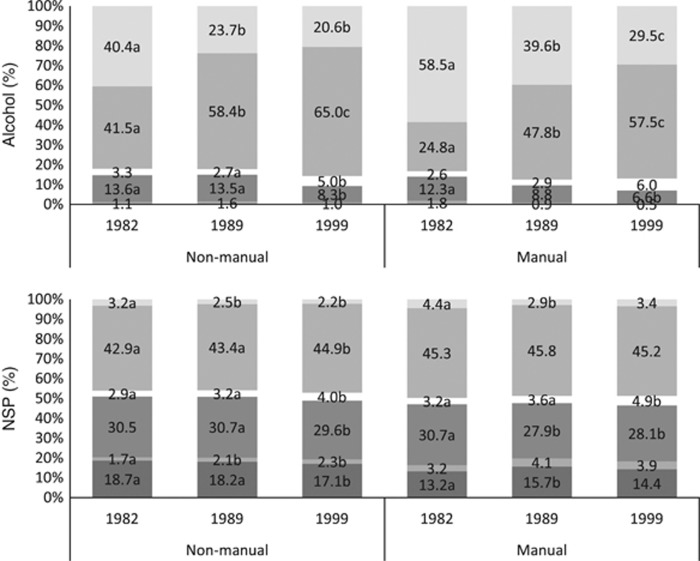
).
 ), evening (
 ), mid-afternoon (
 ), lunch (
 ), mid-morning (
 ) and breakfast (
 ).
).References
-
- McCrory MA, Campbell WW. Effects of eating frequency, snacking, and breakfast skipping on energy regulation: symposium overview. J Nutr. 2011;141:144–147. - PubMed
-
- De La Hunty A, Ashwell M. Are people who regularly eat breakfast cereals slimmer than those who don't? A systematic review of the evidence. Nutr Bull. 2007;32:118–128.
-
- Szajewska H, Ruszczynski M. Systematic review demonstrating that breakfast consumption influences body weight outcomes in children and adolescents in Europe. Crit Rev Food Sci Nutr. 2010;50:113–119. - PubMed
-
- Purslow LR, Sandhu MS, Forouhi N, Young EH, Luben RN, Welch AA, et al. Intake at breakfast and weight change: prospective study of 6764 middle-aged men and women. Am J Epidemiol. 2008;167:188–192. - PubMed
-
- Berkey CS, Rockett HR, Gillman MW, Field AE, Colditz GA. Longitudinal study of skipping breakfast and weight change in adolescents. Int J Obes Relat Metab Disord. 2003;27:1258–1266. - PubMed
Publication types
MeSH terms
Substances
Grants and funding
LinkOut - more resources
Full Text Sources
