


Lack of EGFR-activating mutations in European patients with triple-negative breast cancer could emphasise geographic and ethnic variations in breast cancer mutation profiles
- PMID: 22192147
- PMCID: PMC3326575
- DOI: 10.1186/bcr3079
Lack of EGFR-activating mutations in European patients with triple-negative breast cancer could emphasise geographic and ethnic variations in breast cancer mutation profiles
Abstract
Introduction: Triple-negative breast cancers (TNBCs) are characterised by lack of expression of hormone receptors and epidermal growth factor receptor 2 (HER-2). As they frequently express epidermal growth factor receptors (EGFRs), anti-EGFR therapies are currently assessed for this breast cancer subtype as an alternative to treatments that target HER-2 or hormone receptors. Recently, EGFR-activating mutations have been reported in TNBC specimens in an East Asian population. Because variations in the frequency of EGFR-activating mutations in East Asians and other patients with lung cancer have been described, we evaluated the EGFR mutational profile in tumour samples from European patients with TNBC.
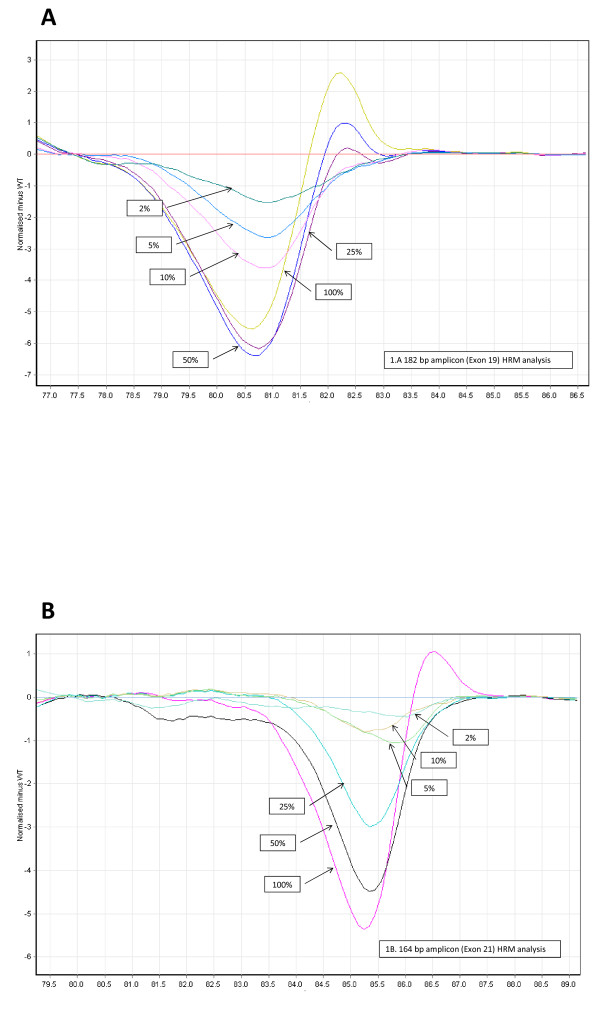
Methods: We selected from a DNA tumour bank 229 DNA samples isolated from frozen, histologically proven and macrodissected invasive TNBC specimens from European patients. PCR and high-resolution melting (HRM) analyses were used to detect mutations in exons 19 and 21 of EGFR. The results were then confirmed by bidirectional sequencing of all samples.
Results: HRM analysis allowed the detection of three EGFR exon 21 mutations, but no exon 19 mutations. There was 100% concordance between the HRM and sequencing results. The three patients with EGFR exon 21 abnormal HRM profiles harboured the rare R836R SNP, but no EGFR-activating mutation was identified.
Conclusions: This study highlights variations in the prevalence of EGFR mutations in TNBC. These variations have crucial implications for the design of clinical trials involving anti-EGFR treatments in TNBC and for identifying the potential target population.
Figures
References
-
- Nielsen TO, Hsu FD, Jensen K, Cheang M, Karaca G, Hu Z, Hernandez-Boussard T, Livasy C, Cowan D, Dressler L, Akslen LA, Ragaz J, Gown AM, Gilks CB, van de Rijn M, Perou CM. Immunohistochemical and clinical characterization of the basal-like subtype of invasive breast carcinoma. Clin Cancer Res. 2004;10:5367–5374. doi: 10.1158/1078-0432.CCR-04-0220. - DOI - PubMed
-
- Viale G, Rotmensz N, Maisonneuve P, Bottiglieri L, Montagna E, Luini A, Veronesi P, Intra M, Torrisi R, Cardillo A, Campagnoli E, Goldhirsch A, Colleoni M. Invasive ductal carcinoma of the breast with the "triple-negative" phenotype: prognostic implications of EGFR immunoreactivity. Breast Cancer Res Treat. 2009;116:317–328. doi: 10.1007/s10549-008-0206-z. - DOI - PubMed
Publication types
MeSH terms
Substances
LinkOut - more resources
Full Text Sources
Medical
Molecular Biology Databases
Research Materials
Miscellaneous
