


Are multiple cryoprobes additive or synergistic in renal cryotherapy?
- PMID: 22192230
- PMCID: PMC4051421
- DOI: 10.1016/j.urology.2011.10.042
Are multiple cryoprobes additive or synergistic in renal cryotherapy?
Abstract
Objective: To investigate the relationship between multiple cryoprobes was investigated to determine whether they work in an additive or synergistic fashion in an in vivo animal model because 1.47 mm (17-gauge) cryoprobes have been introduced to the armamentarium for renal cryotherapy.
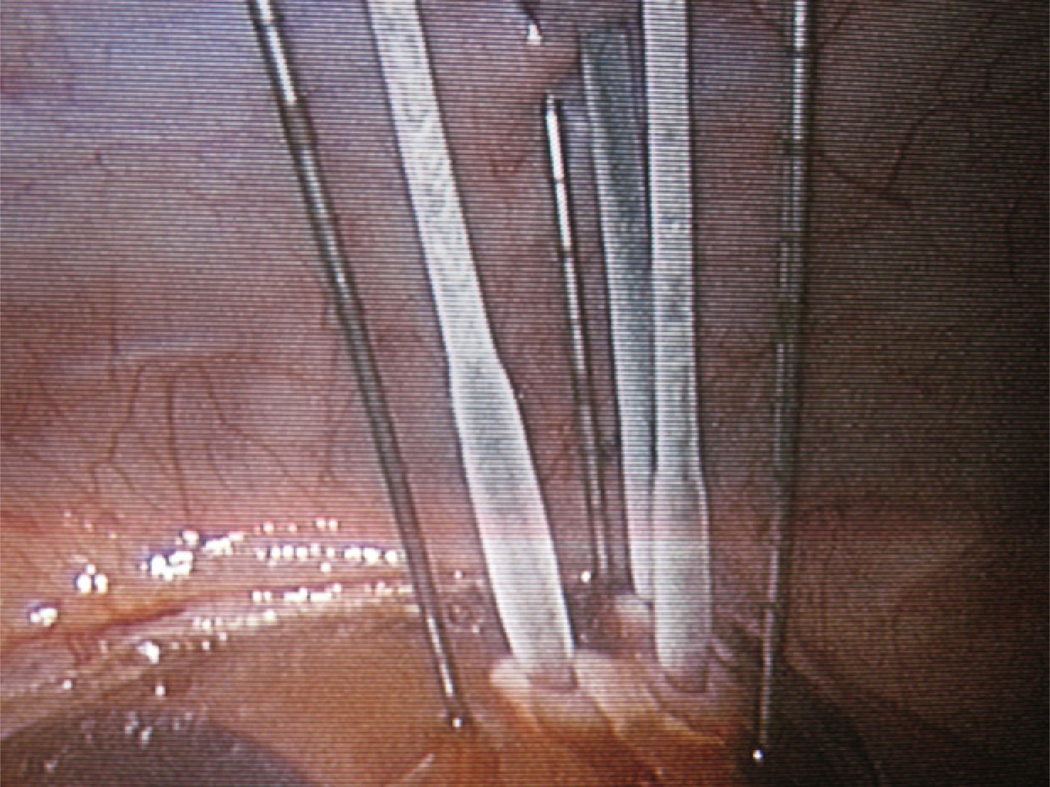
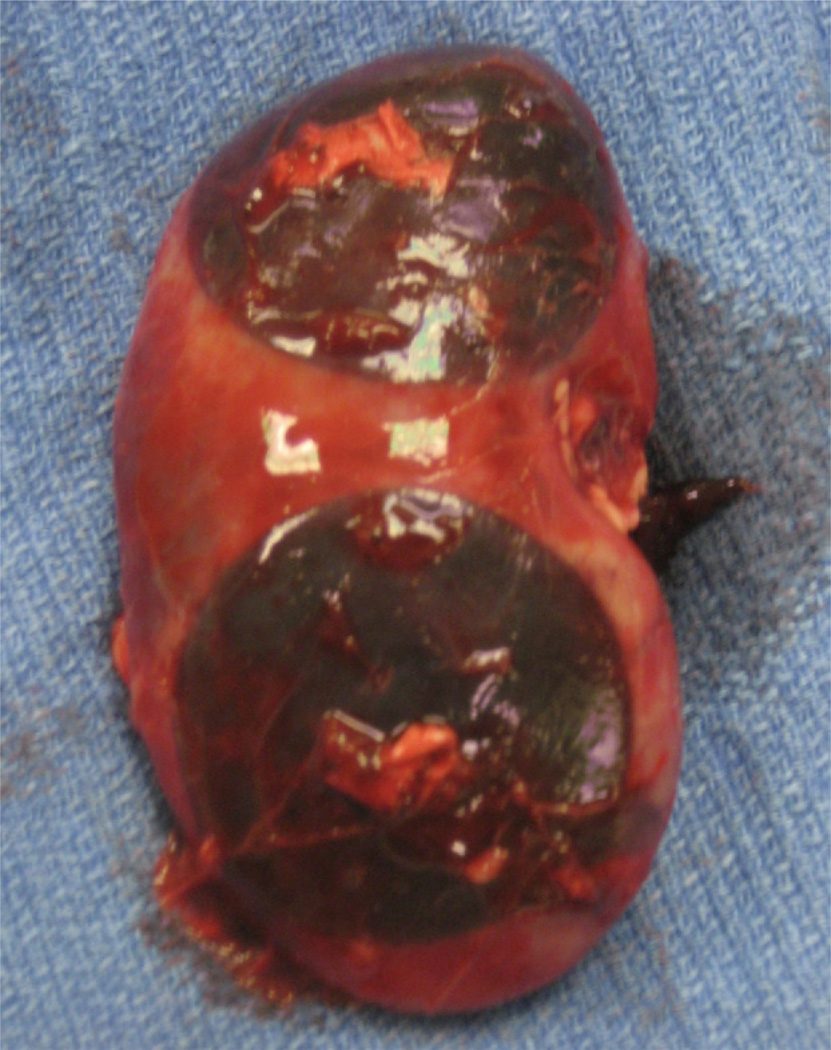
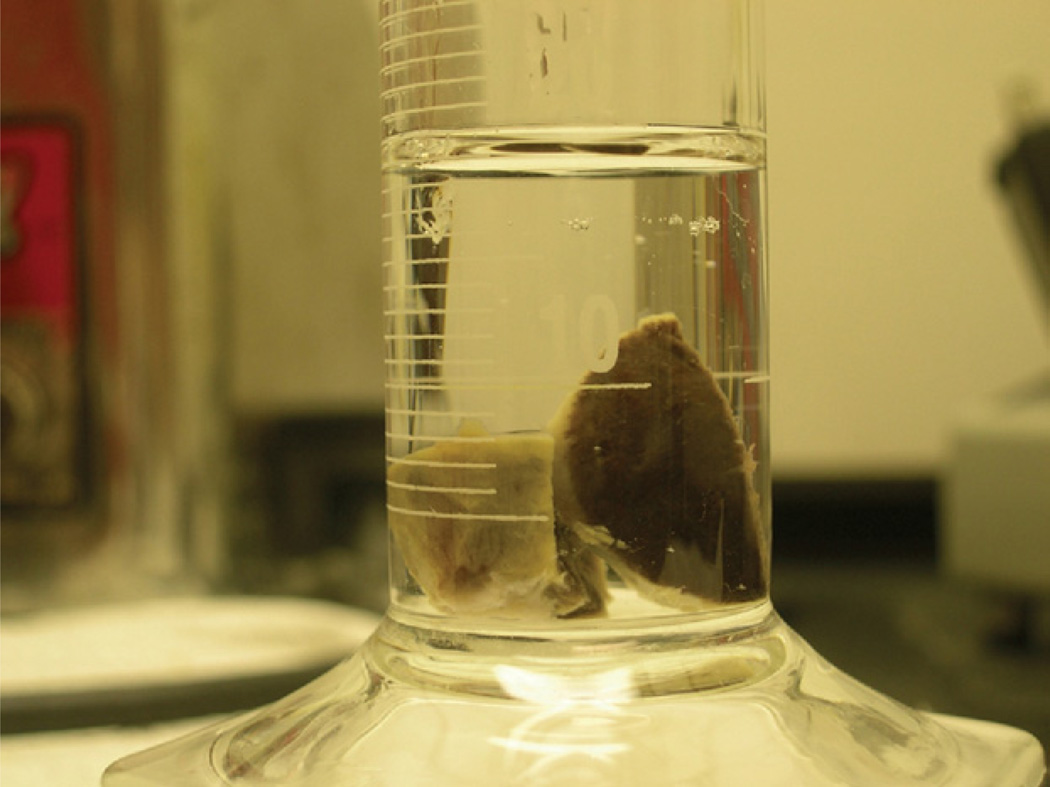
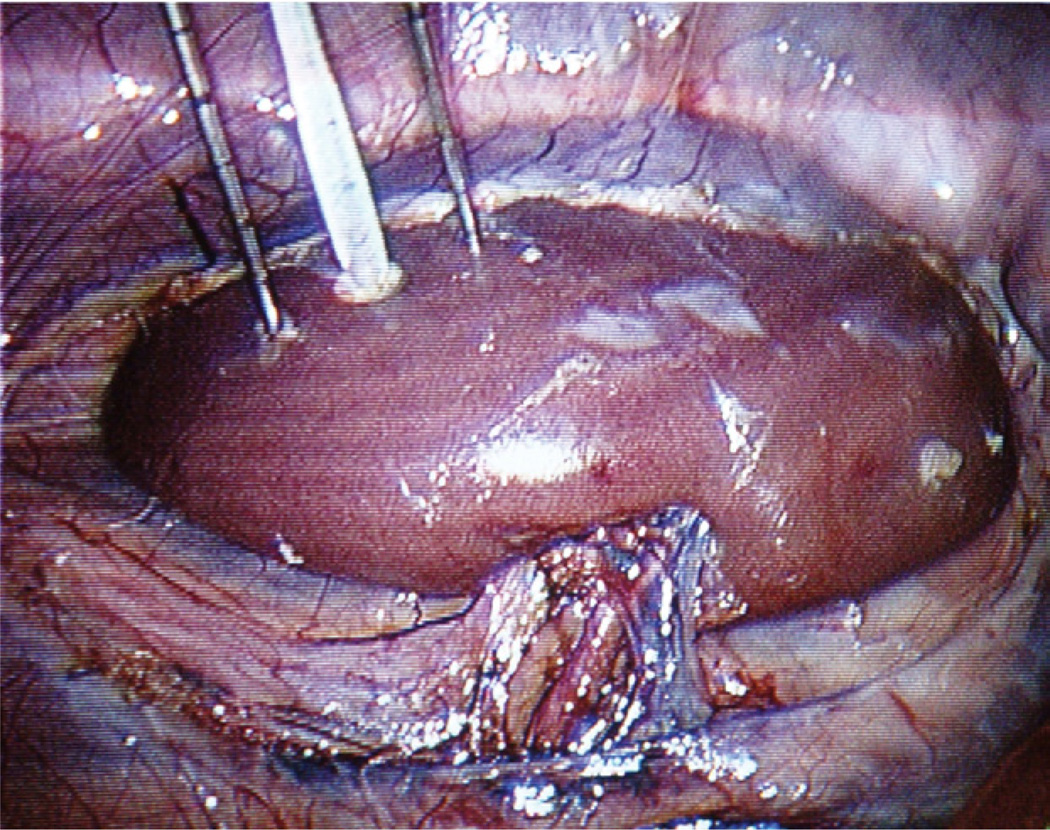
Methods: Laparoscopic-guided percutaneous cryoablation was performed in both renal poles of 3 pigs using 3 IceRod cryoprobes. These 12 cryolesions were compared with 12 cryolesions using a single IceRod cryoprobe. Each cycle consisted of two 10-minute freeze cycles separated by a 5-minute thaw. The iceball volume was measured using intraoperative ultrasonography. The kidneys were harvested, and cryolesion surface area was calculated. The lesions were fixed and excised to obtain a volume measurement. Statistical analysis was used to compare the single probe results multiplied by 3 to the multiple probe group for iceball volume, cryolesion surface area, and cryolesion volume.
Results: The iceball volume for the first freeze cycle for the single cryoprobe multiplied by 3 was 8.55 cm3 compared with 9.79 cm3 for the multiple cryoprobe group (P=.44) and 10.01 cm3 versus 16.58 cm3 for the second freeze (P=.03). The cryolesion volume for the single cryoprobe multiplied by 3 was 11.29 cm3 versus 14.75 cm3 for the multiple cyroprobe group (P=.06). The gross cryolesion surface area for the single cryoprobe multiplied by 3 was 13.14 cm2 versus 13.89 cm2 for the multiple probe group (P=.52).
Conclusion: The cryolesion created by 3 simultaneously activated 1.47-mm probes appears to be larger than that of an additive effect. The lesions were significantly larger as measured by ultrasonography and nearly so (P=.06) as measured by the gross cryolesion volume.
Copyright © 2012 Elsevier Inc. All rights reserved.
Figures
References
-
- Jayson M, Sanders H. Increased incidence of serendipitously discovered renal cell carcinoma. Urology. 1998;51:203–205. - PubMed
-
- Han KR, Kim HL, Pantuck AJ, et al. Use of American Society of Anesthesiologists physical status classification to assess perioperative risk in patients undergoing radical nephrectomy for renal cell carcinoma. Urology. 2004;63:841–846. - PubMed
-
- Frank I, Blute ML, Leibovich BC, et al. Independent validation of the 2002 American Joint Committee on Cancer primary tumor classification for renal cell carcinoma using a large, single institution cohort. J Urol. 2005;173:1889–1892. - PubMed
-
- Hafez KS, Fergany AF, Novick AC. Nephron sparing surgery for localized renal cell carcinoma: impact of tumor size on patient survival, tumor recurrence and TNM staging. J Urol. 1999;162:1930–1933. - PubMed
-
- McKiernan J, Simmons R, Katz J, et al. Natural history of chronic renal insufficiency after partial and radical nephrectomy. Urology. 2002;59:816–820. - PubMed
