


Isolation of a novel cutinase homolog with polyethylene terephthalate-degrading activity from leaf-branch compost by using a metagenomic approach
- PMID: 22194294
- PMCID: PMC3294458
- DOI: 10.1128/AEM.06725-11
Isolation of a novel cutinase homolog with polyethylene terephthalate-degrading activity from leaf-branch compost by using a metagenomic approach
Abstract
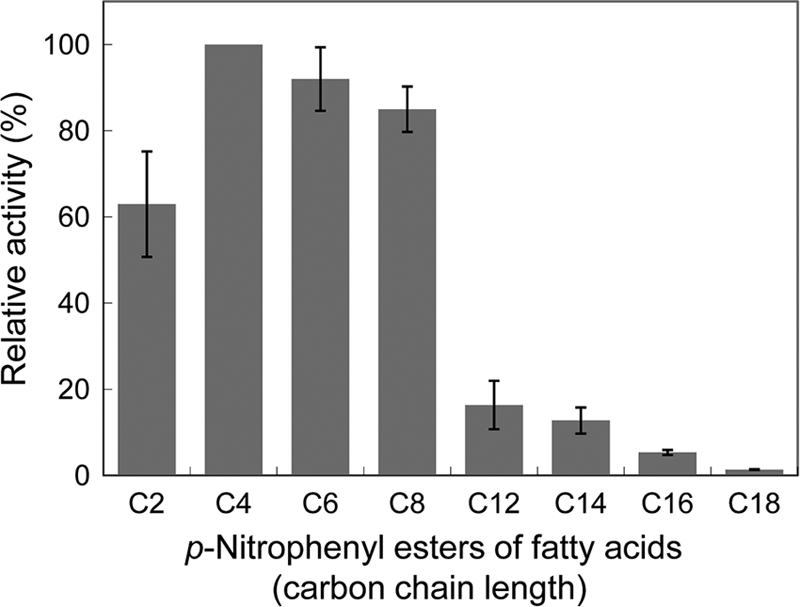
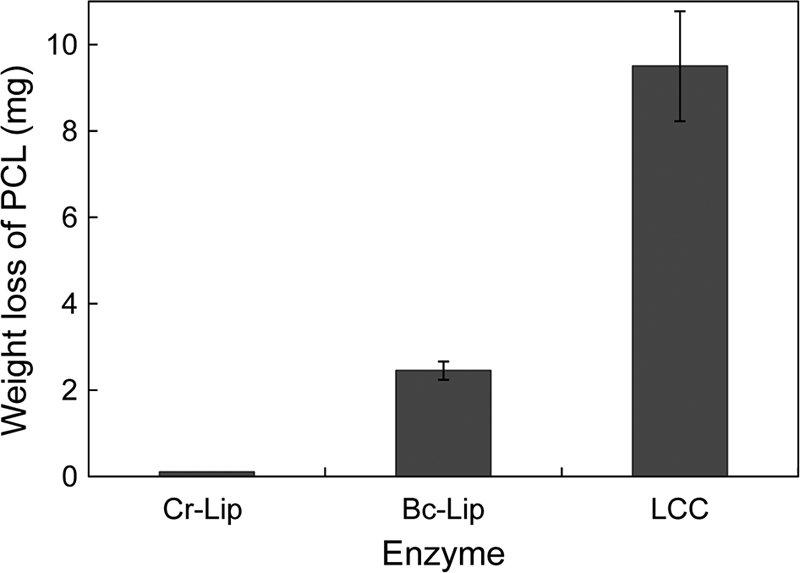
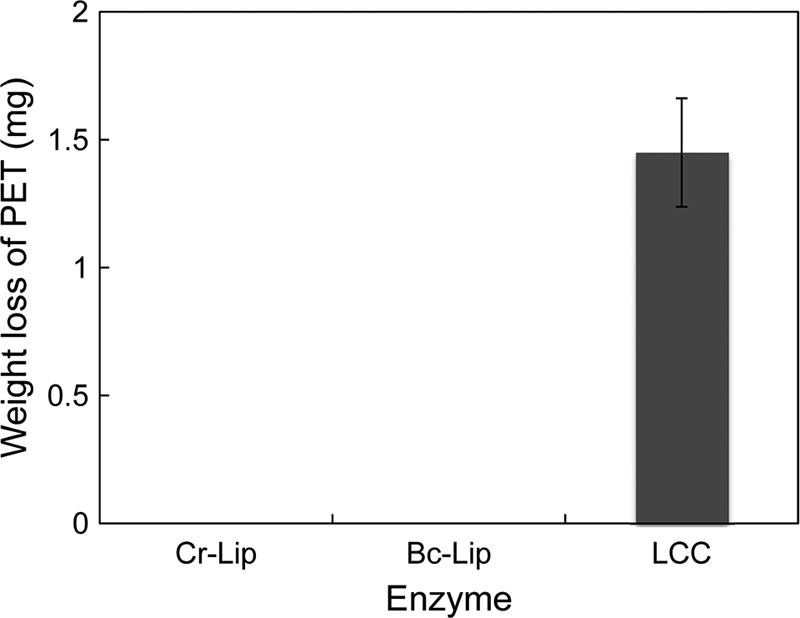
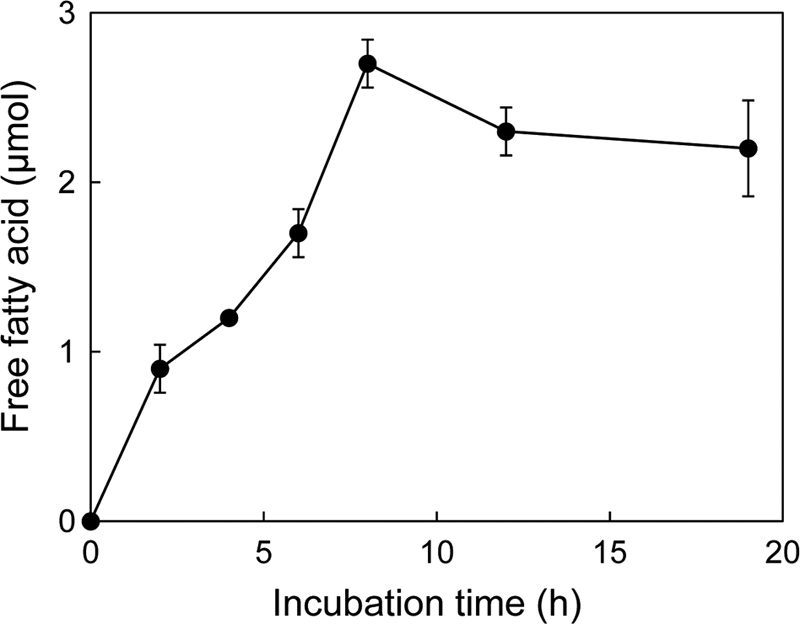
The gene encoding a cutinase homolog, LC-cutinase, was cloned from a fosmid library of a leaf-branch compost metagenome by functional screening using tributyrin agar plates. LC-cutinase shows the highest amino acid sequence identity of 59.7% to Thermomonospora curvata lipase. It also shows the 57.4% identity to Thermobifida fusca cutinase. When LC-cutinase without a putative signal peptide was secreted to the periplasm of Escherichia coli cells with the assistance of the pelB leader sequence, more than 50% of the recombinant protein, termed LC-cutinase*, was excreted into the extracellular medium. It was purified and characterized. LC-cutinase* hydrolyzed various fatty acid monoesters with acyl chain lengths of 2 to 18, with a preference for short-chain substrates (C(4) substrate at most) most optimally at pH 8.5 and 50°C, but could not hydrolyze olive oil. It lost activity with half-lives of 40 min at 70°C and 7 min at 80°C. LC-cutinase* had an ability to degrade poly(ε-caprolactone) and polyethylene terephthalate (PET). The specific PET-degrading activity of LC-cutinase* was determined to be 12 mg/h/mg of enzyme (2.7 mg/h/μkat of pNP-butyrate-degrading activity) at pH 8.0 and 50°C. This activity is higher than those of the bacterial and fungal cutinases reported thus far, suggesting that LC-cutinase* not only serves as a good model for understanding the molecular mechanism of PET-degrading enzyme but also is potentially applicable for surface modification and degradation of PET.
Figures
References
-
- Alisch-Mark M, Herrman A, Zimmermann W. 2006. Increase of the hydrophilicity of polyethylene terephthalate fibres by hydrolases from Thermomonospora fusca and Fusarium solani f. sp. pisi. Biotechnol. Lett. 28:681–685 - PubMed
-
- Amada K, Haruki M, Imanaka T, Morikawa M, Kanaya S. 2000. Overproduction in Escherichia coli, purification, and characterization of a family I.3 lipase from Pseudomonas sp. MIS38. Biochim. Biophys. Acta 1478:201–210 - PubMed
-
- Amass W, Amass A, Tighe B. 1998. A review of biodegradable polymers: uses, current developments in the synthesis and characterization of biodegradable polyesters, blends of biodegradable polymers and recent advances in biodegradation studies. Polym. Int. 47:89–144
Publication types
MeSH terms
Substances
Associated data
- Actions
LinkOut - more resources
Full Text Sources
Other Literature Sources
Molecular Biology Databases
Miscellaneous
