


Complement C3 deficiency attenuates chronic hypoxia-induced pulmonary hypertension in mice
- PMID: 22194859
- PMCID: PMC3237464
- DOI: 10.1371/journal.pone.0028578
Complement C3 deficiency attenuates chronic hypoxia-induced pulmonary hypertension in mice
Abstract
Background: Evidence suggests a role of both innate and adaptive immunity in the development of pulmonary arterial hypertension. The complement system is a key sentry of the innate immune system and bridges innate and adaptive immunity. To date there are no studies addressing a role for the complement system in pulmonary arterial hypertension.
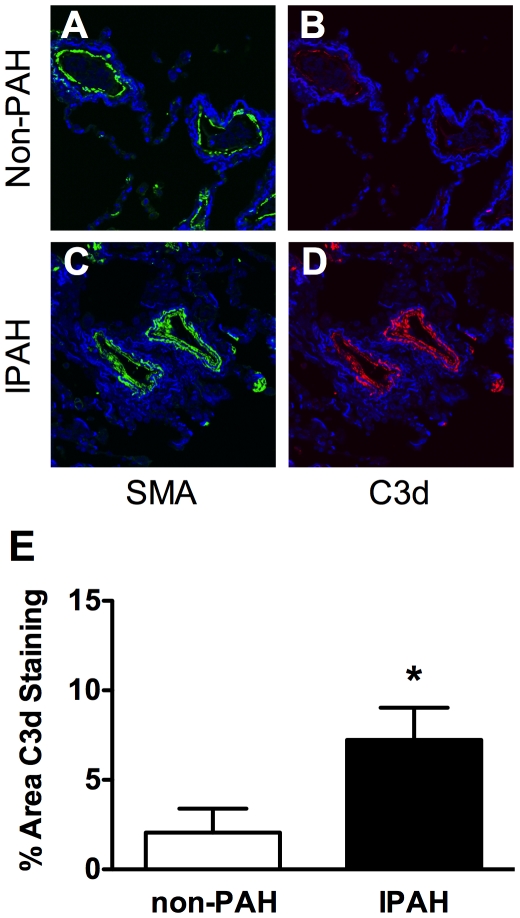
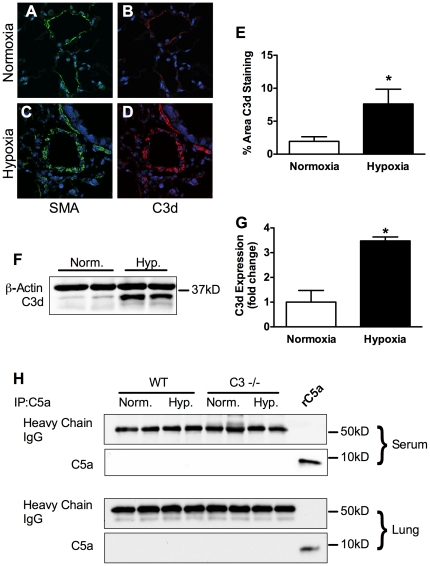
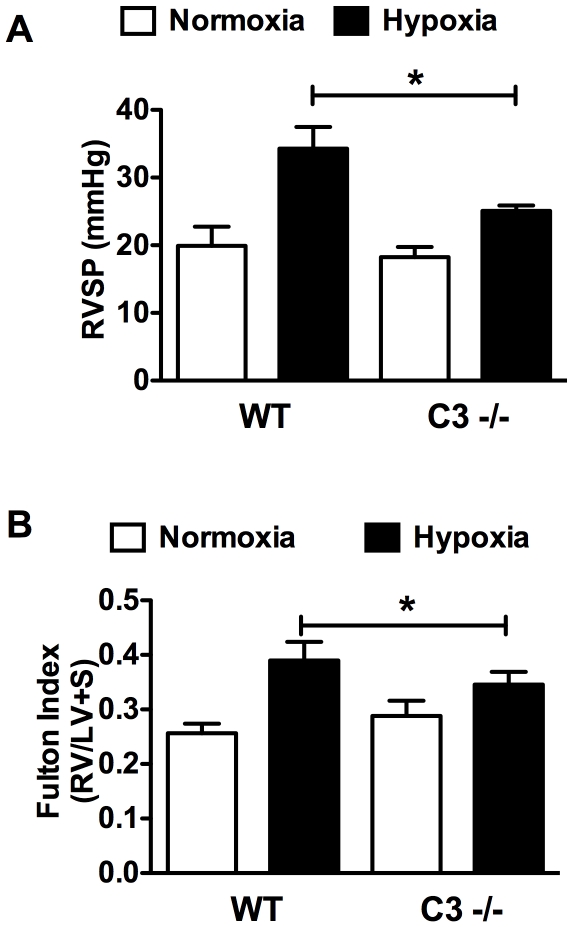
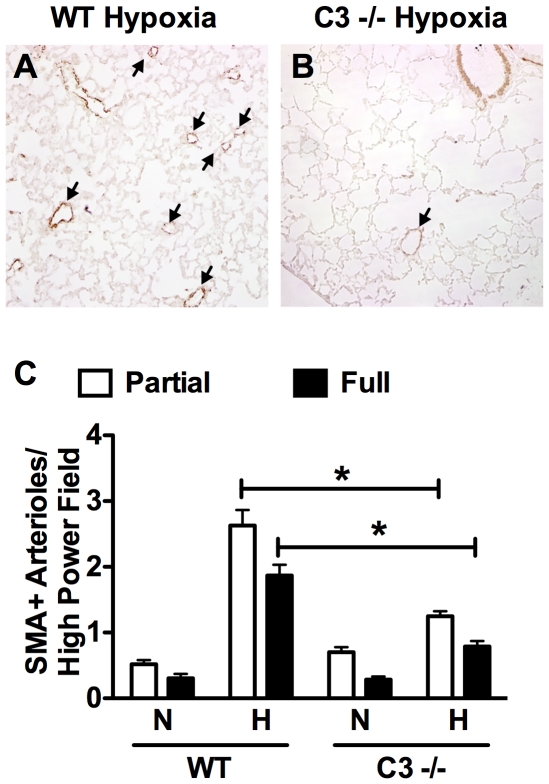
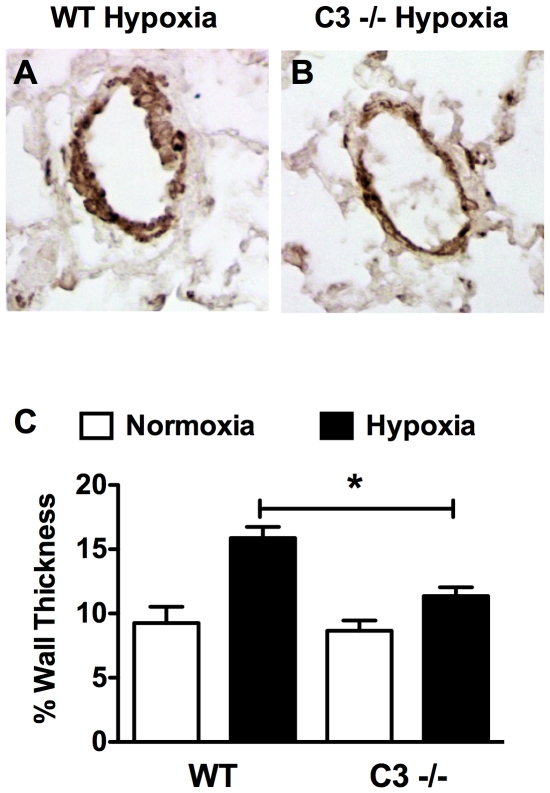
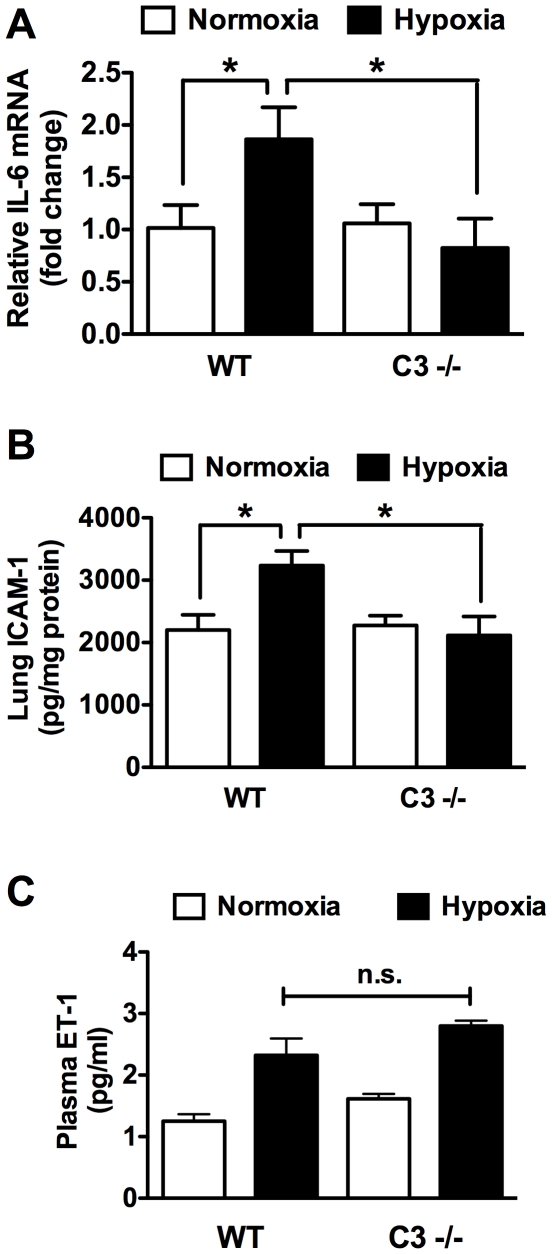
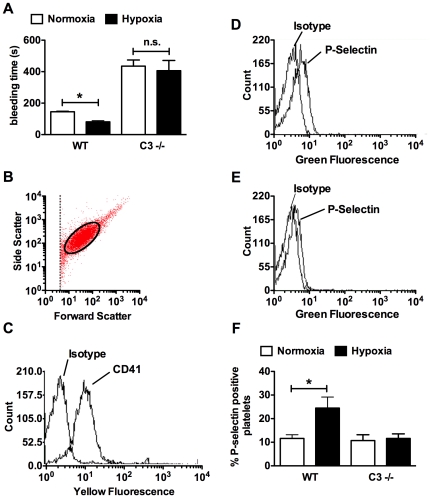
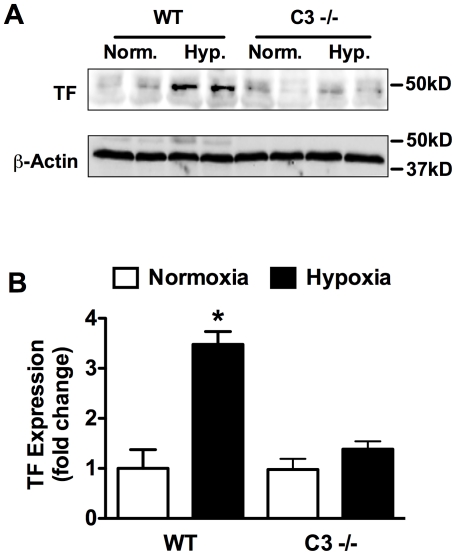
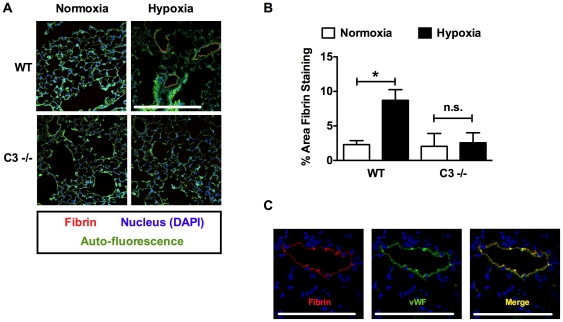
Methodology/principal findings: Immunofluorescent staining revealed significant C3d deposition in lung sections from IPAH patients and C57Bl6/J wild-type mice exposed to three weeks of chronic hypoxia to induce pulmonary hypertension. Right ventricular systolic pressure and right ventricular hypertrophy were increased in hypoxic vs. normoxic wild-type mice, which were attenuated in C3-/- hypoxic mice. Likewise, pulmonary vascular remodeling was attenuated in the C3-/- mice compared to wild-type mice as determined by the number of muscularized peripheral arterioles and morphometric analysis of vessel wall thickness. The loss of C3 attenuated the increase in interleukin-6 and intracellular adhesion molecule-1 expression in response to chronic hypoxia, but not endothelin-1 levels. In wild-type mice, but not C3-/- mice, chronic hypoxia led to platelet activation as assessed by bleeding time, and flow cytometry of platelets to determine cell surface P-selectin expression. In addition, tissue factor expression and fibrin deposition were increased in the lungs of WT mice in response to chronic hypoxia. These pro-thrombotic effects of hypoxia were abrogated in C3-/- mice.
Conclusions: Herein, we provide compelling genetic evidence that the complement system plays a pathophysiologic role in the development of PAH in mice, promoting pulmonary vascular remodeling and a pro-thrombotic phenotype. In addition we demonstrate C3d deposition in IPAH patients suggesting that complement activation plays a role in the development of PAH in humans.
Conflict of interest statement
Figures
References
-
- D'Alonzo GE, Barst RJ, Ayres SM, Bergofsky EH, Brundage BH, et al. Survival in patients with primary pulmonary hypertension. Results from a national prospective registry. Ann Intern Med. 1991;115:343–349. - PubMed
-
- Humbert M, Morrell NW, Archer SL, Stenmark KR, MacLean MR, et al. Cellular and molecular pathobiology of pulmonary arterial hypertension. J Am Coll Cardiol. 2004;43:13S–24S. - PubMed
-
- Mathew R. Inflammation and pulmonary hypertension. Cardiol Rev. 2010;18:67–72. - PubMed
-
- Pangburn MK, Rawal N. Structure and function of complement C5 convertase enzymes. Biochem Soc Trans. 2002;30:1006–1010. - PubMed
Publication types
MeSH terms
Substances
Grants and funding
LinkOut - more resources
Full Text Sources
Other Literature Sources
Medical
Molecular Biology Databases
Miscellaneous
