


Inhibitors of the anti-apoptotic Bcl-2 proteins: a patent review
- PMID: 22195752
- PMCID: PMC3547649
- DOI: 10.1517/13543776.2012.644274
Inhibitors of the anti-apoptotic Bcl-2 proteins: a patent review
Abstract
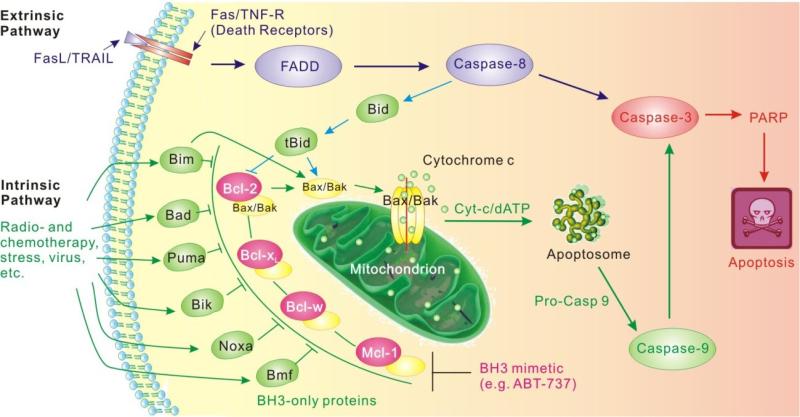
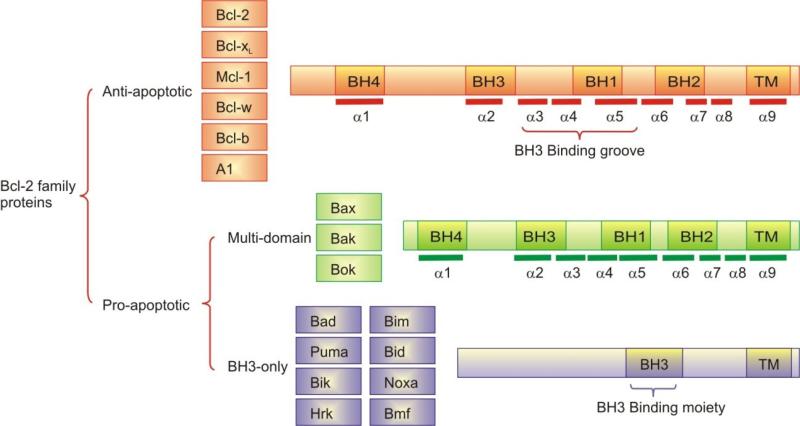
Introduction: The B-cell lymphoma-2 (Bcl-2) family of proteins is central to the regulation of apoptosis, which is vital for proper tissue development and cellular homeostasis. Anti-apoptotic proteins, members of the Bcl-2 family, are an important survival factor for many cancers and their overexpression has been associated with tumor initiation, progression, and resistance to current anticancer therapies. Therefore, strategies seeking to antagonize the function of Bcl-2 anti-apoptotic proteins have been extensively studied for developing a novel cancer therapy.
Areas covered: This review covers research and patent literature of the last 15 years dealing with the discovery and development of inhibitors of the Bcl-2 protein family.
Expert opinion: The feasibility of disrupting protein-protein interactions between anti-apoptotic and pro-apoptotic proteins, members of the Bcl-2 family, using peptidomimetics and small-molecule inhibitors has been successfully established. Three small-molecule inhibitors have entered human clinical trials, which will allow the evaluation of this potential therapeutic approach in cancer patients. It will be important to gain a better understanding of pan and selective Bcl-2 inhibitors in order to facilitate future drug design efforts.
Figures
References
-
- Toogood PL. Inhibition of protein-protein association by small molecules: approaches and progress. J Med Chem. 2002;45:1543–58. - PubMed
-
- Cummings CG, Hamilton AD. Disrupting protein-protein interactions with non-peptidic, small molecule alpha-helix mimetics. Curr Opin Chem Biol. 2010;14:341–6. [This review describes applications of several chemical scaffolds, as non-peptidic, small molecule α-helix mimetics, to disrupt PPIs.] - PubMed
-
- Arkin MR, Wells JA. Small-molecule inhibitors of protein-protein interactions: progressing towards the dream. Nat Rev Drug Discov. 2004;3:301–17. - PubMed
-
- Danial NN, Korsmeyer SJ. Cell death: critical control points. Cell. 2004;116:205–19. - PubMed
Publication types
MeSH terms
Substances
Grants and funding
LinkOut - more resources
Full Text Sources
Other Literature Sources
Miscellaneous
