Review
. 2012 Apr;22(2):72-8.
doi: 10.1016/j.gde.2011.12.001. Epub 2011 Dec 21.

Genomic imprinting: recognition and marking of imprinted loci

Affiliations
Review

Genomic imprinting: recognition and marking of imprinted loci

Lara K Abramowitz et al. Curr Opin Genet Dev. 2012 Apr.

Abstract

Genomic imprinting is an epigenetic process resulting in the monoallelic parent-of-origin-specific expression of a subset of genes in the mammalian genome. The parental alleles are differentially marked by DNA methylation during gametogenesis when the genomes are in separate compartments. How methylation machinery recognizes and differentially modifies these imprinted regions in germ cells remains a key question in the field. While studies have focused on determining a sequence signature that alone could distinguish imprinted regions from the rest of the genome, recent reports do not support such a hypothesis. Rather, it is becoming clear that features such as transcription, histone modifications and higher order chromatin are employed either individually or in combination to set up parental imprints.


Figures

Figure 1
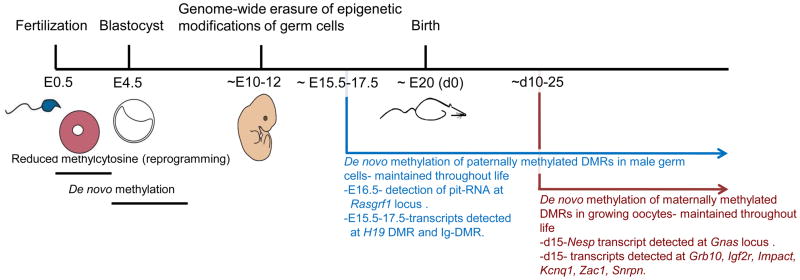
Figure 1. Timeline of epigenetic reprogramming
The first wave of genome-wide DNA demethylation takes place shortly after fertilization, with the maternal genome passively demethylated and the methylcytosine of the paternal genome converted into hydroxymethylcytosine, which is passively eliminated. Imprinted DMRs are maintained despite this demethylation event. De novo DNA methylation occurs around implantation. In both male and female primordial germ cells another wave of DNA demethylation initiates as the cells migrate toward the genital ridge. All DMRs are also erased at this time. In male germ cells methylation imprints are acquired in prospermatogonia around E15.5–17.5. In the female germline methylation imprints are not acquired until after birth, in growing oocytes. Transcripts have been correlated with acquisition of DNA methylation in both the male and female germlines. Activities in male and female germ cells are represented in blue and red, respectively.
Figure 2
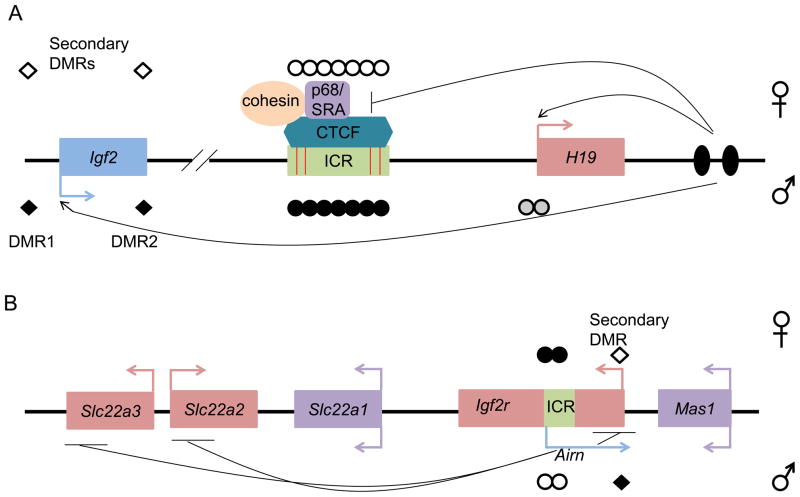
Figure 2. Depiction of insulator and ncRNA mediated imprinting
(a) Insulator-mediated imprinting at the H19/Igf2 locus. The maternal allele is represented above the line whereas the paternal allele is below the line. Depicted here are the maternally expressed H19 (pink box with pink arrow) and paternally expressed Igf2 (blue box with blue arrow) genes. On the maternal allele the ICR (green box) remains unmethylated (open circles) allowing CTCF (binding sites depicted by red bars) and its cofactors (cohesins and p68/SRA) to bind. This interaction mediates enhancer blocking allowing downstream enhancers (black ovals) to access the H19 promoter. Paternal methylation at the ICR (black circles) prevents CTCF binding and together with methylation at the H19 promoter (grey circles) allows the enhancers to access Igf2. Paternal methylation at secondary DMRs (diamonds), DMR1 and DMR2, occurs after fertilization. (b) ncRNA-mediated imprinting at the Igf2r locus. The maternal allele is represented above the line whereas the paternal allele is below the line. Depicted are the maternally expressed Slc22a3, Slc22a2, Igf2r (pink boxes with pink arrows) the paternally expressed ncRNA Airn (blue arrow) and non-imprinted Mas1 and Slc22a1 (purple boxes with purple arrows). The ICR (green box), which is hypermethylated on the maternal allele (black circles), includes the Airn promoter. The hypomethylated ICR (open circles) on the paternal allele allows Airn expression, which represses Slc222a2, Slc22a3 and Igf2r in cis. A secondary paternally methylated DMR (diamonds) is located at the Igf2r promoter. This DMR is not methylated until after transcription occurs through the region. Loci are not drawn to scale.

References

    1. Bartolomei MS. Genomic imprinting: employing and avoiding epigenetic processes. Gene Dev. 2009;23:2124–2133. - PMC - PubMed
    1. Barlow DP. Genomic Imprinting: A Mammalian Epigenetic Discovery Model. Annu Rev Genet. 2011;45:379–404. - PubMed
    1. Ferguson-Smith AC. Genomic imprinting: the emergence of an epigenetic paradigm. Nat Rev Genet. 2011;12:565–575. - PubMed
    1. Frost JM, Moore GE. The importance of imprinting in the human placenta. PLoS Genet. 2010;6:e1001015. - PMC - PubMed
    1. Tomizawa Si, Kobayashi H, Watanabe T, Andrews S, Hata K, Kelsey G, Sasaki H. Dynamic stage-specific changes in imprinted differentially methylated regions during early mammalian development and prevalence of non-CpG methylation in oocytes. Development. 2011;138:811–820. 15 germline DMRs were examined in mouse sperm, oocytes and embryos and it was determined that maternal gametic DMRs appeared as unmethylated islands in male germ cells, the extent of gametic DMRs differs significantly in germ cells compared to embryos and substantial non-CpG DNA methylation was evident in oocytes. - PMC - PubMed

Publication types