Comparative Study
. 2011 Dec 22;72(6):951-63.
doi: 10.1016/j.neuron.2011.11.007.

High frequencies of de novo CNVs in bipolar disorder and schizophrenia

Affiliations
Comparative Study

High frequencies of de novo CNVs in bipolar disorder and schizophrenia

Dheeraj Malhotra et al. Neuron. .

Abstract

While it is known that rare copy-number variants (CNVs) contribute to risk for some neuropsychiatric disorders, the role of CNVs in bipolar disorder is unclear. Here, we reasoned that a contribution of CNVs to mood disorders might be most evident for de novo mutations. We performed a genome-wide analysis of de novo CNVs in a cohort of 788 trios. Diagnoses of offspring included bipolar disorder (n = 185), schizophrenia (n = 177), and healthy controls (n = 426). Frequencies of de novo CNVs were significantly higher in bipolar disorder as compared with controls (OR = 4.8 [1.4,16.0], p = 0.009). De novo CNVs were particularly enriched among cases with an age at onset younger than 18 (OR = 6.3 [1.7,22.6], p = 0.006). We also confirmed a significant enrichment of de novo CNVs in schizophrenia (OR = 5.0 [1.5,16.8], p = 0.007). Our results suggest that rare spontaneous mutations are an important contributor to risk for bipolar disorder and other major neuropsychiatric diseases.


Figures

Figure 1
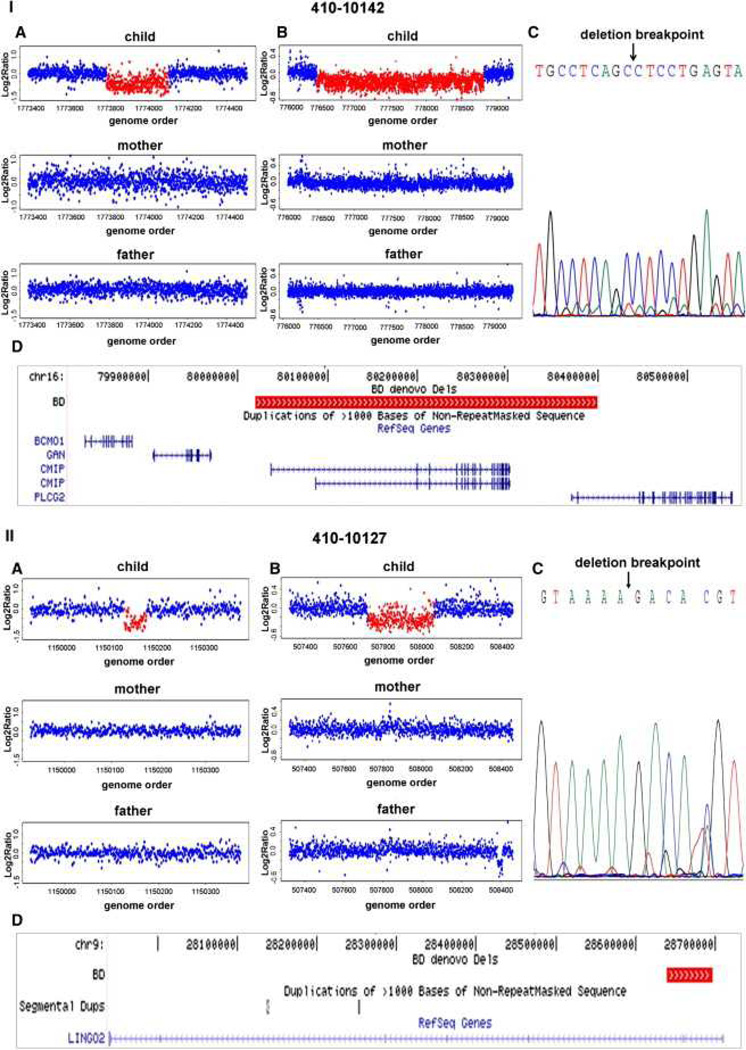
Figure 1. Detection, Validation, and Breakpoint Sequencing of De Novo CNVs in BD
Representative examples of microarray data and sequencing results are provided for deletions detected in two subjects with diagnoses of BD, 410-10142 (panel I) and 410-10127 (panel II). (A) De novo CNVs were identified from whole-genome scans of the child, mother, and father, using the NimbleGen HD2 platform. (B) CNV validation and breakpoint refinement was performed by analysis of the trio using a custom Agilent microarray with dense probe coverage of the target region (~200 bp spacing). (C) Deletion breakpoints were determined by PCR and Sanger sequencing. (D) UCSC genome browser tracks of known genes are shown to scale with a track for de novo deletions displayed in red.
Figure 2
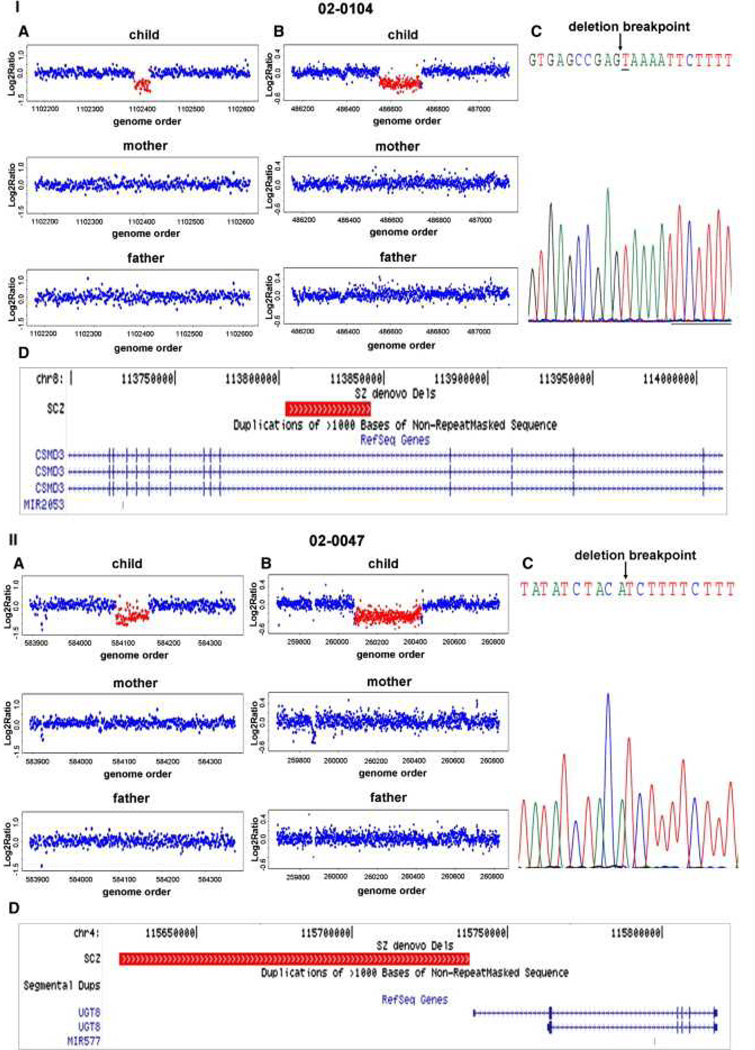
Figure 2. Detection, Validation, and Breakpoint Sequencing of De Novo CNVs in SCZ
Representative examples of microarray data and sequencing results are provided for deletions detected in two subjects with diagnoses of SCZ, 02-0104 (panel I) and 02-0047 (panel II). (A) De novo CNVs were identified from whole-genome scans of the child, mother, and father, using the NimbleGen HD2 platform. (B) CNV validation and breakpoint refinement was performed by analysis of the trio using a custom Agilent microarray with dense probe coverage of the target region (~200 bp spacing). (C) Deletion breakpoints were determined by PCR and Sanger sequencing. (D) UCSC genome browser tracks of known genes are shown to scale with a track for de novo deletions displayed in red.
Figure 3
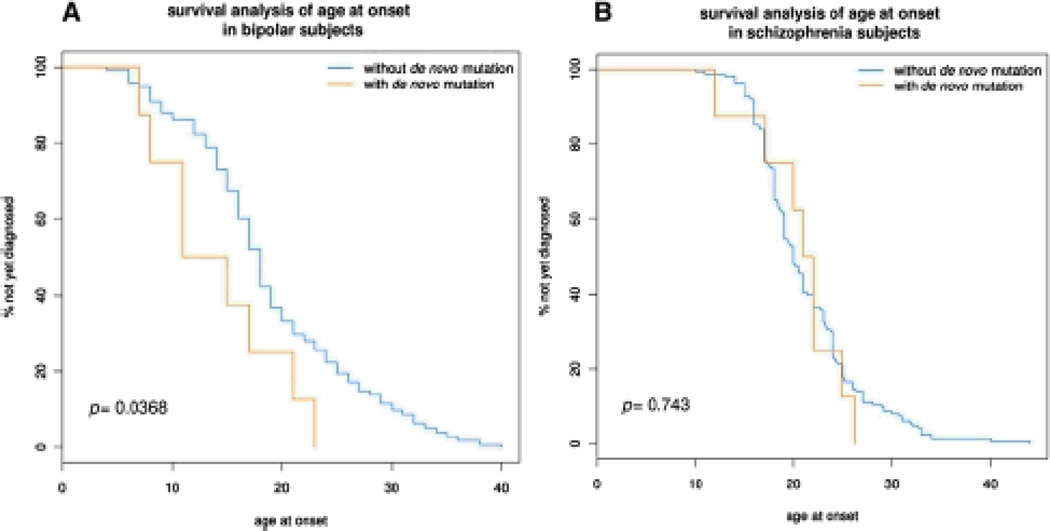
Figure 3. Survival Analysis of De Novo CNVs and Age at Onset in BD and SCZ
We performed a survival analysis/Kaplan-Meier test to analyze the effect of de novo mutations on age at onset in BD(n = 185, panel A) and SCZ (n = 177, panel B). This test determines whether “time to diagnosis” differs systematically between patients who have de novo mutations and those who do not. The test is formalized by performing the Mantel-Haenszel test on the survival curves and reporting the resulting p value.

Comment in

References

    1. Barnett JH, Smoller JW. The genetics of bipolar disorder. Neuroscience. 2009;164:331–343. - PMC - PubMed
    1. Baum AE, Hamshere M, Green E, Cichon S, Rietschel M, Noethen MM, Craddock N, McMahon FJ. Meta-analysis of two genome-wide association studies of bipolar disorder reveals important points of agreement. Mol. Psychiatry. 2008;13:466–467. - PMC - PubMed
    1. Clayton-Smith J, Giblin C, Smith RA, Dunn C, Willatt L. Familial 3q29 microdeletion syndrome providing further evidence of involvement of the 3q29 region in bipolar disorder. Clin. Dysmorphol. 2010;19:128–132. - PubMed
    1. Conrad DF, Pinto D, Redon R, Feuk L, Gokcumen O, Zhang Y, Aerts J, Andrews TD, Barnes C, Campbell P, et al. Wellcome Trust Case Control Consortium. Origins and functional impact of copy number variation in the human genome. Nature. 2010;464:704–712. - PMC - PubMed
    1. Ferreira MA, O’Donovan MC, Meng YA, Jones IR, Ruderfer DM, Jones L, Fan J, Kirov G, Perlis RH, Green EK, et al. Welcome Trust Case Control Consortium. Collaborative genome-wide association analysis supports a role for ANK3 and CACNA1C in bipolar disorder. Nat. Genet. 2008;40:1056–1058. - PMC - PubMed

Publication types