. 2012 Feb 1;52(3):705-715.
doi: 10.1016/j.freeradbiomed.2011.11.027. Epub 2011 Dec 16.

RETRACTED: NAD(P)H:quinone oxidoreductase 1 protects lungs from oxidant-induced emphysema in mice

Affiliations

RETRACTED: NAD(P)H:quinone oxidoreductase 1 protects lungs from oxidant-induced emphysema in mice

Erin N Potts-Kant et al. Free Radic Biol Med. .

Retraction in

Abstract

This article has been retracted: please see Elsevier Policy on Article Withdrawal (https://www.elsevier.com/about/our-business/policies/article-withdrawal). This article has been retracted at the request of the Authors. Since learning of potential discrepancies between the raw data from the animal pulmonary physiology laboratory at Duke that were used to calculate the in vivo pulmonary mechanics and the re-exported machine-generated raw data, some studies published elsewhere have been replicated successfully. However it is not possible to replicate this study as the NQO1-deficient mice on the C57BL/6 background are no longer available from the NCI. The authors recognize that previous work to identify differences in alveolar size can vary dependent on background strain when comparing inbred mouse strains (Soutiere SE et al Resp Physiol Neurobiol 2004;140(3)183–91 doi: 10.1016/j.resp.2004.02.003). Because of the prolonged period of time required to successfully backcross NQO1-deficient animals onto C57BL/6J background and the time required to repeat studies presented in this manuscript the authors think it does not seem feasible to conduct replicate studies in a reasonable timeline. Therefore, the most appropriate course of action is to retract the report as it is the authors' goal to maintain accuracy of the scientific record to the best of their ability. The authors offer sincere apologies to the scientific community.


Figures

Figure 1
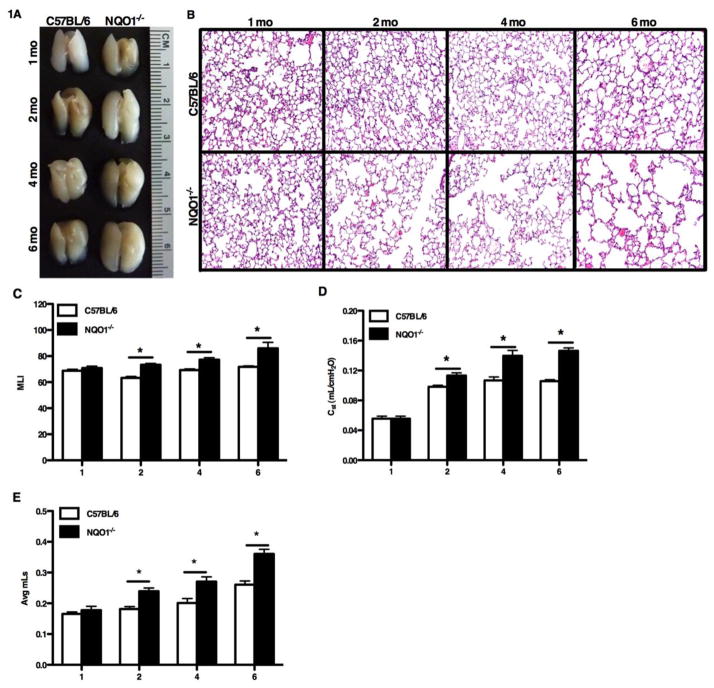
Figure 1. Naïve mice deficient in NQO1 develop accelerated emphysematous changes
Naïve age-matched C57BL/6 and NQO1 deficient mice were evaluated at 1, 2, 4 and 6 months. A, Gross lung photographs demonstrated that NQO1 deficient mice have physically larger lungs beginning at two months and continuing with age when compared to C57BL/6 lungs. B, Lung histology shows increased airspace enlargement in the NQO1 deficient mice beginning at two months of age with greater enlargement with age consistent with the development of premature emphysema. C–E, NQO1 deficient mice develop progressive airspace enlargement as measured my mean line intercept (MLI) (C), increased static compliance (D), and increased residual volume (E) when compared to C57BL/6 mice. The static compliance, residual volume and mean line intercept measurements were performed on 10 mice per group with 2 repeats. The values are presented as the mean ± SEM (*P <0.05).
Figure 2
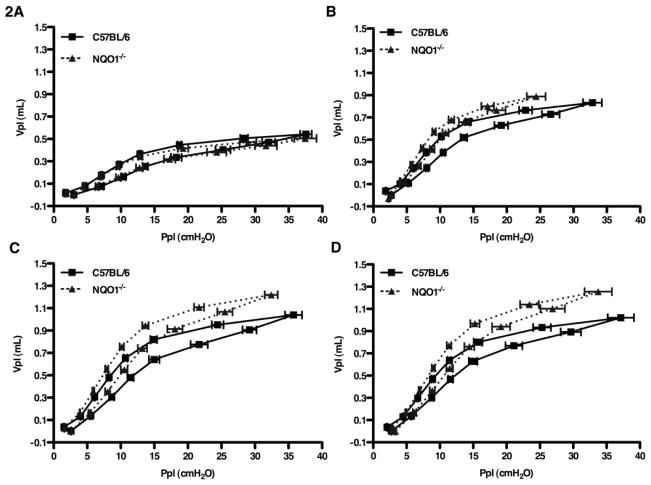
Figure 2. Pulmonary capacity impairment in aging NQO1 deficient mice
A–D, Pressure volume curves of NQO1 deficient mice compared to C57BL/6 mice at one (A), two (B), four (C) and six (D) months of age. Ppl is the airway tracheal pressure measured at each given volume (Vpl) on inflation and deflation steps (n=10 with 2 repeats).
Figure 3
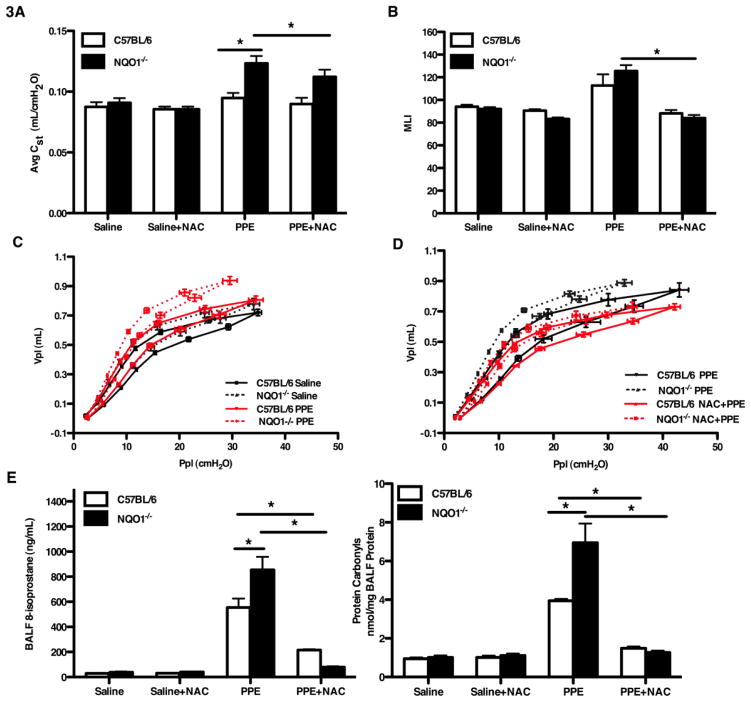
Figure 3. NQO1 deficient mice have enhanced development of elastase-induced emphysema
NQO1 deficient and C57BL/6 mice, age three weeks, were provided either standard water or water with the antioxidant, N-acetyl cysteine (NAC). At 4 weeks, these groups received either porcine pancreatic elastase (PPE) or saline by oropharyngeal aspiration and then analyzed thirteen days post exposure. A, C, D, Static lung compliance (A) and pressure volume measurements (C, D) demonstrated an increase in compliance of the elastase treated NQO1 deficient mice as compared to WT mice. These effects were reversed by pre-treatment with NAC. B, Enhanced airspace enlargement (as measured by mean line intercept) in NQO1 deficient and WT mice after elastase exposure was also reversed with NAC pretreatment. E, 8-isoprostane and protein carbonyl concentrations (measurements of oxidative stress) were quantitated from the BALF. The values in A, B and E represent the mean ± SEM of evaluations of > 10 mice with 2 repeats (*P <0.05)
Figure 4
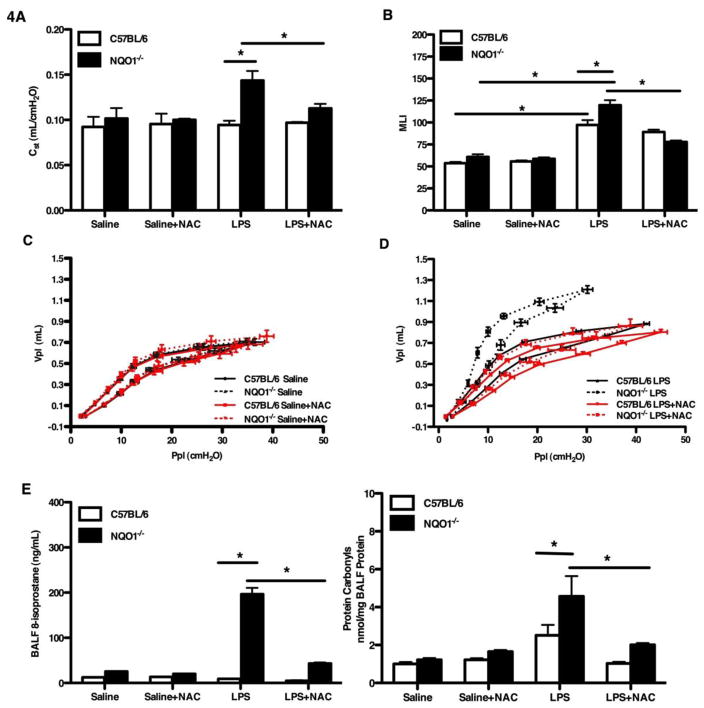
Figure 4. NQO1 deficient mice have enhanced development of LPS-induced emphysema
At three weeks of age, NQO1 deficient and C57BL/6 mice were pretreated with standard or NAC treated water and then exposed to LPS on alternating days (3 times) at four weeks of age and then allowed to recover for four weeks. A–D, Measurements of emphysematous changes: static lung compliance (A), alveolar space enlargement (MLI) (B), pressure volume measurements (C, D) from LPS/Saline ± NAC treated NQO1 deficient and C57BL/6 mice. E, Oxidative stress levels were quantitated by measuring 8-isoprostanes and protein carbonyls in the BALF. The values in A, B and E represent the mean ± SEM of evaluations of > 10 mice with 2 repeats (*P <0.05)
Figure 5
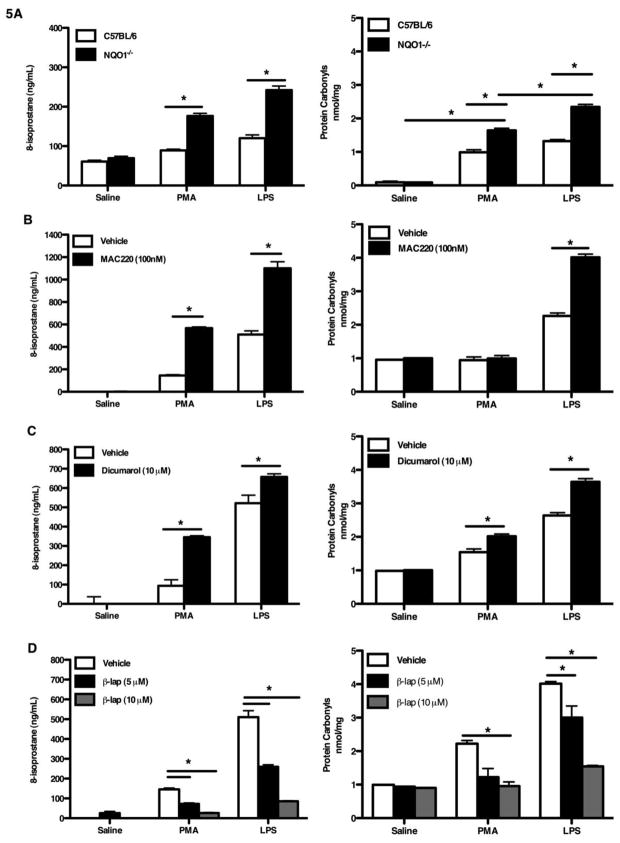
Figure 5. Induction or suppression of NQO1 altered macrophage ability to elaborate 8-isprostane after oxidant stress
Alveolar macrophages were obtained from BAL in C57BL/6 and NQO1 deficient mice. The macrophages were cultured and then stimulated with either saline, LPS or PMA (A). The supernatants were collected and evaluated for 8-isoprostane and protein carbonyl concentrations. Mouse alveolar macrophage cell line (MHS) were cultured and then stimulated with either vehicle, LPS or PMA and the supernatants analyzed for 8-isoprostanes. B-D, The MHS cells were pre-treated with the NQO1 inhibitors MAC220 (B) or Dicumarol (C) followed by exposure to LPS or PMA. D, The MHS cells were pre-treated with a NQO1 inducer (β-Lapachone) prior to LPS or PMA exposure. All values represent the mean ± SEM (*P <0.05).

Comment in

  • Findings of Research Misconduct.
    [No authors listed] [No authors listed] Fed Regist. 2019 Nov 7;84(216):60097-60098. Fed Regist. 2019. PMID: 37547121 Free PMC article. No abstract available.

References

    1. Lopez AD, et al. Global and regional burden of disease and risk factors, 2001: systematic analysis of population health data. Lancet. 2006;367(9524):1747–57. - PubMed
    1. Pauwels RA, et al. Global strategy for the diagnosis, management, and prevention of chronic obstructive pulmonary disease. NHLBI/WHO Global Initiative for Chronic Obstructive Lung Disease (GOLD) Workshop summary. Am J Respir Crit Care Med. 2001;163(5):1256–76. - PubMed
    1. Boutten A, et al. Oxidative stress targets in pulmonary emphysema: focus on the Nrf2 pathway. Expert Opin Ther Targets. 2010;14(3):329–46. - PubMed
    1. Janoff A. Elastases and emphysema. Current assessment of the protease-antiprotease hypothesis. Am Rev Respir Dis. 1985;132(2):417–33. - PubMed
    1. Taraseviciene-Stewart L, Voelkel NF. Molecular pathogenesis of emphysema. J Clin Invest. 2008;118(2):394–402. - PMC - PubMed

Publication types

MeSH terms