


Outcome of lower-intensity allogeneic transplantation in non-Hodgkin lymphoma after autologous transplantation failure
- PMID: 22198543
- PMCID: PMC3376237
- DOI: 10.1016/j.bbmt.2011.12.581
Outcome of lower-intensity allogeneic transplantation in non-Hodgkin lymphoma after autologous transplantation failure
Abstract
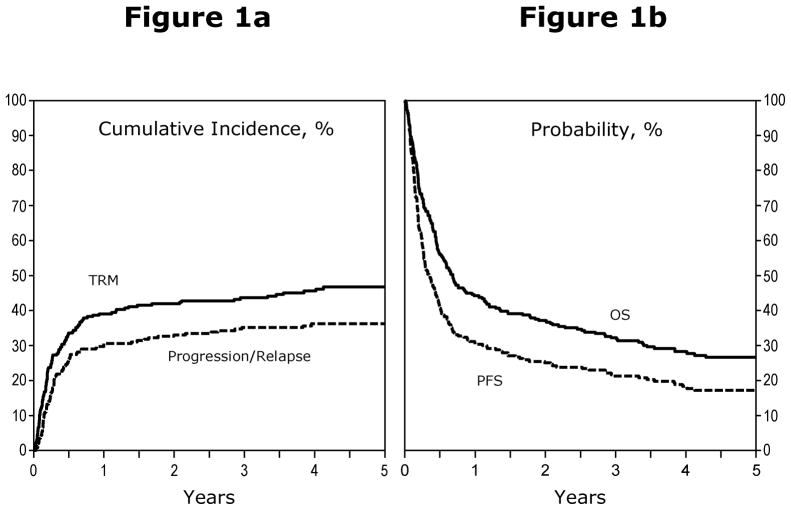
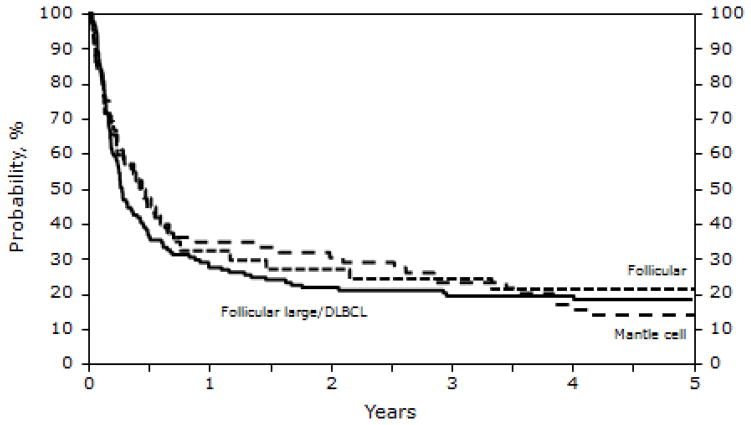
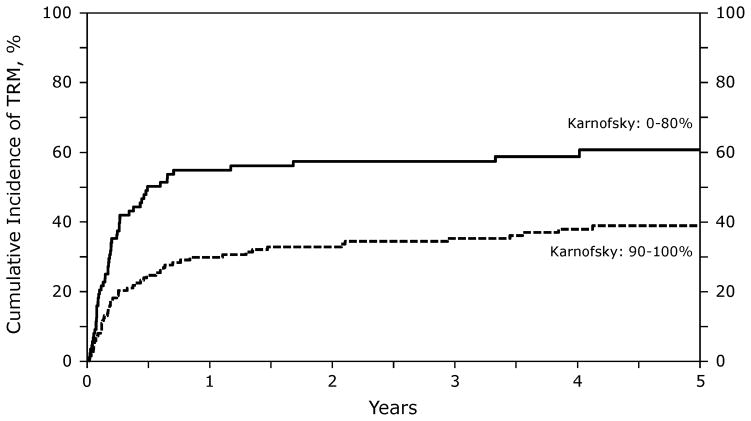
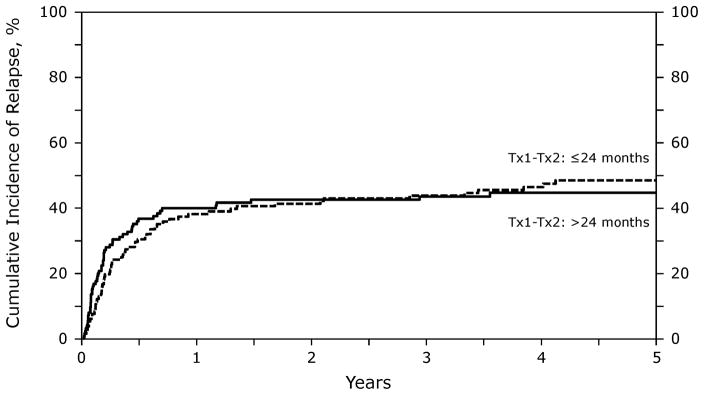
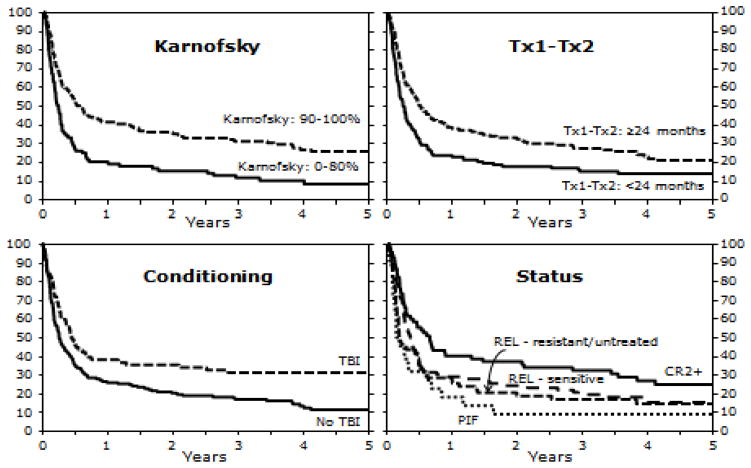
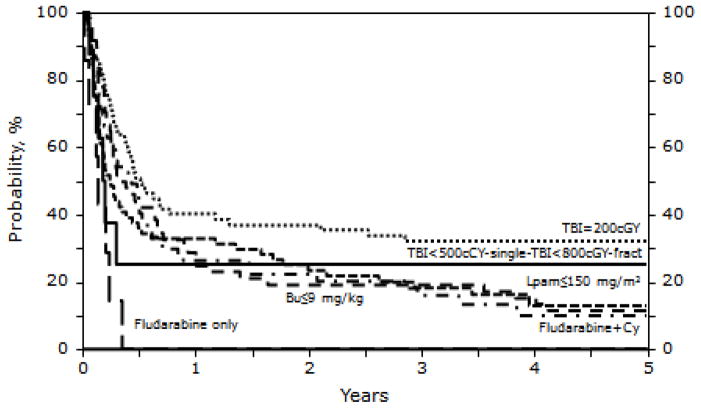
We studied the outcome of allogeneic hematopoietic stem cell transplantation after lower-intensity conditioning regimens (reduced-intensity conditioning and nonmyeloablative) in patients with non-Hodgkin lymphoma who relapsed after autologous hematopoietic stem cell transplantation. Nonrelapse mortality, lymphoma progression/relapse, progression-free survival (PFS), and overall survival were analyzed in 263 patients with non-Hodgkin lymphoma. All 263 patients had relapsed after a previous autologous hematopoietic stem cell transplantation and then had undergone allogeneic hematopoietic stem cell transplantation from a related (n = 26) or unrelated (n = 237) donor after reduced-intensity conditioning (n = 128) or nonmyeloablative (n = 135) and were reported to the Center for International Blood and Marrow Transplant Research between 1996 and 2006. The median follow-up of survivors was 68 months (range, 3-111 months). Three-year nonrelapse mortality was 44% (95% confidence interval [CI], 37%-50%). Lymphoma progression/relapse at 3 years was 35% (95% CI, 29%-41%). Three-year probabilities of PFS and overall survival were 21% (95% CI, 16%-27%) and 32% (95% CI, 27%-38%), respectively. Superior Karnofsky Performance Score, longer interval between transplantations, total body irradiation-based conditioning regimen, and lymphoma remission at transplantation were correlated with improved PFS. Allogeneic hematopoietic stem cell transplantation after lower-intensity conditioning is associated with significant nonrelapse mortality but can result in long-term PFS. We describe a quantitative risk model based on pretransplantation risk factors to identify those patients likely to benefit from this approach.
Copyright © 2012 American Society for Blood and Marrow Transplantation. Published by Elsevier Inc. All rights reserved.
Figures
Comment in
-
Second transplants for NHL: if at first you don't succeed….Biol Blood Marrow Transplant. 2012 Aug;18(8):1148-9. doi: 10.1016/j.bbmt.2012.05.018. Epub 2012 Jul 4. Biol Blood Marrow Transplant. 2012. PMID: 22772132 No abstract available.
References
-
- Vose JM, Zhang MJ, Rowlings PA, et al. Autologous transplantation for diffuse aggressive non-Hodgkin’s lymphoma in patients never achieving remission: a report from the Autologous Blood and Marrow Transplant Registry. J Clin Oncol. 2001;19:406–413. - PubMed
-
- Lazarus HM, Loberiza FR, Jr, Zhang MJ, et al. Autotransplants for Hodgkin’s disease in first relapse or second remission: a report from the autologous blood and marrow transplant registry (ABMTR) Bone Marrow Transplant. 2001;27:387–396. - PubMed
-
- Copelan EA. Hematopoietic stem-cell transplantation. N Engl J Med. 2006;354:1813–1826. - PubMed
-
- Vandenberghe E, Pearce R, Taghipour G, Fouillard L, Goldstone AH. Role of a second transplant in the management of poor-prognosis lymphomas: a report from the European Blood and Bone Marrow Registry. J Clin Oncol. 1997;15:1595–1600. - PubMed
Publication types
MeSH terms
Grants and funding
LinkOut - more resources
Full Text Sources
