


Treatments to restore respiratory function after spinal cord injury and their implications for regeneration, plasticity and adaptation
- PMID: 22200541
- PMCID: PMC3334458
- DOI: 10.1016/j.expneurol.2011.12.018
Treatments to restore respiratory function after spinal cord injury and their implications for regeneration, plasticity and adaptation
Abstract
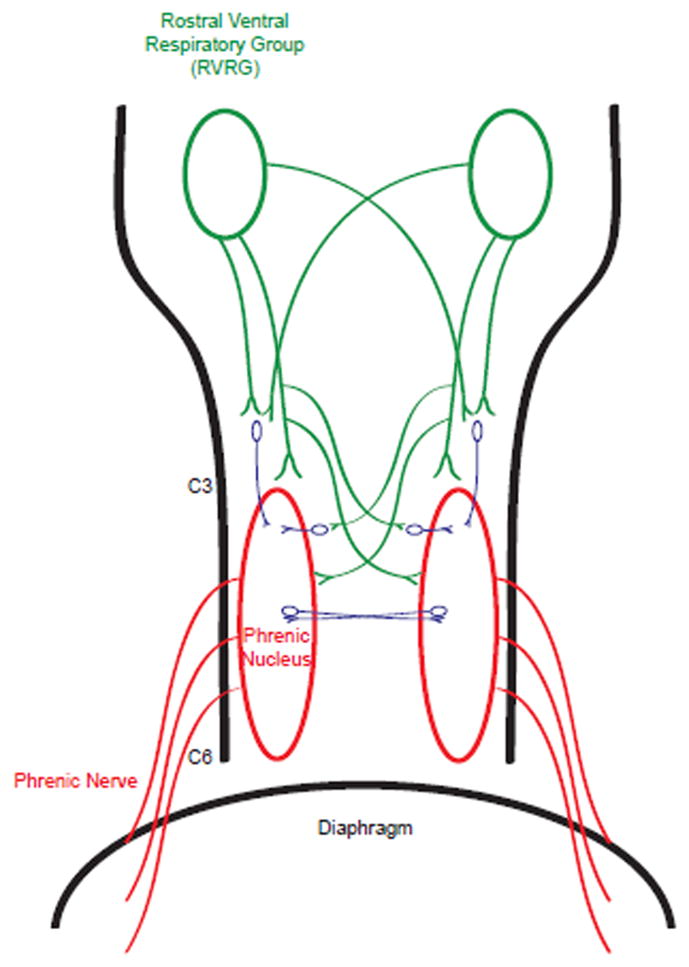
Spinal cord injury (SCI) often leads to impaired breathing. In most cases, such severe respiratory complications lead to morbidity and death. However, in the last few years there has been extensive work examining ways to restore this vital function after experimental spinal cord injury. In addition to finding strategies to rescue breathing activity, many of these experiments have also yielded a great deal of information about the innate plasticity and capacity for adaptation in the respiratory system and its associated circuitry in the spinal cord. This review article will highlight experimental SCI resulting in compromised breathing, the various methods of restoring function after such injury, and some recent findings from our own laboratory. Additionally, it will discuss findings about motor and CNS respiratory plasticity and adaptation with potential clinical and translational implications.
Copyright © 2011 Elsevier Inc. All rights reserved.
Figures
References
-
- Alilain WJ, Horn KP, Dick TE, Silver J. 2006 Neuroscience Meeting Planner. Atlanta, GA: Society for Neuroscience; 2006. Chondroitinase ABC-induced reduction of chondroitin sulfate proteoglycans and the perineuronal net following C2 hemisection. Program No. 720.7. Online.
-
- Alilain WJ, Horn KP, Dick TE, Silver J. 2007 Neuroscience Meeting Planner. San Diego, CA: Society for Neuroscience; 2007. Chondroitinase ABC treatment following C2 hemisection results in dramatically enhanced ipsilateral hemi-diaphragmatic recovery. Program No. 137.4. Online.
Publication types
MeSH terms
Grants and funding
LinkOut - more resources
Full Text Sources
Medical
