


LTR retrotransposons contribute to genomic gigantism in plethodontid salamanders
- PMID: 22200636
- PMCID: PMC3318908
- DOI: 10.1093/gbe/evr139
LTR retrotransposons contribute to genomic gigantism in plethodontid salamanders
Abstract
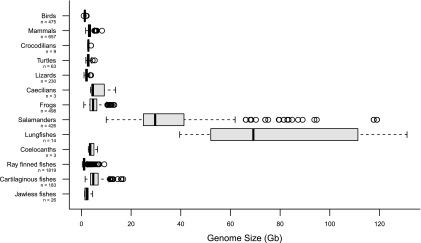
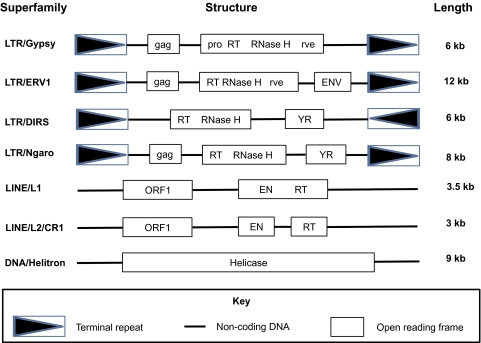
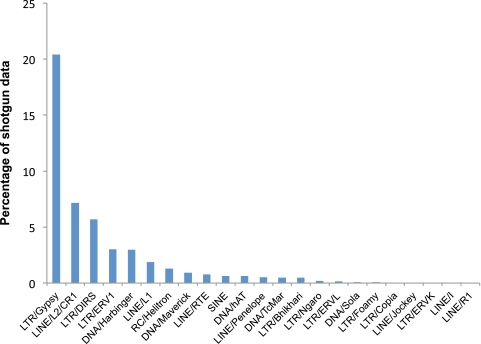
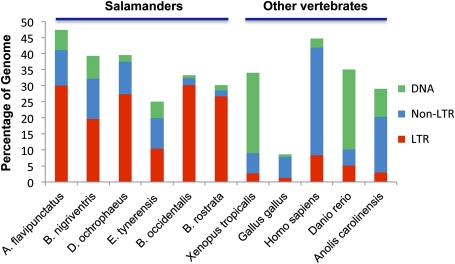
Among vertebrates, most of the largest genomes are found within the salamanders, a clade of amphibians that includes 613 species. Salamander genome sizes range from ~14 to ~120 Gb. Because genome size is correlated with nucleus and cell sizes, as well as other traits, morphological evolution in salamanders has been profoundly affected by genomic gigantism. However, the molecular mechanisms driving genomic expansion in this clade remain largely unknown. Here, we present the first comparative analysis of transposable element (TE) content in salamanders. Using high-throughput sequencing, we generated genomic shotgun data for six species from the Plethodontidae, the largest family of salamanders. We then developed a pipeline to mine TE sequences from shotgun data in taxa with limited genomic resources, such as salamanders. Our summaries of overall TE abundance and diversity for each species demonstrate that TEs make up a substantial portion of salamander genomes, and that all of the major known types of TEs are represented in salamanders. The most abundant TE superfamilies found in the genomes of our six focal species are similar, despite substantial variation in genome size. However, our results demonstrate a major difference between salamanders and other vertebrates: salamander genomes contain much larger amounts of long terminal repeat (LTR) retrotransposons, primarily Ty3/gypsy elements. Thus, the extreme increase in genome size that occurred in salamanders was likely accompanied by a shift in TE landscape. These results suggest that increased proliferation of LTR retrotransposons was a major molecular mechanism contributing to genomic expansion in salamanders.
Figures

References
-
- Agren JA, Wright SI. Co-evolution between transposable elements and their hosts: a major factor in genome size evolution? Chromosome Res. 2011;19:777–786. - PubMed
-
- AmphibiaWeb . AmphibiaWeb: information on amphibian biology and conservation. 2011. [Internet]. Berkeley (CA): AmphibiaWeb. [cited 2011 Sep 26]. Available from: http://amphibiaweb.org.
-
- Baldari CT, Amaldi F. DNA reassociation kinetics in relation to genome size in four amphibian species. Chromosoma. 1976;59:13–22. - PubMed
Publication types
MeSH terms
Substances
Grants and funding
LinkOut - more resources
Full Text Sources
Other Literature Sources
