The interaction of perceived risk and benefits and the relationship to predicting mammography adherence in African American women
- PMID: 22201655
- PMCID: PMC3721522
- DOI: 10.1188/12.ONF.53-60
The interaction of perceived risk and benefits and the relationship to predicting mammography adherence in African American women
Abstract
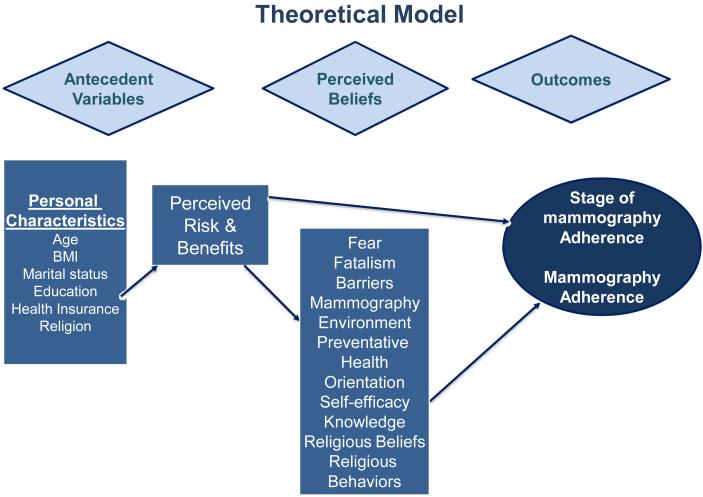
Purpose/objectives: To test the interaction of perceived risk and benefits and how they impact stage of mammography readiness and adherence.
Design: Cross-sectional study.
Setting: Community gathering centers and healthcare clinics across Indiana.
Sample: 299 African American women who had not had a mammogram in more than 18 months.
Methods: In-person interviews were used to collect data on sociodemographics, health belief variables, and stage of readiness to undertake mammography screening. Four categories were created to measure the combined magnitude of high or low levels of perceived risk and benefit, with health belief variables linked to modified mammography screening behavior.
Main research variables: Perceived risks and benefits, stage of readiness, and mammography adherence.
Findings: The lowest rate of mammography adherence was in women with a high perceived risk and low perceived benefit toward mammography adherence (26%). The highest rate of adherence was in women with a high perceived benefit and low perceived risk (46%). Differences in mammography adherence were statistically significant between the groups (p = 0.009).
Conclusions: The interaction of high perceived risk and low perceived benefits impacted readiness to undergo screening mammography.
Implications for nursing: Reducing disparities in breast cancer diagnosis and survival requires timely and efficient mammography adherence. African American medically underserved women with high perceived risk and low perceived benefits exhibited a reluctance to move forward with mammography adherence. Interventions are needed to increase the perception of mammography benefit and to subsequently reduce breast cancer mortality rates in that population.
References
-
- Adams ML, Becker H, Colbert A. African-American women’s perceptions of mammography screening. Journal of National Black Nurses Association. 2001;12:44–48. - PubMed
-
- Allen JD, Sorensen G, Stoddard AM, Colditz G, Peterson K. Intention to have a mammogram in the future among women who have underused mammography in the past. Health Education & Behavior. 1998;25:474–488. - PubMed
-
- American Cancer Society . Cancer Facts & Figures 2009-2010. American Cancer Society; Atlanta: 2010.
-
- Champion V, Skinner CS. Difference in perceptions of risk, benefits, and barriers by stage of mammography adoption. Journal of Women’s Health. 2003;12:277–286. doi:10.1089/154099903321667618. - PubMed
-
- Champion V, Skinner CS, Menon U. Development of a self-efficacy scale for mammography. Research in Nursing & Health. 2005;28:329–336. doi:10.1002/nur.20088. - PubMed
Publication types
MeSH terms
Grants and funding
LinkOut - more resources
Full Text Sources
Medical