TAp73alpha protects small cell lung carcinoma cells from caspase-2 induced mitochondrial mediated apoptotic cell death
- PMID: 22201672
- PMCID: PMC3282073
- DOI: 10.18632/oncotarget.391
TAp73alpha protects small cell lung carcinoma cells from caspase-2 induced mitochondrial mediated apoptotic cell death
Abstract
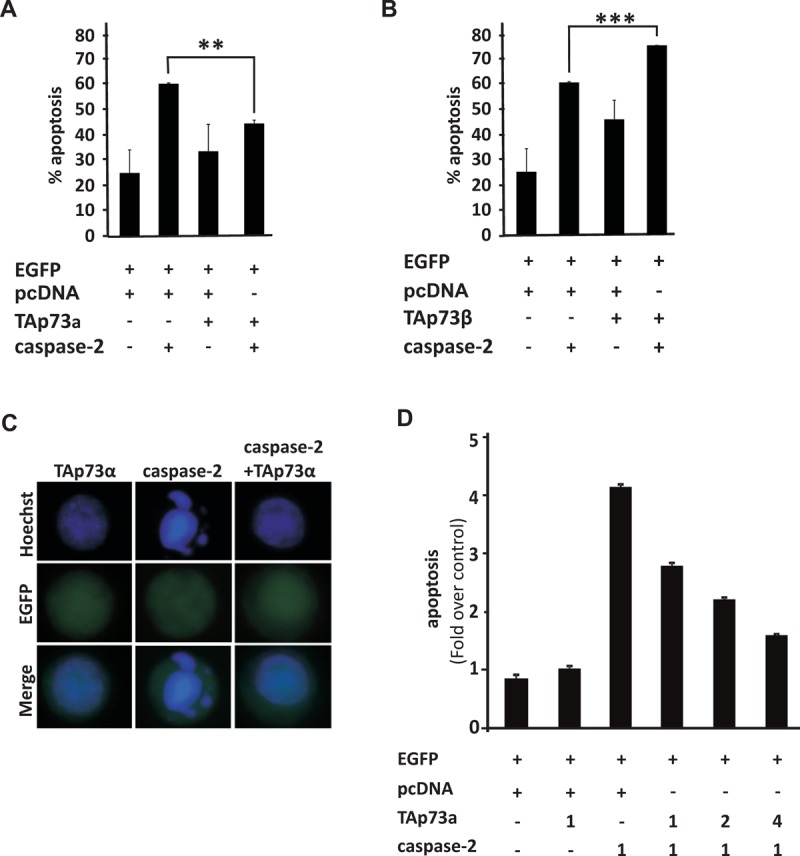
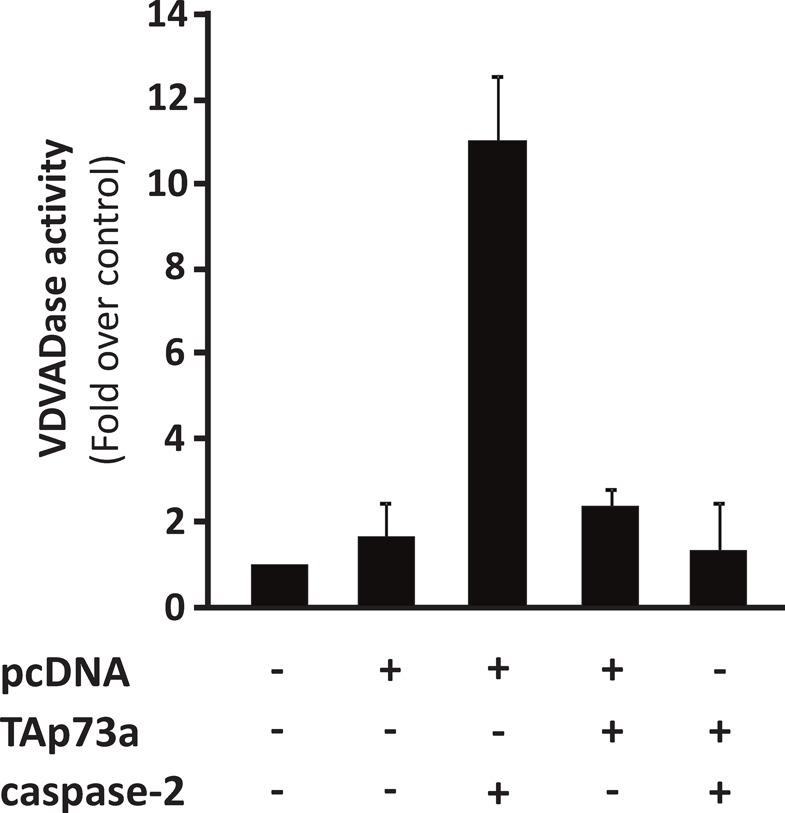
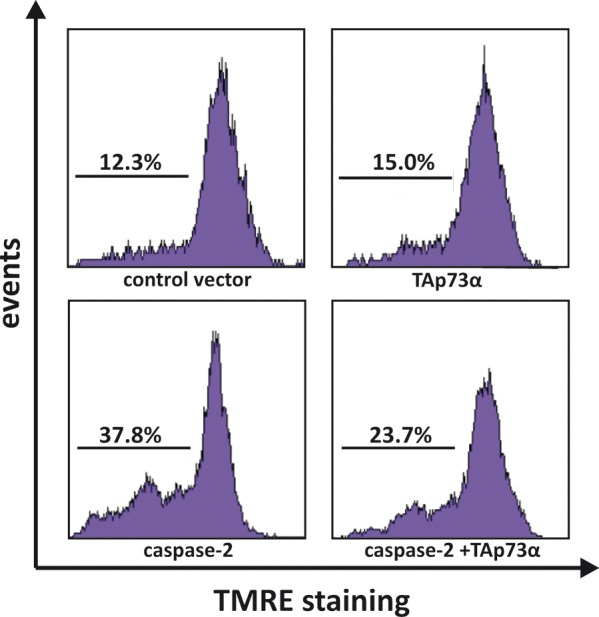
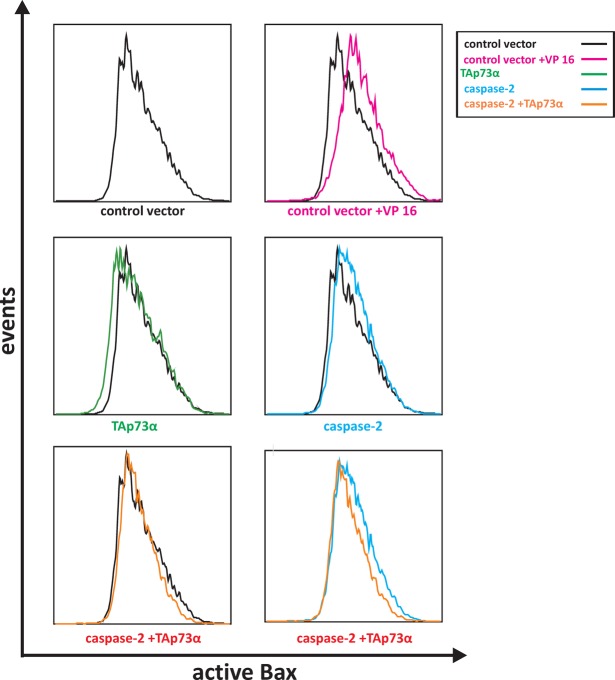
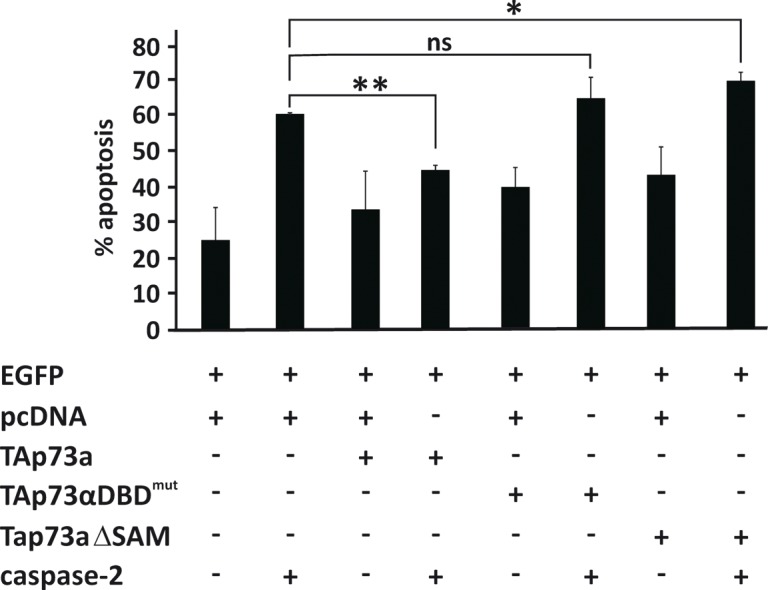
Caspase-2 is ubiquitously expressed and the most evolutionarily conserved mammalian caspase. It can be activated by a range of death stimuli prior to Bax activation and the occurrence of apoptotic mitochondrial dysfunctions. Caspase-2 has also been reported to exert tumour suppressor function in vivo. The full length TAp73alpha isoform is found up-regulated in various tumour types, and is reported in a cell-type specific manner to repress drug-induced apoptosis. Here, we report that TAp73alpha represses caspase-2 enzymatic activity and by this means reduce caspase-2 induced Bax activation, loss of mitochondrial transmembrane potential and resulting apoptosis. The inhibitory effect on caspase-2 requires the presence of the DNA binding domain and SAM domain region of TAp73alpha. In conclusion, the ability of TAp73alpha to act as an inhibitor of caspase-2-induced cell death together with its up-regulation in certain tumour types strengthen the potential oncogenic activities for this protein.
Conflict of interest statement
The authors confirm that there are no conflicts of interest.
Figures
References
-
- Tomasini R, Seux M, Nowak J, Bontemps C, Carrier A, Dagorn JC, Pébusque MJ, Iovanna JL, Dusetti NJ. TP53INP1 is a novel p73 target gene that induces cell cycle arrest and cell death by modulating p73 transcriptional activity. Oncogene. 2005;24:8093–8104. - PubMed
-
- Dobbelstein M, Strano S, Roth J, Blandino G. p73-induced apoptosis: a question of compartments and cooperation. Biochem Biophys Res Commun. 2005;331:688–693. - PubMed
-
- Marqués-García F, Ferrandiz N, Fernández-Alonso R, González-Cano L, Herreros-Villanueva M, Rosa-Garrido M, Fernández-García B, Vaque JP, Marqués MM, Alonso ME, Segovia JC, León J, Marín MC, et al. p73 plays a role in erythroid differentiation through GATA1 induction. J Biol Chem. 2009;284:21139–21156. - PMC - PubMed
-
- Yang A, Kaghad M, Caput D, McKeon F. On the shoulders of giants: p63, p73 and the rise of p53. Trends Genet. 2002;18:90–95. - PubMed
Publication types
MeSH terms
Substances
LinkOut - more resources
Full Text Sources
Other Literature Sources
Medical
Research Materials