Suppression of autophagy by BCR/ABL
- PMID: 22202070
- PMCID: PMC7405106
- DOI: 10.2741/278
Suppression of autophagy by BCR/ABL
Abstract
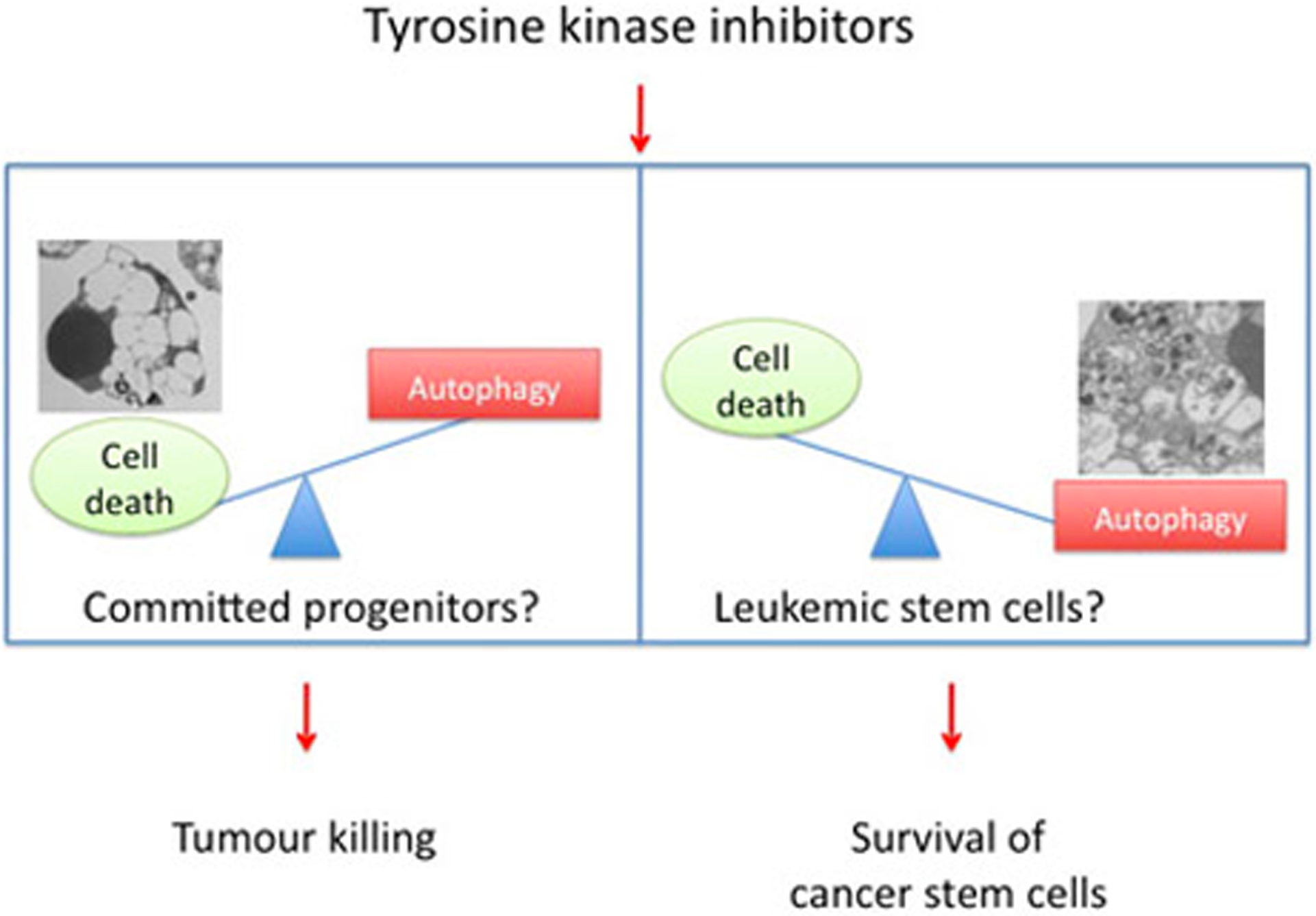
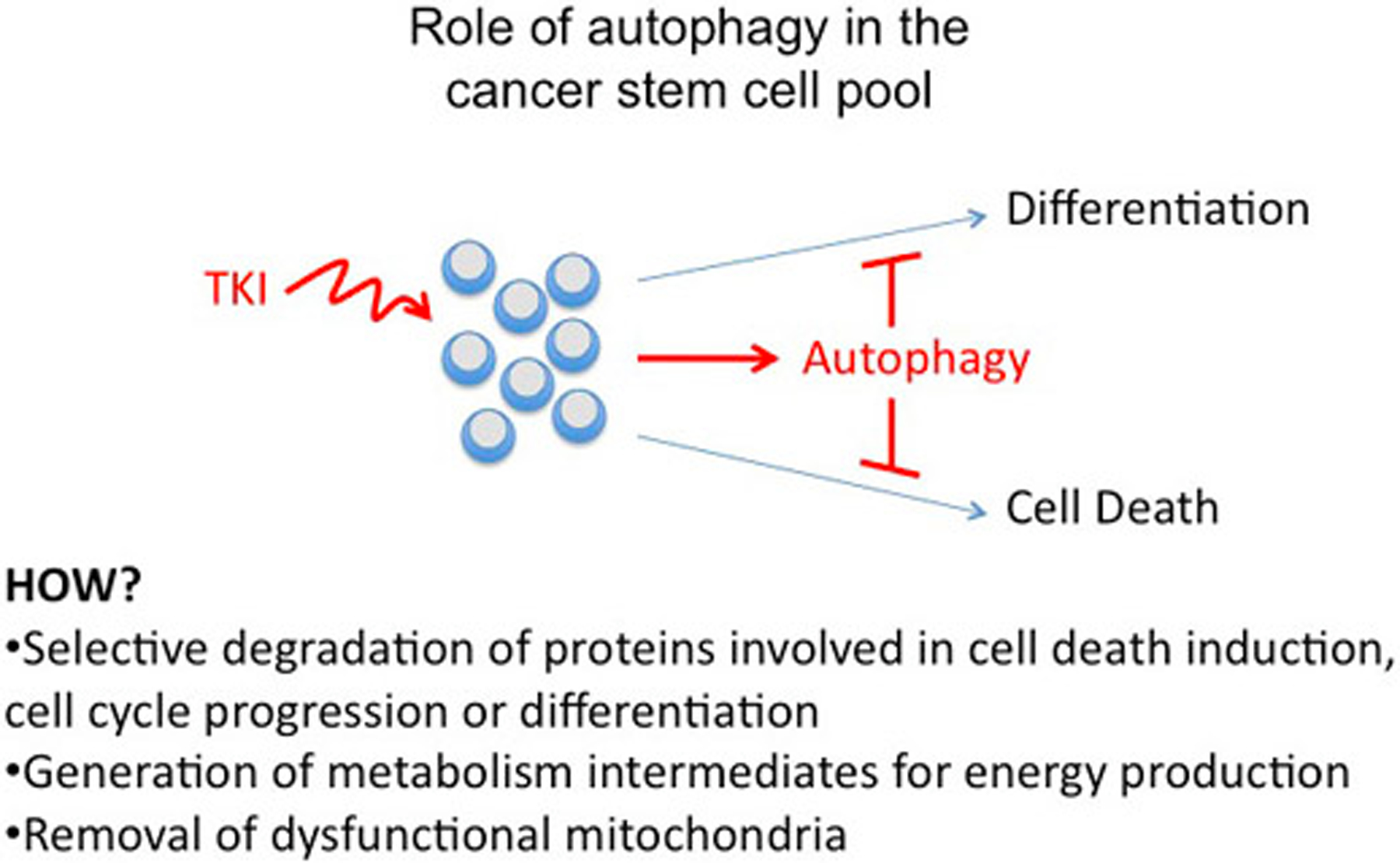
Imatinib and second generation BCR/ABL tyrosine kinase inhibitors (TKIs) serve now as standard therapies for patients with chronic myelogenous leukemia (CML); however, CML stem cells are intrinsically insensitive to the cell death-inducing effects of TKIs, allowing the persistence of a "reservoir" of BCR/ABL-expressing CML-initiating cells potentially responsible for disease relapse and progression. Although it is still controversial whether the "insensitivity" of CML stem cells to treatment with TKI is due to BCR/ABL-dependent or independent mechanisms, treatment with IM appears to suppress BCR/ABL-dependent signaling in CML stem cells with no adverse effects on their survival. Recent evidence indicates that BCR/ABL suppresses and treatment of CML cells with IM/TKIs induces autophagy, a genetically-regulated process of adaptation to metabolic stress which could allow tumor cells to become metabolically inert enabling their survival under conditions that may mimic growth factor/nutrients deprivation. Based on this hypothesis, TKI-induced autophagy may "antagonize" TKI-induced cell death and inhibition of autophagy may eliminate this survival mechanism by restoring "sensitivity" of CML stem cells to treatment with IM/TKI. Consistent with this, phenotypically and functionally defined CML-enriched stem cells insensitive to treatment with TKI are efficiently eliminated by the combination of TKI and chloroquine, an inhibitor of late stage autophagy. Thus, inhibition of autophagy may improve the potent and specific effects of TKIs by rendering CML stem cells sensitive to these targeted therapies.
Figures
References
-
- Kantarjian HM, Keating MJ, Talpaz M, Walters RS, Smith TL, Cork A, McCredie KB, Freireich EJ: Chronic myelogenous leukemia in blast crisis. Analysis of 242 patients. Am J Med 83,445–454 (1987) - PubMed
-
- Savage DG, Szydlo RM, Goldman JM. Clinical features at diagnosis in 430 patients with chronic myeloid leukaemia seen at a referral centre over a 16-year period: Br J Haematol 96,111–116 (1997) - PubMed
-
- Spiers AS. Clinical manifestations of chronic granulocytic leukemia: Semin Oncol 22, 380–340 (1995) - PubMed
-
- Ben-Neriah Y, Daley GQ, Mes-Masson AM, Witte ON, Baltimore D. The chronic myelogenous leukemia-specific P210 protein is the product of the bcr/abl hybrid gene: Science 233, 212–214 (1986) - PubMed
Publication types
MeSH terms
Substances
Grants and funding
LinkOut - more resources
Full Text Sources
Medical
Miscellaneous