


The effect of traditional cupping on pain and mechanical thresholds in patients with chronic nonspecific neck pain: a randomised controlled pilot study
- PMID: 22203873
- PMCID: PMC3235710
- DOI: 10.1155/2012/429718
The effect of traditional cupping on pain and mechanical thresholds in patients with chronic nonspecific neck pain: a randomised controlled pilot study
Abstract
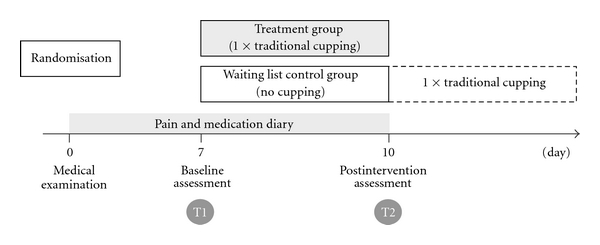
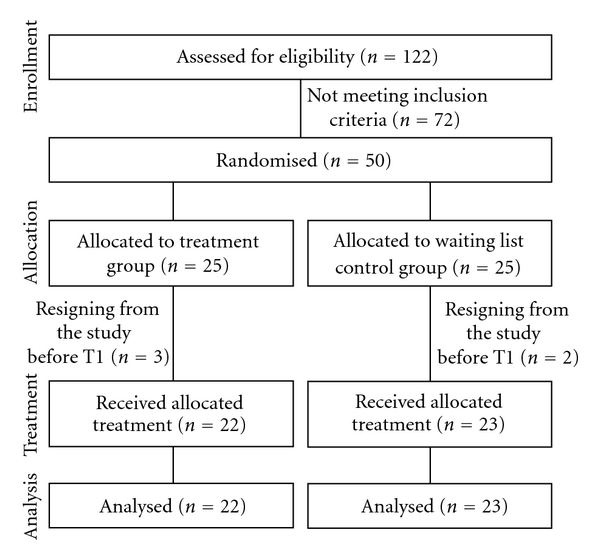
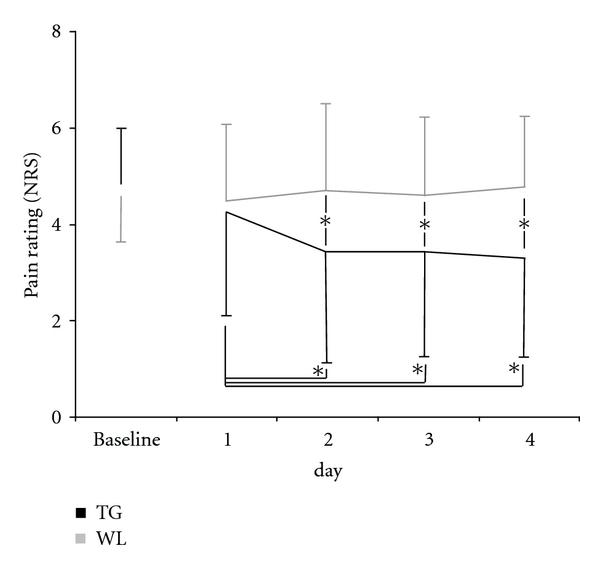
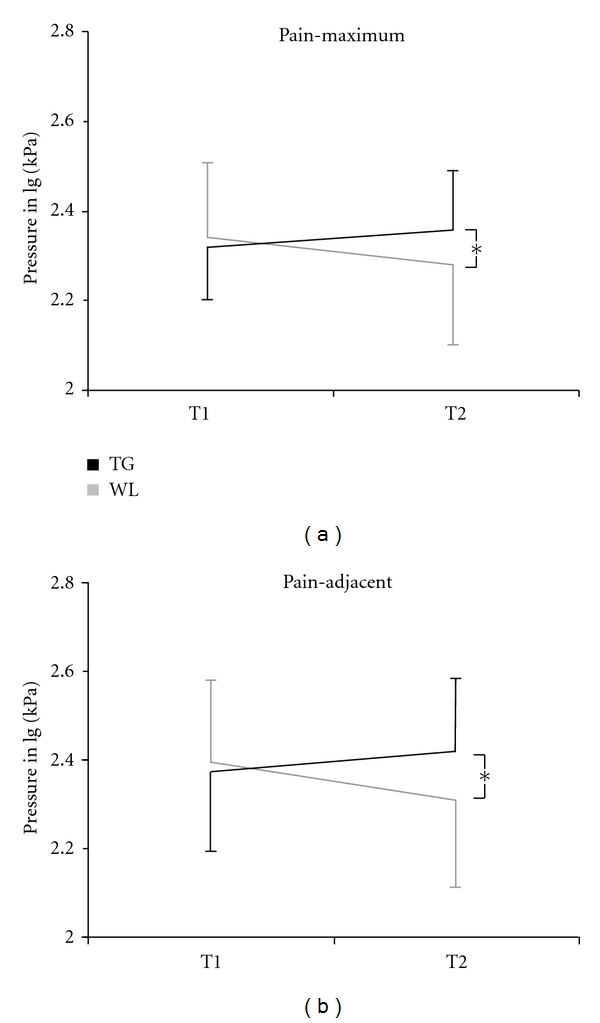
Introduction. Cupping has been used since antiquity in the treatment of pain conditions. In this pilot study, we investigated the effect of traditional cupping therapy on chronic nonspecific neck pain (CNP) and mechanical sensory thresholds. Methods. Fifty CNP patients were randomly assigned to treatment (TG, n = 25) or waiting list control group (WL, n = 25). TG received a single cupping treatment. Pain at rest (PR), pain related to movement (PM), quality of life (SF-36), Neck Disability Index (NDI), mechanical detection (MDT), vibration detection (MDT), and pressure pain thresholds (PPT) were measured before and three days after a single cupping treatment. Patients also kept a pain and medication diary (PaDi, MeDi) during the study. Results. Baseline characteristics were similar in the two groups. After cupping TG reported significantly less pain (PR: -17.9 mm VAS, 95%CI -29.2 to -6.6; PM: -19.7, 95%CI -32.2 to -7.2; PaDi: -1.5 points on NRS, 95%CI -2.5 to -0.4; all P < 0.05) and higher quality of life than WL (SF-36, Physical Functioning: 7.5, 95%CI 1.4 to 13.5; Bodily Pain: 14.9, 95%CI 4.4 to 25.4; Physical Component Score: 5.0, 95%CI 1.4 to 8.5; all P < 0.05). No significant effect was found for NDI, MDT, or VDT, but TG showed significantly higher PPT at pain-areas than WL (in lg(kPa); pain-maximum: 0.088, 95%CI 0.029 to 0.148, pain-adjacent: 0.118, 95%CI 0.038 to 0.199; both P < 0.01). Conclusion. A single application of traditional cupping might be an effective treatment for improving pain, quality of life, and hyperalgesia in CNP.
Figures
References
-
- Merskey H, Bogduk N. Classification of Chronic Pain: Description Of Chronic Pain Syndromes and Definitions of Pain Terms. Seattle, Wash, USA: IASP Press ; 1994.
-
- Binder A. The diagnosis and treatment of nonspecific neck pain and whiplash. Europa Medicophysica. 2007;43(1):79–89. - PubMed
-
- Linton SJ. A review of psychological risk factors in back and neck pain. Spine. 2000;25(9):1148–1156. - PubMed
LinkOut - more resources
Full Text Sources
Medical
Research Materials
Miscellaneous
