


Comment
doi: 10.1038/ki.2011.301.
Cysteamine therapy: a treatment for cystinosis, not a cure
- PMID: 22205430
- PMCID: PMC3386783
- DOI: 10.1038/ki.2011.301
Item in Clipboard
Comment
Cysteamine therapy: a treatment for cystinosis, not a cure
Kidney Int.
2012 Jan.
Abstract
Cystinosis as a clinical entity is a progressive dysfunction of multiple organs caused by the accumulation of cystine in the tissues, leading, for example, to end-stage renal failure, diabetes, hypothyroidism, myopathy, and central nervous system deterioration. Brodin-Sartorius and colleagues present a long-term study on the impact of cysteamine therapy on these complications. The data show that cysteamine improves the outcome and complications of cystinosis but does not prevent them.
Conflict of interest statement
The author declared no competing interests.
Figures
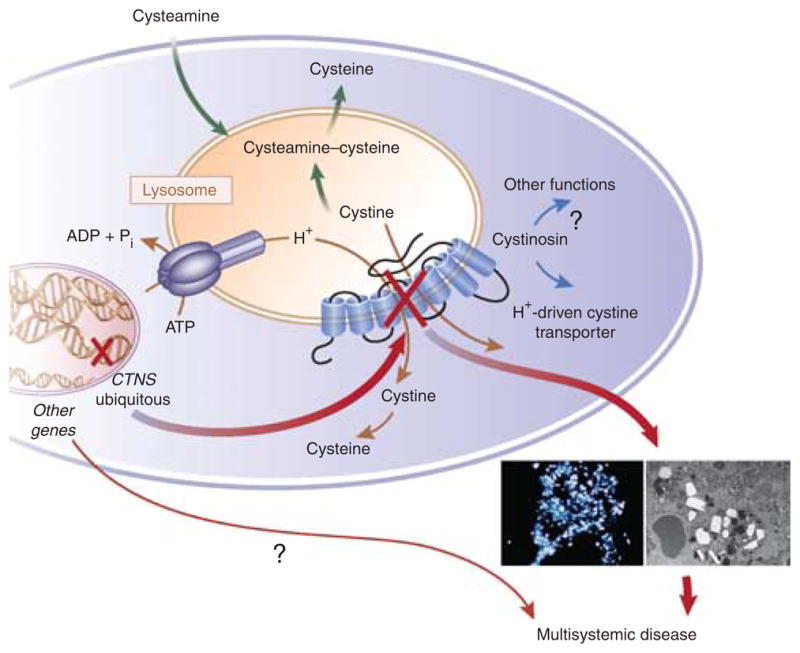
Cystinosis is a monogenic hereditary disease caused by mutations or deletions in the ubiquitous gene CTNS. This gene encodes a seven-transmembrane lysosomal protein, which is a proton-driven cystine transporter. However, the physiopathology of cystinosis suggests that cystinosin has other functions and/or other genes influence the pace and extent of the disease. This could explain the high variability in age of the appearance and severity of the complications observed in patients taking cysteamine, which allows cystine to exit the lysosomes. ADP, adenosine diphosphate; ATP, adenosine triphosphate; Pi, inorganic phosphate.
Comment on
-
Kidney preservation by bone marrow cell transplantation in hereditary nephropathy.Kidney Int. 2011 Jun;79(11):1198-206. doi: 10.1038/ki.2010.537. Epub 2011 Jan 19. Kidney Int. 2011. PMID: 21248718
References
-
- Gahl WA, Thoene J, Schneider JA. Cystinosis: a disorder of lysosomal membrane transport. In: Scriver CR, Beaudet AL, Sly WS, Valle D, editors. The Metabolic and Molecular Bases of Inherited Disease. 8. Vol. 3. McGraw Hill; NewYork: 2001. pp. 5085–5108.
-
- Gahl WA, Balog JZ, Kleta R. Nephropathic cystinosis in adults: natural history and effects of oral cysteamine therapy. Ann Intern Med. 2007;147:242–250. - PubMed
-
- Nesterova G, Gahl W. Nephropathic cystinosis: late complications of a multisystemic disease. Pediatr Nephrol. 2008;23:863–878. - PubMed
Publication types
MeSH terms
Grants and funding
LinkOut - more resources
Full Text Sources
Other Literature Sources
Medical
