


Protein supplementation in strength and conditioning adepts: knowledge, dietary behavior and practice in Palermo, Italy
- PMID: 22206347
- PMCID: PMC3267647
- DOI: 10.1186/1550-2783-8-25
Protein supplementation in strength and conditioning adepts: knowledge, dietary behavior and practice in Palermo, Italy
Abstract
Background: It is known that supplement use is a widespread and accepted practice by athletes and people who attend commercial gyms. Little is known about protein supplement amongst people undertaking strength training in commercial gyms in Italy when compared to the US.
Objective: The purpose of this study was to examine the use of protein supplementation, alone or in association with other supplements, and dietary behavior amongst regular fitness center attendees in Palermo, Italy.
Design: Resistance training information have been collected from 800 regular fitness center attendees for the initial analysis. A specific questionnaire was generated for the experimentation. Data were collected using a face-to-face interview method. Supplement users were then compared to the non users and analyzed using a one-way ANOVA, Kruskall-Wallis, chi-square test or exact test of Fisher when appropriate.
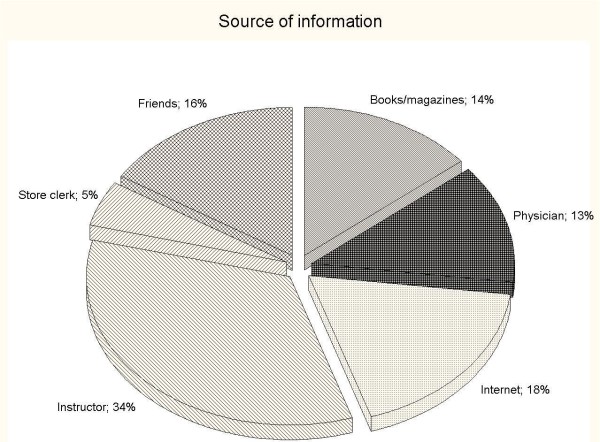
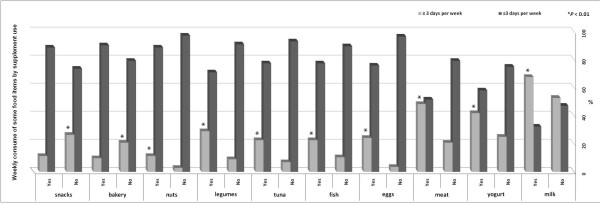
Results: 30.1% of the respondents use dietary supplements during their training as a believe it is the "way to gain muscles and strength". Whey protein shakes (50.0%) mixed with creatine and amino-acids (48.3%) were the most frequent choices amongst the users. A majority of the subjects (34.0%) appeared to rely on their gym instructors' advice for their intake; a lower proportion (13.0%) consulted physicians, while none of them consulted nutritionists. A high consumption of milk has been noticed in both users (67,7%) and non-users (52,8%); supplement non-users consumed significantly more snacks and bakery products than users per week (P < 0.001), while users consumed significantly more protein-rich foods (P < 0.01) with a particular preference for meat (48.0%).
Conclusions: A considerable number of regular strength training adepts consume protein supplements mixed with other products (mainly creatine and amino-acids). Limited numbers consult "dietary specialists" and rely mainly on their instructors. We emphasize on the importance of the dissemination of scientifically based information about supplementation in this environment and the promotion of updated educational programs for the instructors.
Figures
References
-
- Silver MD. Use of ergogenic aids by athletes. J Am Acad Orthopaed Surg. 2001;9:61–70. - PubMed
-
- Williams MH. Nutrition for health, fitness & sports, 7/e. McGraw-Hill. New York; 2008.
-
- Tekin KA, Kravitz L. The growing trend of ergogenic drugs and supplements. ACSM'S Health Fitness J. 2004;8:15–18.
-
- Palmer ME, Haller C, McKinney PE, Klein-Schwartz W, Tschirgi A, Smolinske SC, Woolf A, Sprague BM, Ko R, Everson G, Nelson LS, Dodd-Butera T, Bartlett WD, Landzberg BR. Adverse events associated with dietary supplements: an observational study. Lancet. 2003;361:101–106. doi: 10.1016/S0140-6736(03)12227-1. - DOI - PubMed
-
- Krumbach CJ, Ellis DR, Driskell JA. A report of vitamin and mineral supplement use among university athletes in a Division I institution. Int J Sport Nutr. 1999;9:416–25. - PubMed
LinkOut - more resources
Full Text Sources
