


Correlating changes in lung function with patient outcomes in chronic obstructive pulmonary disease: a pooled analysis
- PMID: 22206353
- PMCID: PMC3287973
- DOI: 10.1186/1465-9921-12-161
Correlating changes in lung function with patient outcomes in chronic obstructive pulmonary disease: a pooled analysis
Abstract
Background: Relationships between improvements in lung function and other clinical outcomes in chronic obstructive pulmonary disease (COPD) are not documented extensively. We examined whether changes in trough forced expiratory volume in 1 second (FEV(1)) are correlated with changes in patient-reported outcomes.
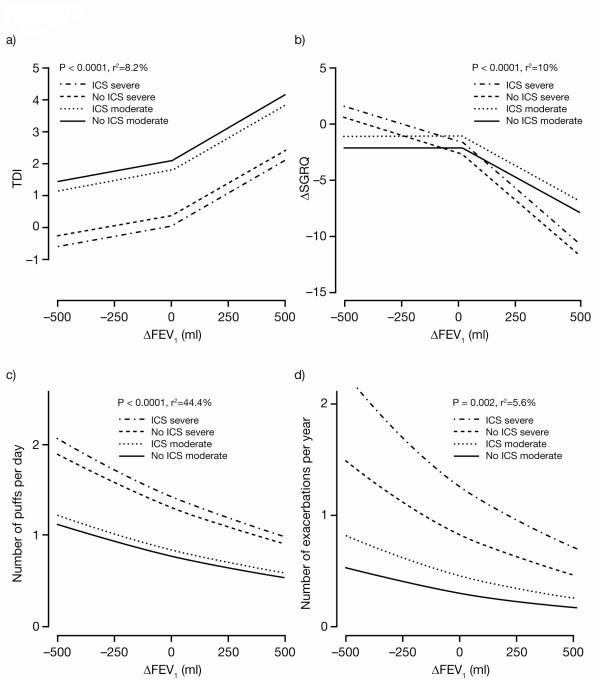
Methods: Pooled data from three indacaterol studies (n = 3313) were analysed. Means and responder rates for outcomes including change from baseline in Transition Dyspnoea Index (TDI), St. George's Respiratory Questionnaire (SGRQ) scores (at 12, 26 and 52 weeks), and COPD exacerbation frequency (rate/year) were tabulated across categories of ΔFEV(1). Also, generalised linear modelling was performed adjusting for covariates such as baseline severity and inhaled corticosteroid use.
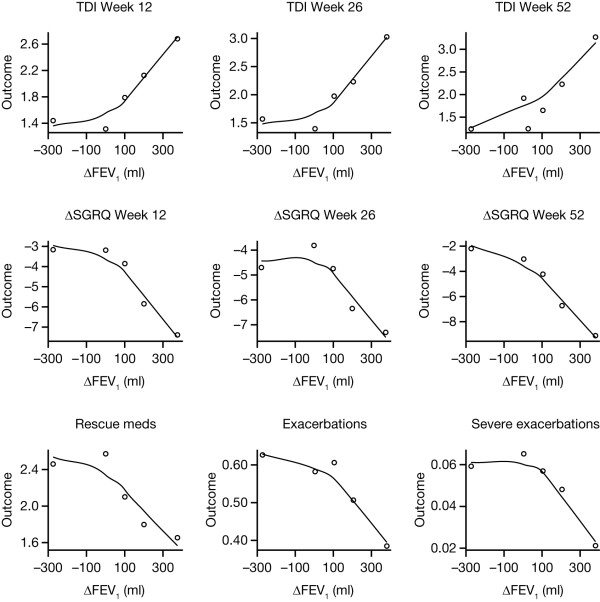
Results: With increasing positive ΔFEV(1), TDI and ΔSGRQ improved at all timepoints, exacerbation rate over the study duration declined (P < 0.001). Individual-level correlations were 0.03-0.18, but cohort-level correlations were 0.79-0.95. At 26 weeks, a 100 ml increase in FEV(1) was associated with improved TDI (0.46 units), ΔSGRQ (1.3-1.9 points) and exacerbation rate (12% decrease). Overall, adjustments for baseline covariates had little impact on the relationship between ΔFEV(1) and outcomes.
Conclusions: These results suggest that larger improvements in FEV(1) are likely to be associated with larger patient-reported benefits across a range of clinical outcomes.
Trial registration: ClinicalTrials.gov NCT00393458, NCT00463567, and NCT00624286.
Figures
References
-
- Álvarez-Gutiérrez FJ, Miravitlles M, Calle M, Gobartt E, López F, Martín A. Grupo de Estudio EIME. Impact of chronic obstructive pulmonary disease on activities of daily living: results of the EIME multicenter study. Arch Bronconeumol. 2007;43:64–72. - PubMed
Publication types
MeSH terms
Substances
Associated data
LinkOut - more resources
Full Text Sources
Medical
