


The effects of altitude training on the AMPK-related glucose transport pathway in the red skeletal muscle of both lean and obese Zucker rats
- PMID: 22206563
- PMCID: PMC3248611
- DOI: 10.1089/ham.2010.1088
The effects of altitude training on the AMPK-related glucose transport pathway in the red skeletal muscle of both lean and obese Zucker rats
Abstract
Introduction: The skeletal muscle AMP-activated protein kinase (AMPK)-related glucose transport pathway is involved in glucose homeostasis.
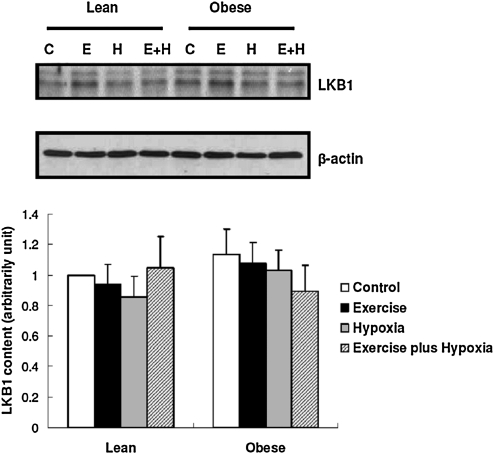
Aim: In this study, we examined whether obese control Zucker rats had abnormal expression of proteins in the LKB1-AMPK-AS160-GLUT4 pathway in red gastrocnemius muscle compared to that in lean (normal) control Zucker rats. We also compared the chronic training effects of exercise, hypoxia, and altitude training on this pathway in lean and obese rats.
Methods: At sea level, lean and obese rats were divided into 4 groups for 6 weeks training as follows: 1) control; 2) exercise (progressive daily swimming-exercise training with comparable exercise signals between the two groups); 3) hypoxia (8 hours of daily 14% O2 exposure); and 4) exercise plus hypoxia (also called altitude training). Seven animals were used for each group.
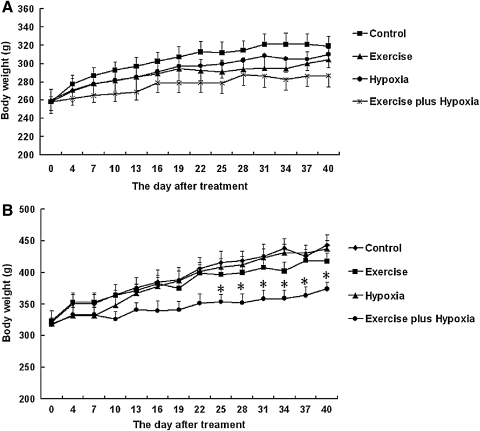
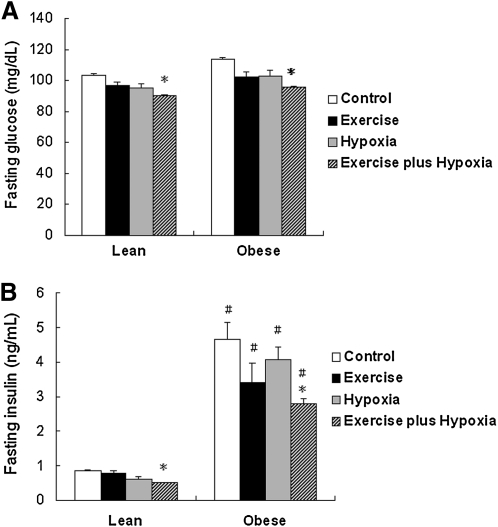
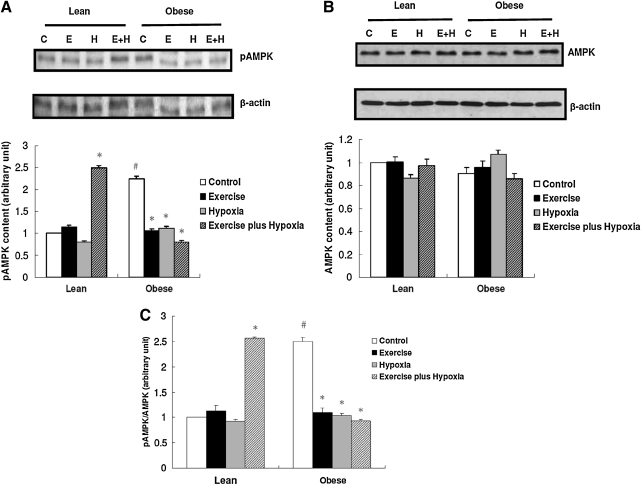
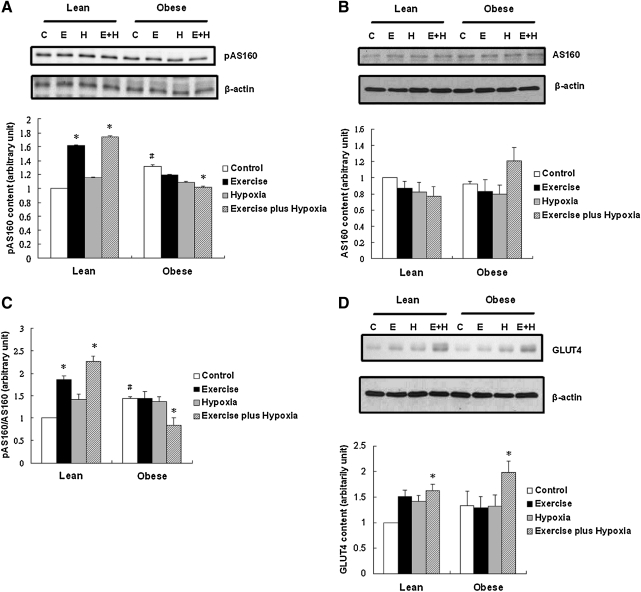
Results: The obese rats in the control group had higher body weights, elevated fasting insulin and glucose levels, and higher baseline levels of muscle AMPK and AS160 phosphorylation compared with those of lean control rats. For obese Zucker rats in the exercise or hypoxia groups, the muscle AMPK phosphorylation level was significantly decreased compared with that of the control group. For obese Zucker rats in the altitude training group, the levels of AMPK, AS160 phosphorylation, fasting insulin, and fasting glucose were decreased concomitant with an approximate 50% increase in the muscle GLUT4 protein level compared with those of the control group. In lean rats, the altitude training efficiently lowered fasting glucose and insulin levels and increased muscle AMPK and AS160 phosphorylation as well as GLUT4 protein levels.
Conclusion: Our results provide evidence that long-term altitude training may be a potentially effective nonpharmacological strategy for treating and preventing insulin resistance based on its effects on the skeletal muscle AMPK-AS160-GLUT4 pathway.
Figures
References
-
- Barnes BR. Ryder JW. Steiler TL. Fryer LG. Carling D. Zierath JR. Isoform-specific regulation of 5' AMP-activated protein kinase in skeletal muscle from obese Zucker (fa/fa) rats in response to contraction. Diabetes. 2002;51:2703–2708. - PubMed
-
- Chiu LL. Chou SW. Cho YM. Ho HY. Ivy JL. Hunt D. Wang PS. Kuo CH. Effect of prolonged intermittent hypoxia and exercise training on glucose tolerance and muscle GLUT4 protein expression in rats. J Biomed Sci. 2004;11:838–846. - PubMed
-
- de Lange P. Moreno M. Silvestri E. Lombardi A. Goglia F. Lanni A. Fuel economy in food-deprived skeletal muscle: Signaling pathways and regulatory mechanisms. FASEB J. 2007;21:3431–3441. - PubMed
-
- Frosig C. Jorgensen SB. Hardie DG. Richter EA. Wojtaszewski JF. 5'-AMP-activated protein kinase activity and protein expression are regulated by endurance training in human skeletal muscle. Am J Physiol Endocrinol Metab. 2004;286:E411–417. - PubMed
-
- Fujii N. Jessen N. Goodyear LJ. AMP-activated protein kinase and the regulation of glucose transport. Am J Physiol Endocrinol Metab. 2006;291:E867–877. - PubMed
Publication types
MeSH terms
Substances
LinkOut - more resources
Full Text Sources
