


Descendants of primed Arabidopsis plants exhibit resistance to biotic stress
- PMID: 22209872
- PMCID: PMC3271771
- DOI: 10.1104/pp.111.191593
Descendants of primed Arabidopsis plants exhibit resistance to biotic stress
Abstract
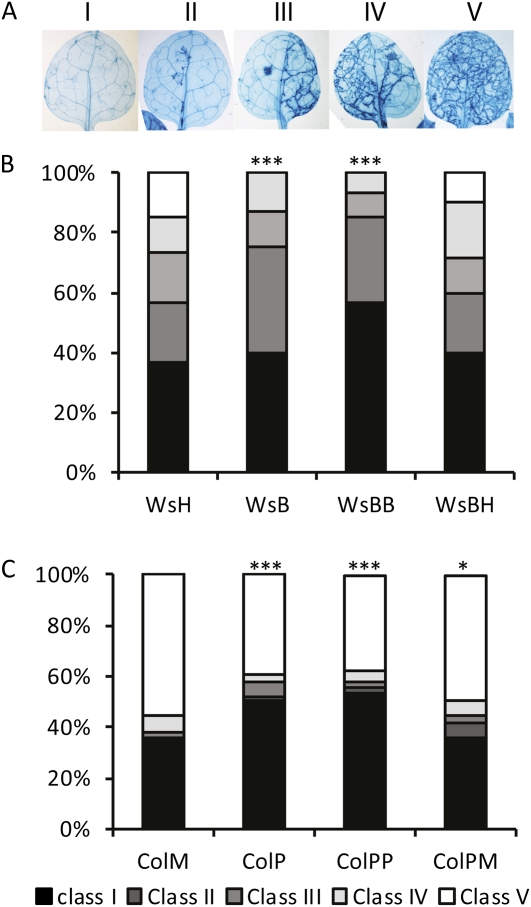
An attack of plants by pathogens or treatment with certain resistance-inducing compounds can lead to the establishment of a unique primed state of defense. Primed plants show enhanced defense reactions upon further challenge with biotic or abiotic stress. Here, we report that the primed state in Arabidopsis (Arabidopsis thaliana) is still functional in the next generation without additional treatment. We compared the reactions of Arabidopsis plants that had been either primed with β-amino-butyric acid (BABA) or with an avirulent isolate of the bacteria Pseudomonas syringae pv tomato (PstavrRpt2). The descendants of primed plants showed a faster and higher accumulation of transcripts of defense-related genes in the salicylic acid signaling pathway and enhanced disease resistance upon challenge inoculation with a virulent isolate of P. syringae. In addition, the progeny of primed plants was also more resistant against the oomycete pathogen Hyaloperonospora arabidopsidis. When transgenerationally primed plants were subjected to an additional priming treatment, their descendants displayed an even stronger primed phenotype, suggesting that plants can inherit a sensitization for the priming phenomenon. Interestingly, this primed to be primed phenotype was much reduced in the Arabidopsis β-amino-butyric acid priming mutant ibs1 (induced BABA sterility1). Our results demonstrate that the primed state of plants is transferred to their progeny and confers improved protection from pathogen attack as compared to the descendants of unprimed plants.
Figures
Comment in
-
Prime time for transgenerational defense.Plant Physiol. 2012 Feb;158(2):545. doi: 10.1104/pp.112.900430. Plant Physiol. 2012. PMID: 22308198 Free PMC article. No abstract available.
References
-
- Agrawal AA. (2002) Maternal effects associated with herbivory: mechanisms and consequences of transgenerational induced plant resistance. Ecology 83: 3408–3415
-
- Alvarez-Venegas R, Sadder M, Hlavacka A, Baluška F, Xia Y, Lu G, Firsov A, Sarath G, Moriyama H, Dubrovsky JG, et al. (2006) The Arabidopsis homolog of trithorax, ATX1, binds phosphatidylinositol 5-phosphate, and the two regulate a common set of target genes. Proc Natl Acad Sci USA 103: 6049–6054 - PMC - PubMed
-
- Boachon B, Robert J, Daniel X, Mauch-Mani B. (2009) Absolute quantification of specific plant defence pathways and disease development of several microbial pathogens in Arabidopsis using real-time PCR. IOBC Meeting Proceedings of “Biological Control of Fungal and Bacterial Plant Pathogens (Phytopathogens)” Molecular Tools for Understanding and Improving Biocontrol, 43, pp 311–316
Publication types
MeSH terms
LinkOut - more resources
Full Text Sources
Other Literature Sources
Molecular Biology Databases
