


Reversal of scopolamine-induced disruption of prepulse inhibition by clozapine in mice
- PMID: 22210488
- PMCID: PMC3587654
- DOI: 10.1016/j.pbb.2011.12.010
Reversal of scopolamine-induced disruption of prepulse inhibition by clozapine in mice
Abstract
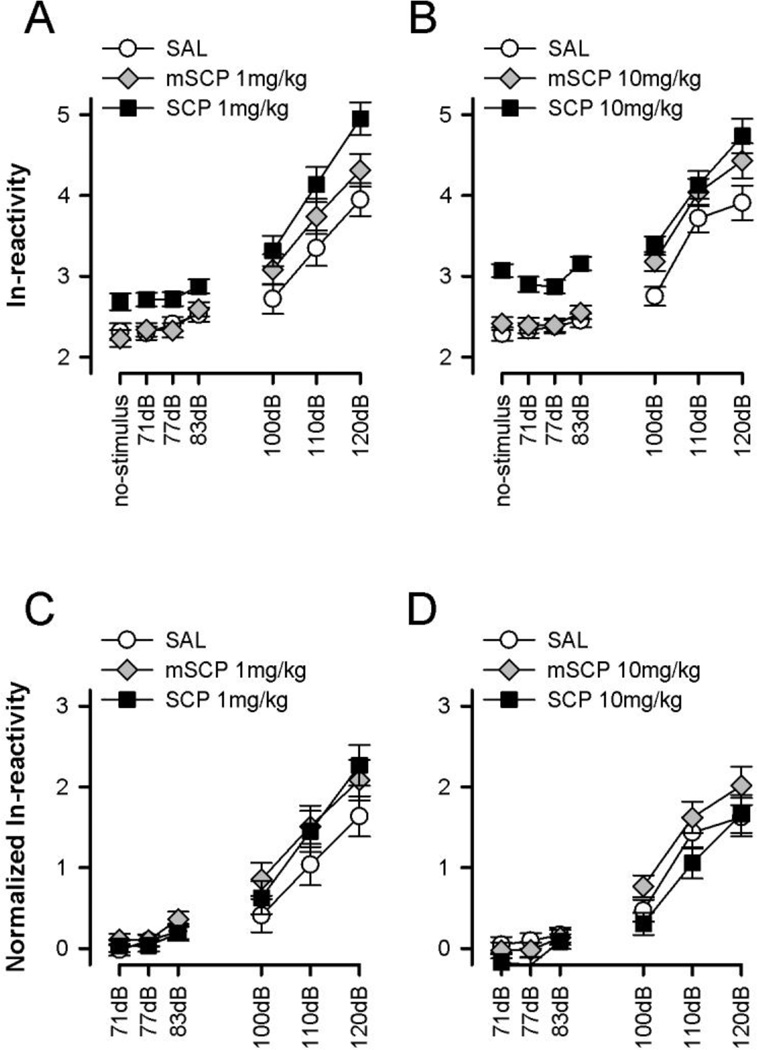
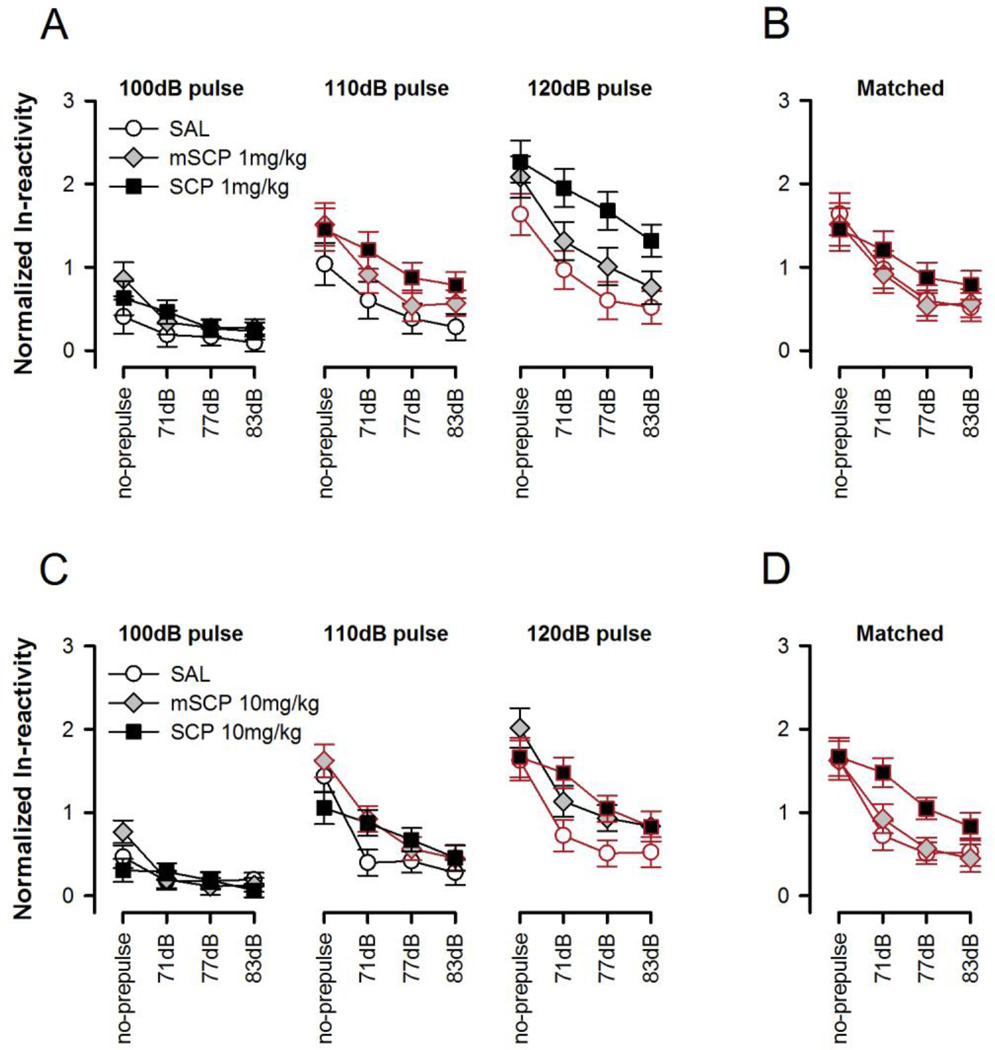
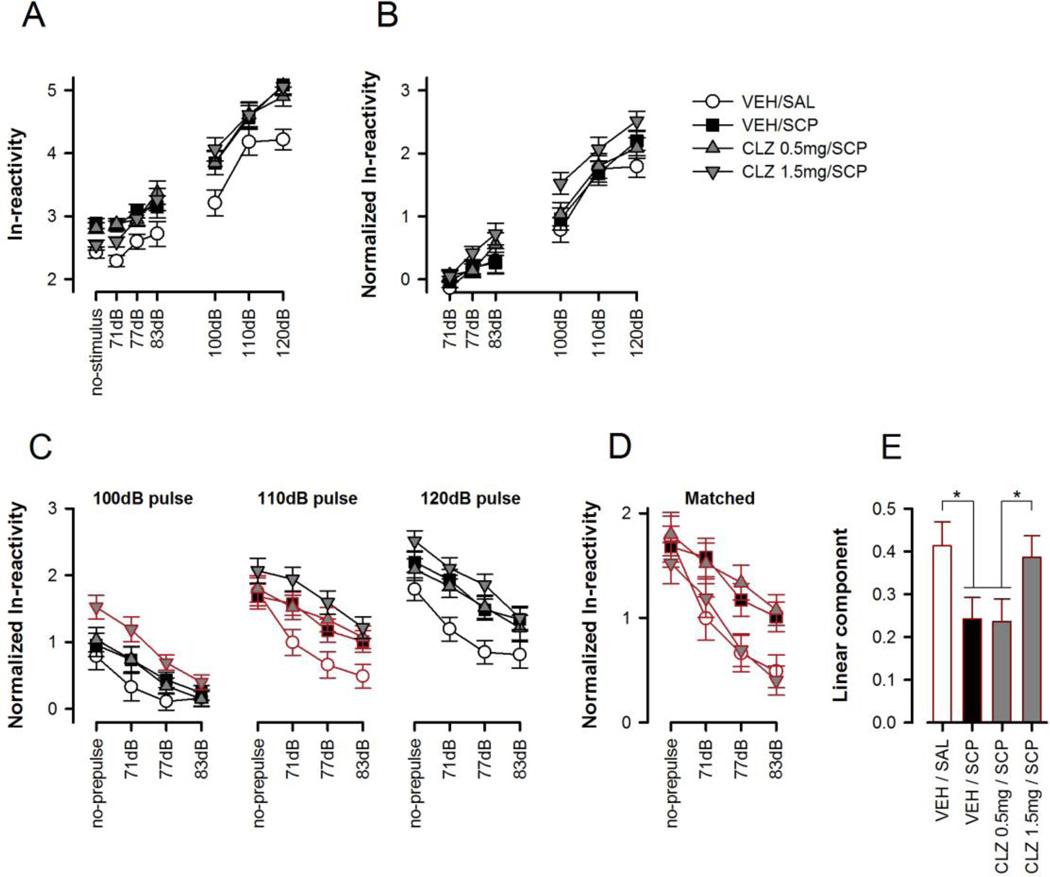
Prepulse inhibition (PPI) of the acoustic startle reflex refers to the reduction of the startle response to an intense acoustic pulse stimulus when it is shortly preceded by a weak non-startling prepulse stimulus and provides a cross-species measure of sensory-motor gating. PPI is typically impaired in schizophrenia patients, and a similar impairment can be induced in rats by systemic scopolamine, a muscarinic cholinergic receptor antagonist that can evoke a range of cognitive and psychotic symptoms in healthy humans that are commonly referred to as the "anti-muscarinic syndrome" resembling some clinical features of schizophrenia. Scopolamine-induced PPI disruption has therefore been proposed as an anti-muscarinic animal model of schizophrenia, but parallel investigations in the mouse remain scant and the outcomes are mixed and often confounded by an elevation of startle reactivity. Here, we distinguished the PPI-disruptive and the confounding startle-enhancing effects of scopolamine (1 and 10mg/kg, i.p.) in C57BL/6 wild-type mice by showing that the latter partly stemmed from a shift in spontaneous baseline reactivity. With appropriate correction for between-group differences in startle reactivity, we went on to confirm that the PPI-disruptive effect of scopolamine could be nullified by clozapine pre-treatment (1.5mg/kg, i.p.) in a dose-dependent manner. This is the first demonstration that scopolamine-induced PPI disruption is sensitive to atypical antipsychotic drugs. In concert with previous data showing its sensitivity to haloperidol the present finding supports the predictive validity of the anti-muscarinic PPI disruption model for both typical and atypical antipsychotic drug action.
Copyright © 2011 Elsevier Inc. All rights reserved.
Conflict of interest statement
The authors declare no conflicts of interests.
Figures
References
-
- Andrus AK, Marable BR, Dunbar GL, Reilly MP, Maurissen JP. Effects of intensity and type of prepulse stimulus on prepulse inhibition in scopolamine treated rats. Pharmacol Biochem Behav. 2007;87:481–488. - PubMed
-
- Barak S. Modeling cholinergic aspects of schizophrenia, Focus on the antimuscarinic syndrome. Behav Brain Res. 2009;204:335–351. - PubMed
-
- Bond NW. Prenatal alcohol exposure and offspring hyperactivity, effects of scopolamine and methylscopolamine. Neurobehav Toxicol Teratol. 1986;8:287–292. - PubMed
-
- Braff DL, Geyer MA. Sensorimotor gating and schizophrenia, human and animal model studies. Arch Gen Psychiatry. 1990;47:181–188. - PubMed
-
- Braff DL, Grillon C, Geyer MA. Gating and habituation of startle reflex in schizophrenic patients. Arch Gen Psychiatry. 1992;49:206–215. - PubMed
Publication types
MeSH terms
Substances
Grants and funding
LinkOut - more resources
Full Text Sources
