


Effect of distributing an evidence-based guideline for prevention of osteoporosis on health education programs in municipal health centers: a randomized controlled trial
- PMID: 22214657
- PMCID: PMC3798588
- DOI: 10.2188/jea.je20110036
Effect of distributing an evidence-based guideline for prevention of osteoporosis on health education programs in municipal health centers: a randomized controlled trial
Abstract
Background: Current health education programs for osteoporosis prevention are not strictly evidence-based. We assessed whether distribution of an evidence-based guideline improved such programs at municipal health centers.
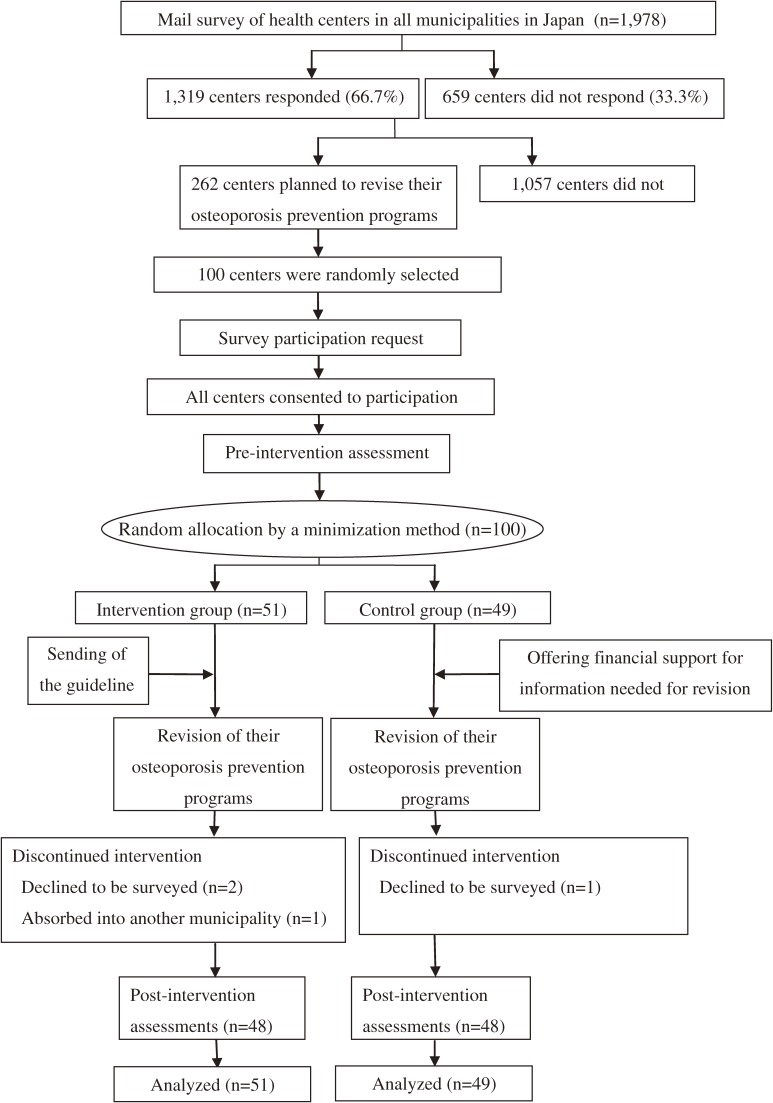
Methods: This randomized controlled trial evaluated 100 municipal health centers throughout Japan that were randomly selected from those that planned to revise osteoporosis prevention programs. The implementation status of educational items recommended by the guideline was assessed before and after the intervention by evaluators blinded to the allocation. After the pre-intervention assessment, centers were randomly allocated in a 1:1 ratio to intervention and control groups by a minimization method defining region and city/town as stratification factors. Centers in the intervention group were given copies of the guideline; centers in the control group were instructed to use any information except the guideline. Analyses were performed on an intention-to-treat basis.
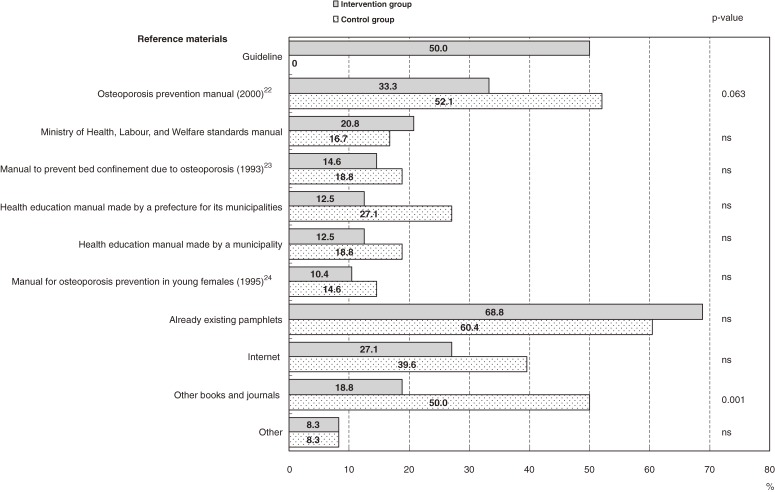
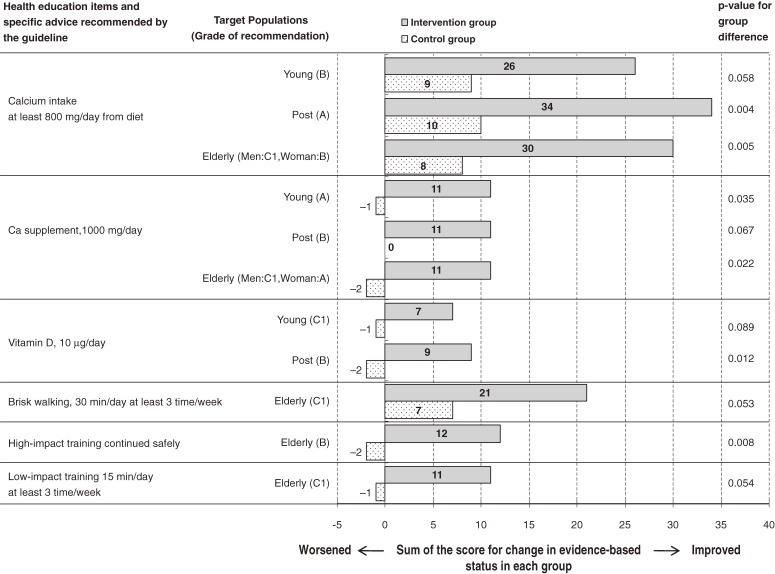
Results: The guideline was used by 50% of the intervention group. Before the intervention, there was no significant difference in the evidence-based status of health education between the groups. The post-intervention assessment showed that the implementation rates of health education on dietary calcium intake for postmenopausal women and exercise for elderly persons were higher in the intervention group. Specific advice on intakes of calcium and vitamin D and exercise became more evidence-based in the intervention group.
Conclusions: The findings suggest that the guideline helped healthcare professionals to improve health education programs by making them more evidence-based. However, the improvements seemed to be limited to items that the professionals felt prepared to improve.
Figures
References
-
- Report of a WHO Scientific Group. Epidemiology and risk factors. Secular trends. Prevention and management of osteoporosis. WHO Technical Report Series 921. Geneva: World Health Organization; 2003. p. 36–7.
-
- Report of a WHO Scientific Group. Introduction. Prevention and management of osteoporosis. WHO Technical Report Series 921. Geneva: World Health Organization; 2003. p. 1–9. - PubMed
-
- Komatsu M, Kajita E, Tamaki J, Nakatani Y, Yura A, Iki M. Present status of evidence level of preventive procedures against osteoporosis conducted by Japanese municipalities and associated factors. Jpn J Health Hum Ecol. 2008;74:164–77(in Japanese) 10.3861/jshhe.74.164 - DOI
