


Utilization of hepatocellular carcinoma surveillance among American patients: a systematic review
- PMID: 22215266
- PMCID: PMC3378733
- DOI: 10.1007/s11606-011-1952-x
Utilization of hepatocellular carcinoma surveillance among American patients: a systematic review
Abstract
Background: Although surveillance for hepatocellular carcinoma (HCC) is recommended in high-risk patients, several studies have suggested it is being underutilized in clinical practice. The aim of our study was to quantify utilization rates for HCC surveillance among patients with cirrhosis and summarize patterns of association between utilization rates and patient socio-demographic characteristics.
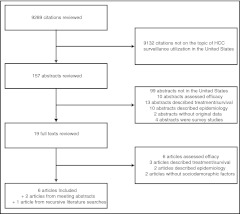
Data sources: We performed a systematic literature review using the Medline database from January 1990 through March 2011 and a manual search of national meeting abstracts from 2008-2010.
Methods: Two investigators independently extracted data on patient populations, study methods, and results using standardized forms. A pooled surveillance rate with 95% confidence intervals was calculated. Pre-specified subgroup analysis was performed to find correlates of surveillance utilization.
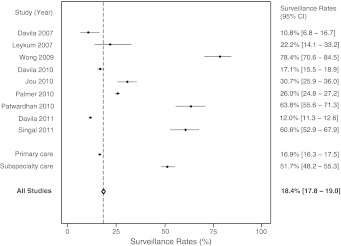
Results: We identified nine studies that met inclusion criteria. The pooled surveillance rate was 18.4% (95%CI 17.8%-19.0%). Surveillance rates were significantly higher among patients followed in subspecialty gastroenterology clinics compared to those followed in primary care clinics (51.7% vs. 16.9%, p < 0.001). Non-Caucasians and patients of low socioeconomic status had lower surveillance rates than their counterparts.
Conclusions: Utilization rates for HCC surveillance are low, although they are significantly higher among patients followed in subspecialty clinics. Current studies fail to determine why HCC surveillance is not being performed. Future efforts should focus on identifying appropriate intervention targets to increase surveillance rates and reduce socio-demographic disparities.
Figures
References
Publication types
MeSH terms
Grants and funding
LinkOut - more resources
Full Text Sources
Medical
Miscellaneous
