


Cognitive deficit is associated with phase advance of sleep-wake rhythm, daily napping, and prolonged sleep duration--a cross-sectional study in 2,947 community-dwelling older adults
- PMID: 22215376
- PMCID: PMC3592949
- DOI: 10.1007/s11357-011-9366-6
Cognitive deficit is associated with phase advance of sleep-wake rhythm, daily napping, and prolonged sleep duration--a cross-sectional study in 2,947 community-dwelling older adults
Abstract
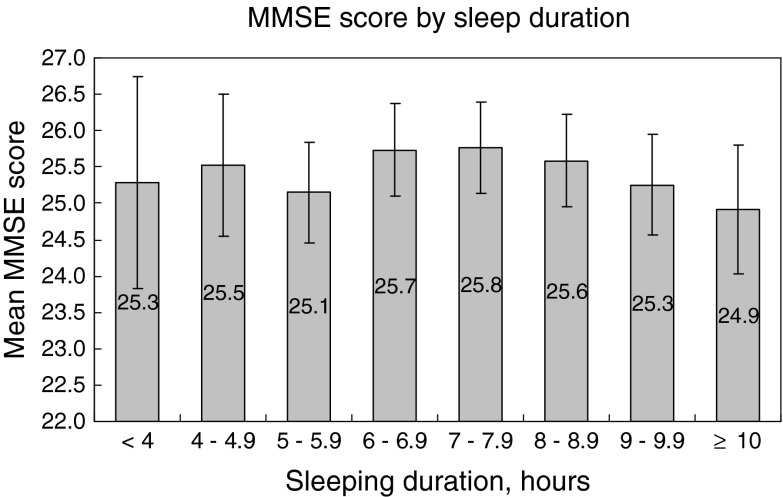
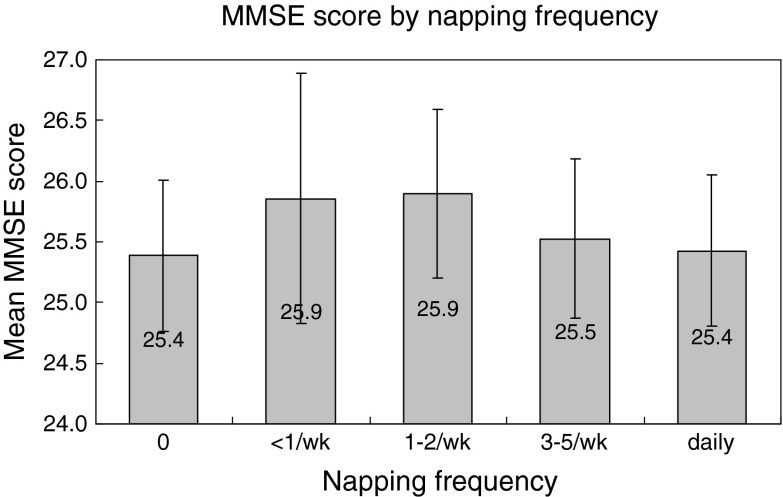
This study aims to examine the phase advance of sleep-wake rhythm, napping habit, nocturnal sleep duration, prolonged sleep latency and insomnia and their relationship with cognitive function. This is a cross-sectional study. Participants in this study are 2,947 community-dwelling adults older than 65 years old. Measurements of mini-mental examination (MMSE) score, go-to-bed time, wake-up time, nocturnal sleep duration, prolonged sleep latency, napping, and insomnia were done. The mean (standard deviation) nocturnal sleep hours was 7.96 (1.39) h. Twenty-one percent and 16.2% of the participants complained of prolonged sleep latency longer than 1 h and insomnia, respectively. Fifty-six percent of the participants napped once or more than once weekly. With advancing age, the participants reported longer sleep duration (p<0.001), went to bed earlier, and woke up earlier, which were significant both before and after adjustment. The participants who had lower MMSE score went to bed earlier and woke up earlier, which were statistically significant both before and after adjustment. An inverted U-shaped relationship was observed between MMSE score and napping frequency, p for tend 0.026.The MMSE score decreased when the sleep duration prolonged from 7 h to ≧10 h (p for trend 0.006). No trend was observed from the sleep duration <4 up to 7.9 h (p for trend 0.500). Modest age-independent phase advance of the sleep-wake rhythm is associated with lower cognitive function. Whether this is a manifestation of early pre-clinical dementia and whether its recognition with early stabilization can slow cognitive decline remain elusive.
Figures
References
-
- Ancoli-Israel S, Klauber MR, Jones DW, et al. Variations in circadian rhythms of activity, sleep and light exposure related to dementia in nursing home patients. Sleep. 1997;20:18–23. - PubMed
-
- Benito-Leon J, Bermego-Pareja F, Vega S, Louis ED (2009) Total daily sleep duration and the risk of dementia: a prospective population-based study. Eur J Neurol 16:990–997 - PubMed
-
- Bliwise D. Sleep in normal aging and dementia. Sleep. 1993;16:40–81. - PubMed
MeSH terms
LinkOut - more resources
Full Text Sources
Medical