


Daily rhythms in olfactory discrimination depend on clock genes but not the suprachiasmatic nucleus
- PMID: 22215613
- PMCID: PMC3658462
- DOI: 10.1177/0748730411420247
Daily rhythms in olfactory discrimination depend on clock genes but not the suprachiasmatic nucleus
Abstract
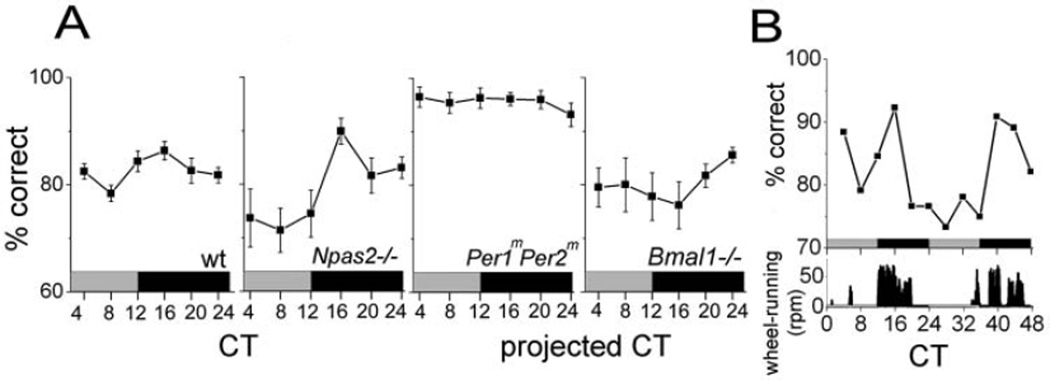
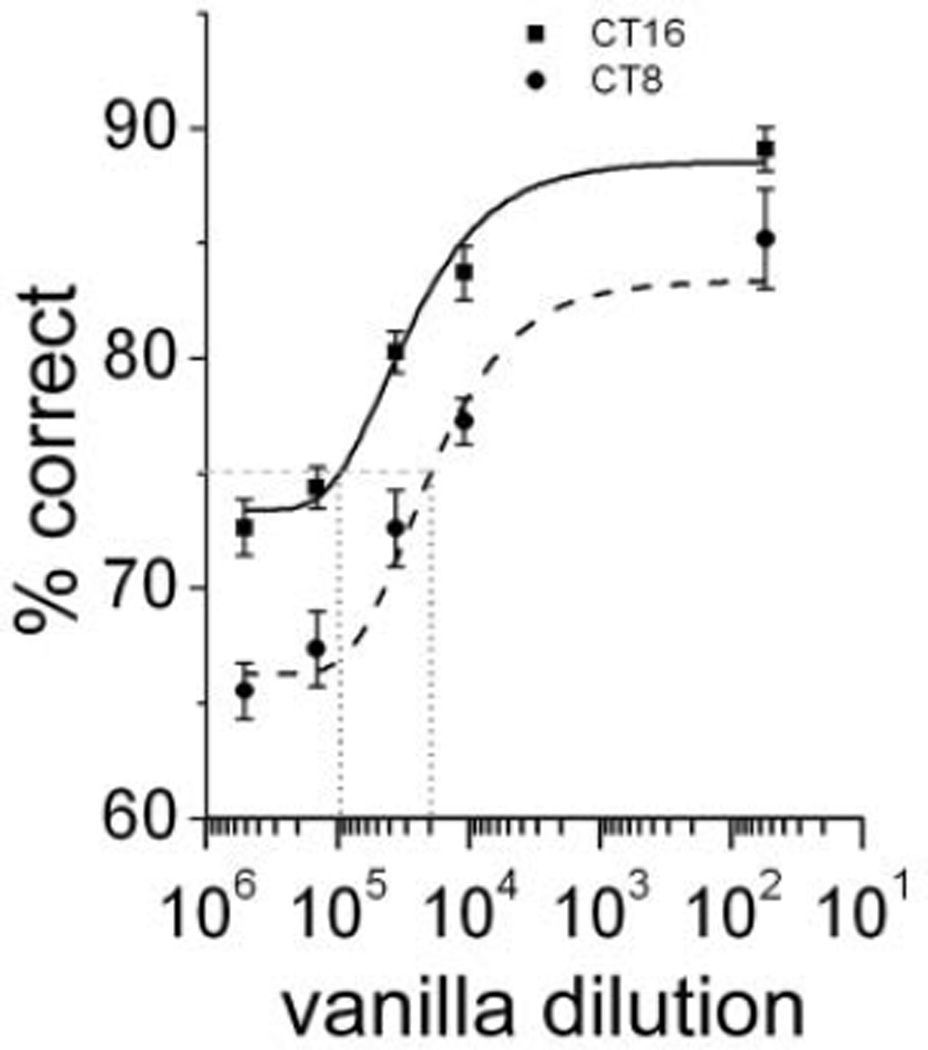
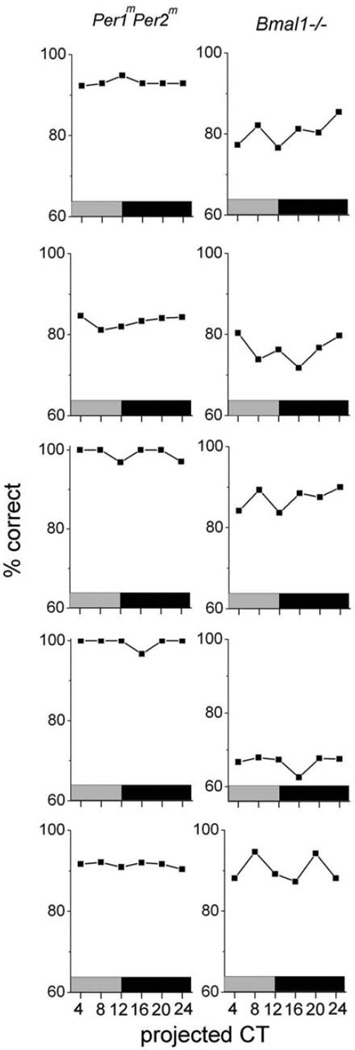
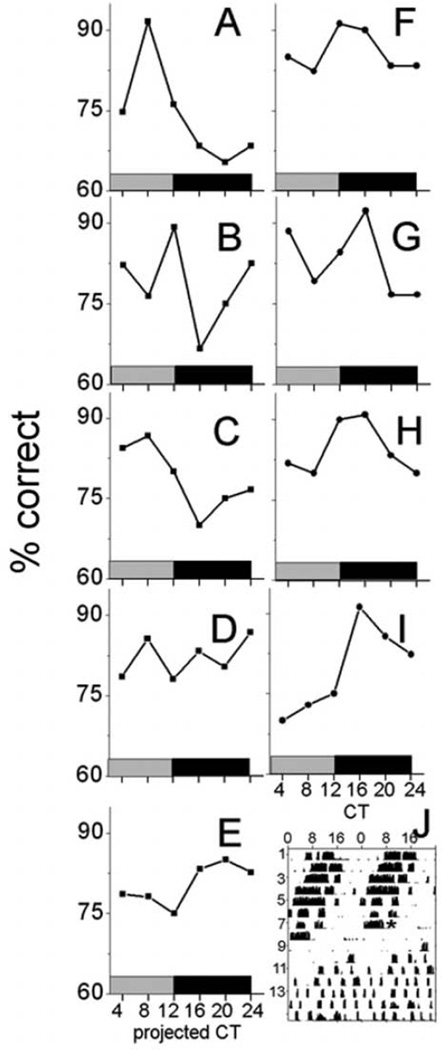
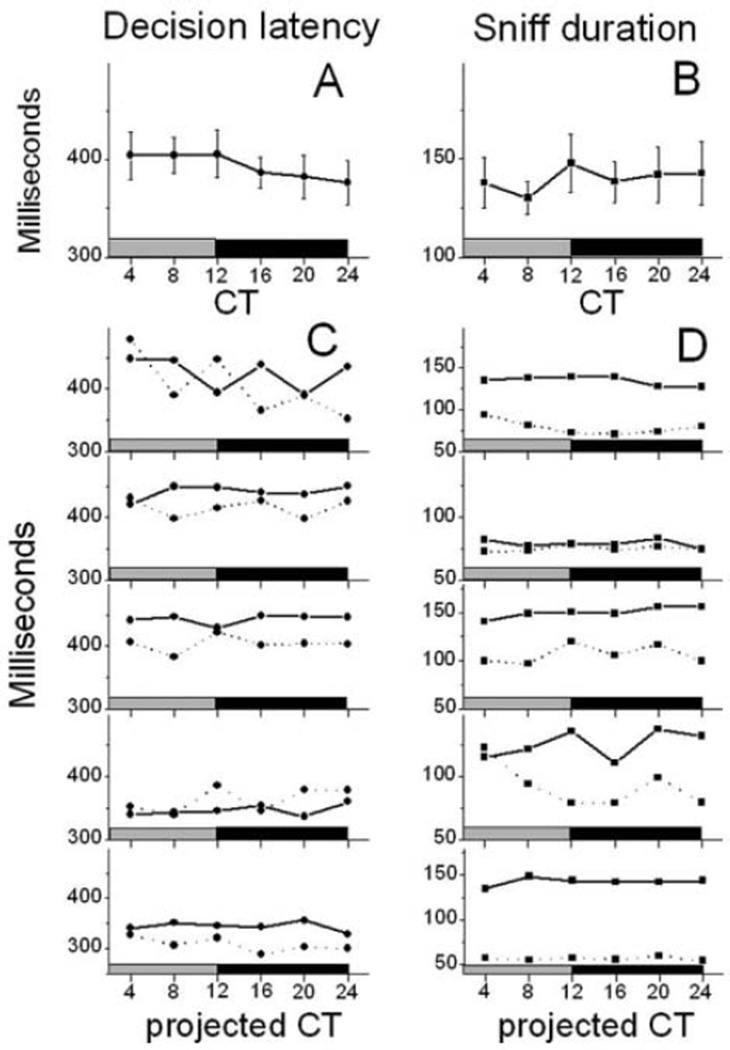
The suprachiasmatic nucleus (SCN) regulates a wide range of daily behaviors and has been described as the master circadian pacemaker. The role of daily rhythmicity in other tissues, however, is unknown. We hypothesized that circadian changes in olfactory discrimination depend on a genetic circadian oscillator outside the SCN. We developed an automated assay to monitor olfactory discrimination in individual mice throughout the day. We found olfactory sensitivity increased approximately 6-fold from a minimum during the day to a peak in the early night. This circadian rhythm was maintained in SCN-lesioned mice and mice deficient for the Npas2 gene but was lost in mice lacking Bmal1 or both Per1 and Per2 genes. We conclude that daily rhythms in olfactory sensitivity depend on the expression of canonical clock genes. Olfaction is, thus, the first circadian behavior that is not based on locomotor activity and does not require the SCN.
Conflict of interest statement
CONFLICT OF INTEREST STATEMENT
The author(s) have no potential conflicts of interest with respect to the research, authorship, and/or publication of this article.
Figures
References
-
- Amir S, Cain S, Sullivan J, Robinson B, Stewart J. In rats, odor-induced Fos in the olfactory pathways depends on the phase of the circadian clock. Neurosci Lett. 1999;272:175–178. - PubMed
-
- Bae K, Jin X, Maywood ES, Hastings MH, Reppert SM, Weaver DR. Differential Functions of mPer1, mPer2, and mPer3 in the SCN circadian clock. Neuron. 2001;30:525–536. - PubMed
Publication types
MeSH terms
Substances
Grants and funding
LinkOut - more resources
Full Text Sources
