. 2011;6(12):e27996.
doi: 10.1371/journal.pone.0027996. Epub 2011 Dec 22.

Molecular mechanisms of bortezomib resistant adenocarcinoma cells

Affiliations

Molecular mechanisms of bortezomib resistant adenocarcinoma cells

Erika Suzuki et al. PLoS One. 2011.

Abstract

Bortezomib (Velcade™) is a reversible proteasome inhibitor that is approved for the treatment of multiple myeloma (MM). Despite its demonstrated clinical success, some patients are deprived of treatment due to primary refractoriness or development of resistance during therapy. To investigate the role of the duration of proteasome inhibition in the anti-tumor response of bortezomib, we established clonal isolates of HT-29 adenocarcinoma cells adapted to continuous exposure of bortezomib. These cells were ~30-fold resistant to bortezomib. Two novel and distinct mutations in the β5 subunit, Cys63Phe, located distal to the binding site in a helix critical for drug binding, and Arg24Cys, found in the propeptide region were found in all resistant clones. The latter mutation is a natural variant found to be elevated in frequency in patients with MM. Proteasome activity and levels of both the constitutive and immunoproteasome were increased in resistant cells, which correlated to an increase in subunit gene expression. These changes correlated with a more rapid recovery of proteasome activity following brief exposure to bortezomib. Increased recovery rate was not due to increased proteasome turnover as similar findings were seen in cells co-treated with cycloheximide. When we exposed resistant cells to the irreversible proteasome inhibitor carfilzomib we noted a slower rate of recovery of proteasome activity as compared to bortezomib in both parental and resistant cells. Importantly, carfilzomib maintained its cytotoxic potential in the bortezomib resistant cell lines. Therefore, resistance to bortezomib, can be overcome with irreversible inhibitors, suggesting prolonged proteasome inhibition induces a more potent anti-tumor response.


Conflict of interest statement

Competing Interests: Christopher J. Kirk, Erika Suzuki and Shirin Arastu-Kapur are current employees of Onyx Pharmaceuticals. There are no patents to declare, however this study is in support of the mechanism of action of Carfilzomib, a product currently in development from Onyx. This does not alter the authors' adherence to all the PLoS ONE policies on sharing data and materials.

Figures

Figure 1
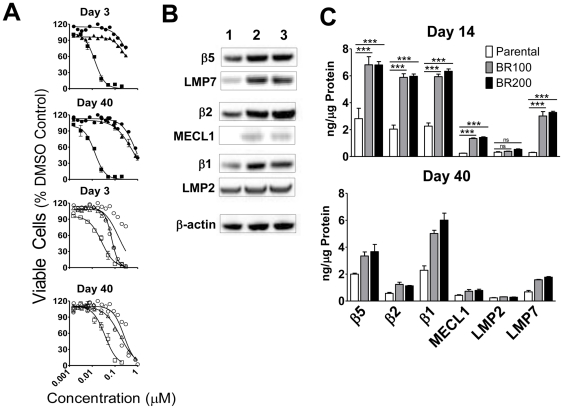
Figure 1. Altered proteasome expression in bortezomib-resistant HT-29 cells.
(A) Parental (▪,□), BR100 (▴, Δ), and BR200 cells (•,○) were cultured for 3 or 40 days in the absence of drug prior to exposure to varying concentrations (1 nM–1 µM) of bortezomib (closed symbols) or carfilzomib (open symbols) for 72 hrs. Viability was normalized to DMSO controls and data are presented as mean viability of triplicate cultures (± S.E.M). Data is from 1 of 3 replicate experiments with similar results. (B) Western blot analysis of constitutive and immunoproteasome active site subunits in parental (1), BR100 (2), and BR200 (3) cells cultured in the absence of drug for 14 days. β-actin or GAPDH was used as an to verify equal loading. (C) Constitutive and immunoproteasome subunit levels (ng subunit/µg total protein) in parental, BR100 and BR200 cell lines cultured in the absence of drug for 14 or 40 days were measured using ProCISE. Data at day 14 are presented as mean ± S.D. of 3 independent experiments. *** = P<0.001 by one-way ANOVA followed by Bonferroni's Multiple Comparison Test. Data at day 40 is representative of one experiment.
Figure 2
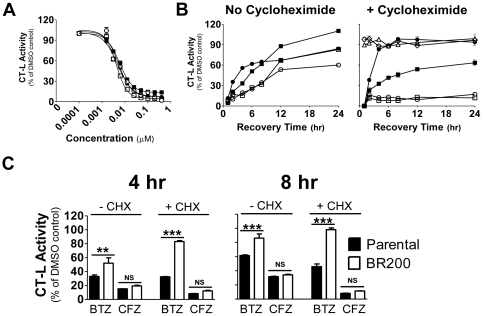
Figure 2. Increased proteasome turnover in bortezomib-resistant cells.
(A) Parental (▪,□) and BR200 cells (•,○) were cultured for 3 days in the absence of drug prior to exposure to varying concentrations (1 nM–1 µM) of bortezomib (closed symbols) or carfilzomib (open symbols) for 1 hr. Proteasome chymotrypsin-like activity was measured using LLVY-AMC as substrate and specific activity values were normalized to DMSO controls. Data are presented as the mean relative activity (± S.E.M.) and is representative of 2 replicate experiments. (B) Parental (▪,□) and BR200 cells (•,○) were exposed to 100 nM bortezomib (closed symbols) or carfilzomib (open symbols) for 1 hr, washed and cultured in drug free media with or without cycloheximide for 1, 2, 4, 6, 8, 12 , and 24 hr prior to measurement of chymotrypsin-like activity. Parental cells (Δ) and BR200 (◊) cells treated with CHX alone in the absence of drug are included as additional controls. Data are presented as the mean relative activity (± S.E.M.) and is representative of 2 replicate experiments. (C) Relative chymotrypsin-like activity in parental and BR200 cells at 4 or 8 hr after a 1 hr pulse exposure to 100 nM bortezomib or carfilzomib in the presence or absence of cycloheximide. ** = P<0.01; *** = P<0.001 by one-way ANOVA followed by Newman-Keuls post-hoc comparisons.
Figure 3
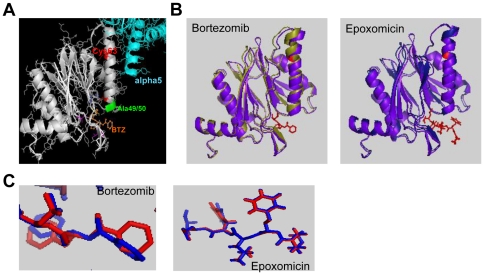
Figure 3. Cys63Phe mutation is a critical structural mutation.
(A) Cys63Phe mutation is part of a critical helix at the α5 (cyan)/β5 (gray) subunit interface subunit that directly points into the active site, with Ala49/50 making direct contacts with proteasome inhibitors. (B) Mutant PRE unbound (purple) overlaid with mutant PRE bound to bortezomib (olive) and epoxomicin (midnight blue). (C) Active site view of bortezomib and epoxomicin bound to the wild-type (blue) and mutant (red) PRE2 structures.

References

    1. Ciechanover A. Proteolysis: from the lysosome to ubiquitin and the proteasome. Nat Rev Mol Cell Biol. 2005;6:79–87. - PubMed
    1. Murata S, Yashiroda H, Tanaka K. Molecular mechanisms of proteasome assembly. Nat Rev Mol Cell Biol. 2009;10:104–115. - PubMed
    1. McConkey DJ, Zhu K. Mechanisms of proteasome inhibitor action and resistance in cancer. Drug Resist Updat. 2008;11:164–179. - PubMed
    1. Adams J. Development of the proteasome inhibitor PS-341. Oncologist. 2002;7:9–16. - PubMed
    1. Bennett MK, Kirk CJ. Development of proteasome inhibitors in oncology and autoimmune diseases. Curr Opin Drug Discov Devel. 2008;11:616–625. - PubMed

Publication types