


Relationship of radiographic acromial characteristics and rotator cuff disease: a prospective investigation of clinical, radiographic, and sonographic findings
- PMID: 22217644
- PMCID: PMC3725773
- DOI: 10.1016/j.jse.2011.09.028
Relationship of radiographic acromial characteristics and rotator cuff disease: a prospective investigation of clinical, radiographic, and sonographic findings
Abstract
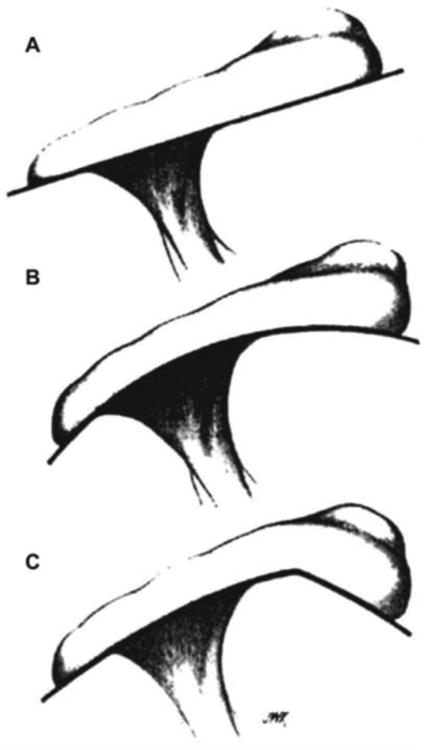
Background: Many studies have attempted to correlate radiographic acromial characteristics with rotator cuff tears, but the results have not been conclusive. Therefore, the purpose of this study was to determine the relationship between rotator cuff disease and the development of symptoms with different radiographic acromial characteristics, including shape, index, and presence of a spur.
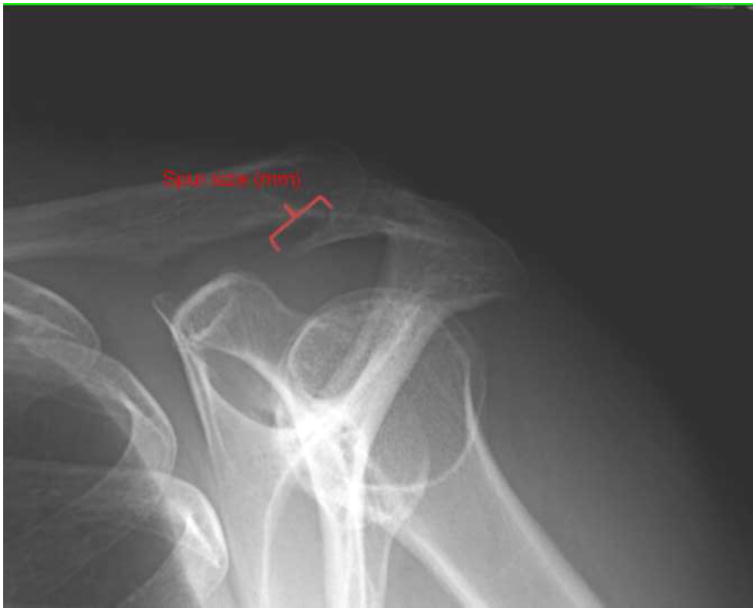
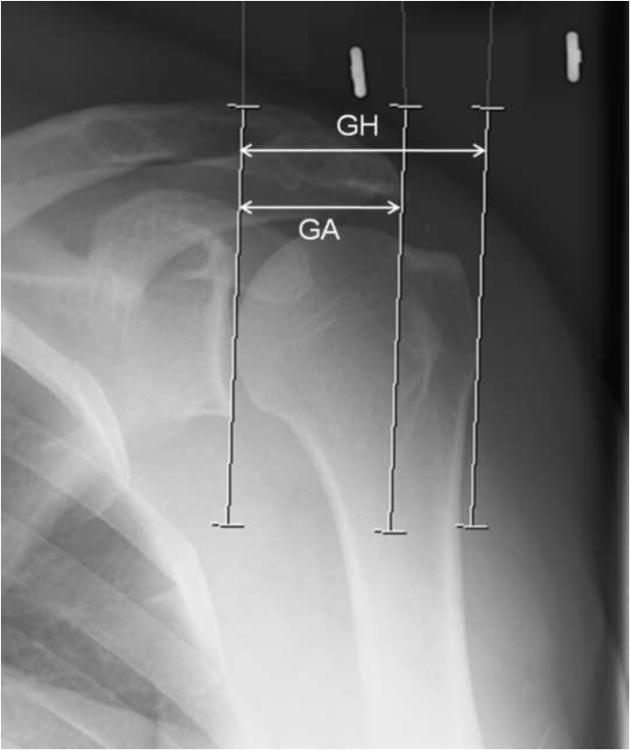
Materials and methods: The records of 216 patients enrolled in an ongoing prospective, longitudinal study investigating asymptomatic rotator cuff tears were reviewed. All patients underwent standardized radiographic evaluation, clinical evaluation, and shoulder ultrasonography at regularly scheduled surveillance visits. Three blinded observers reviewed all radiographs to determine the acromial morphology, presence, and size of an acromial spur, as well as the acromial index. These findings were analyzed to determine an association with the presence of a full-thickness rotator cuff tear.
Results: The 3 observers demonstrated poor agreement for acromial morphology (κ = 0.41), substantial agreement for the presence of an acromial spur (κ = 0.65), and excellent agreement for the acromial index (κ = 0.86). The presence of an acromial spur was highly associated with the presence of a full-thickness rotator cuff tear (P = .003), even after adjusting for age. No association was found between the acromial index and rotator cuff disease (P = .92).
Conclusion: The presence of an acromial spur is highly associated with the presence of a full-thickness rotator cuff tear in symptomatic and asymptomatic patients. The acromial morphology classification system is an unreliable method to assess the acromion. The acromial index shows no association with the presence of rotator cuff disease.
Copyright © 2012 Journal of Shoulder and Elbow Surgery Board of Trustees. Published by Mosby, Inc. All rights reserved.
Figures
References
-
- Aoki M, Ishii S, Usui M. Clinical application for measuring the slope of the acromion Surgery of the Shoulder R H B Morrey. St. Louis, MO: Mosby; 1990. p. 200.
-
- Biberthaler P, Wiedemann E, Nerlich A, Kettler M, Mussack T, Deckelmann S. Microcirculation associated with degenerative rotator cuff lesions. J Bone Joint Surg (Am) 2005;85-A:475–480. - PubMed
-
- Bigliani LU, D'Alessandro DF, Duralde XA, McIlveen SJ. Anterior acromioplasty for subacromial impingement in patients younger than 40 years of age. Clin Orthop. 1989;246:111–116. - PubMed
-
- Bigliani LU, Morrison DS, April EW. The morphology of the acromion and its relationship to rotator cuff tears. Orthop Trans. 1986;10:216.
-
- Bigliani LU, Ticker JB, Flatow EL, Soslowsky LJ, Mow VC. The relationship of acromial architecture to rotator cuff disease. Clin Sports Med. 1991;10(4):823–838. - PubMed
Publication types
MeSH terms
Grants and funding
LinkOut - more resources
Full Text Sources
Medical
