Review
. 2012 Jan 5;19(1):9-16.
doi: 10.1038/nsmb.2203.

New approaches for dissecting protease functions to improve probe development and drug discovery

Affiliations
Review

New approaches for dissecting protease functions to improve probe development and drug discovery

Edgar Deu et al. Nat Struct Mol Biol. .

Abstract

Proteases are well-established targets for pharmaceutical development because of their known enzymatic mechanism and their regulatory roles in many pathologies. However, many potent clinical lead compounds have been unsuccessful either because of a lack of specificity or because of our limited understanding of the biological roles of the targeted protease. In order to successfully develop protease inhibitors as drugs, it is necessary to understand protease functions and to expand the platform of inhibitor development beyond active site-directed design and in vitro optimization. Several newly developed technologies will enhance assessment of drug selectivity in living cells and animal models, allowing researchers to focus on compounds with high specificity and minimal side effects in vivo. In this review, we highlight advances in the development of chemical probes, proteomic methods and screening tools that we feel will help facilitate this paradigm shift in drug discovery.


Figures

Figure 1
Figure 1. Mechanism of substrate hydrolysis by the primary families of proteases
A) Protease substrates bind through interactions of the side chain residues (P, P′ residues) with the substrate pockets of the protease (S, S′ pockets). The red dashed line indicates scissile bond. B-D) The architecture of the active site and mechanism of the hydrolysis for the three classes of proteases employing a covalent catalysis mechanism, B) N-terminal threonine, C) serine and D) cysteine protease is depicted. E-F) A non-covalent hydrolysis mechanism is employed by E) zinc metalloproteases, F) aspartate proteases and glutamate proteases (not depicted).
Figure 2
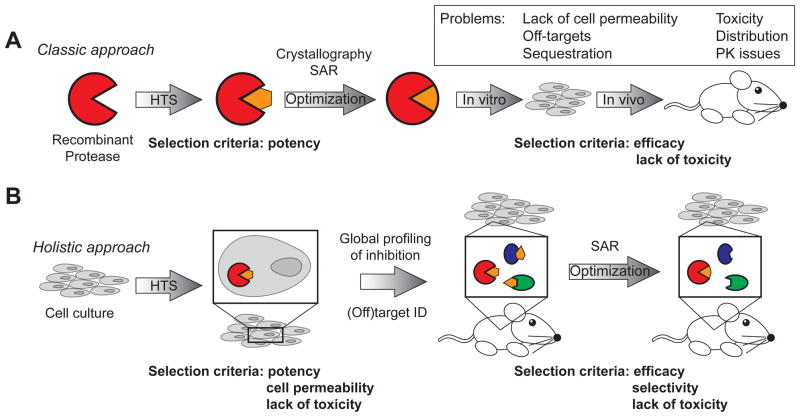
Figure 2. Schematic presentation of the hit-to-lead process
A) In a classical protease drug discovery approach the emphasis of the screen and optimization lays on the maximizing the potency of a hit compound for a recombinant protease. Off-target effects and efficacy are usually tested after the optimization process, and problems encountered when testing the compounds in cultures and in vivo implies either modifying the structure of the lead inhibitor to solve a particular issue or select a different chemotype for further optimization. B) In this perspective we like to propose a more holistic approach in which the emphasis lays on identifying hits in a more complex and relevant context (intact cells) and incorporating the specificity profile of hits to select hits and optimize lead compound. By putting the emphasis of the hit to lead optimization process in selectivity instead of just potency we believe would help us prevent off-target effects and thus increase the chances of developing protease inhibitor drugs with minimum side effects.
Figure 3
Figure 3. Protease activity is highly regulated. Activity-based probes report on protease activity
A) Besides regulation on the transcription and translation level, proteases are highly regulated on the protein level. Being expressed as zymogens, proteases are activated in a variety of ways depending on the protease: allosteric activation, environmental changes, localization, protein-protein interactions, processing by upstream proteases, etc. Endogenous inhibitors and targeted degradation form yet another layer of regulation. B) Activity-based probes (ABPs) are small molecule reporter molecules that turn the chemistry of the active protease against itself to distinguish it from its zymogen or inhibited form. Most ABPs consist of three parts; a warhead, an electrophilic moiety that reacts with the active site nucleophile to result in a covalent and irreversible adduct, a spacer and/or recognition element that targets the probe to a specific target protease, and a tag, usually a fluorescent dye and/or an affinity handle, like biotin.
Figure 4
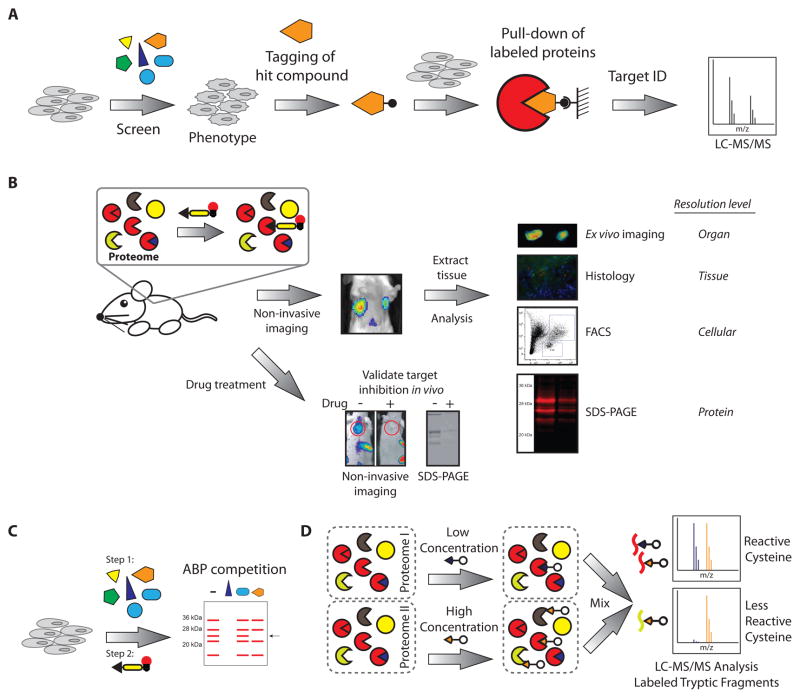
Figure 4. Chemical toolbox to study protease function and target inhibition
A) Forward Chemical Genetics allows for target identification through the introduction of an affinity tag to the hit compound. B) Near-Infrared fluorescently labeled ABPs can be applied to top-down characterization of a target protease. Whole animal non-invasive imaging techniques allow for visualization of target distribution. Extracted tissue can be analyzed ex vivo, histology can be performed to show target distribution on a microscopic level. FACS analysis can report on which types of cells contain active protease, whereas biochemical analysis of the fluorescently labeled proteases allows for characterization at the protein level. Treatment with a lead compound prior to labeling informs on target inhibition. C) The use of broad spectrum protease probes enables a readout for the inhibition profile of a lead compound for an entire protease family. In short, first a proteome is exposed to a compound. Inhibition of a target protease prevents probe binding in the second step allowing for target identification. D) Global profiling of all reactive cysteines in a proteome; at low concentrations the iodoacetamide based reporter molecule will react primarily with the more reactive cysteines. At higher concentrations, less reactive cysteines will also be modified. Using isotopically labeled reporter molecules, this method can be used to predict functional cysteines in proteomes as well as target identification. Most of the profiling methods described here use probes that covalently modify the active site of the targeted proteases. When used to evaluate the specificity profile of reversible inhibitors it is important to adjust the labeling conditions such that the probe will not out-compete the inhibitor. Because most of these methods have a good dynamic range, this can be accomplished by lowering probe concentration or decreasing labeling times.

References

    1. Drag M, Salvesen GS. Emerging principles in protease-based drug discovery. Nat Rev Drug Discov. 2010;9:690–701. - PMC - PubMed
    1. Rawlings ND, Barrett AJ, Bateman A. Asparagine peptide lyases: a seventh catalytic type of proteolytic enzymes. J Biol Chem. 2011 - PMC - PubMed
    1. Powers JC, Asgian JL, Ekici OD, James KE. Irreversible inhibitors of serine, cysteine, and threonine proteases. Chem Rev. 2002;102:4639–4750. - PubMed
    1. Johnson SL, Pellecchia M. Structure- and fragment-based approaches to protease inhibition. Curr Top Med Chem. 2006;6:317–329. - PubMed
    1. Turk B. Targeting proteases: successes, failures and future prospects. Nat Rev Drug Discov. 2006;5:785–799. - PubMed

Publication types