


Inhaled hydrogen sulfide prevents endotoxin-induced systemic inflammation and improves survival by altering sulfide metabolism in mice
- PMID: 22221071
- PMCID: PMC3342565
- DOI: 10.1089/ars.2011.4363
Inhaled hydrogen sulfide prevents endotoxin-induced systemic inflammation and improves survival by altering sulfide metabolism in mice
Abstract
Aims: The role of hydrogen sulfide (H(2)S) in endotoxin (lipopolysaccharide [LPS])-induced inflammation is incompletely understood. We examined the impact of H(2)S breathing on LPS-induced changes in sulfide metabolism, systemic inflammation, and survival in mice.
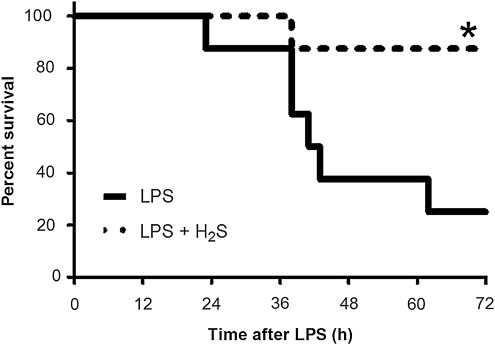
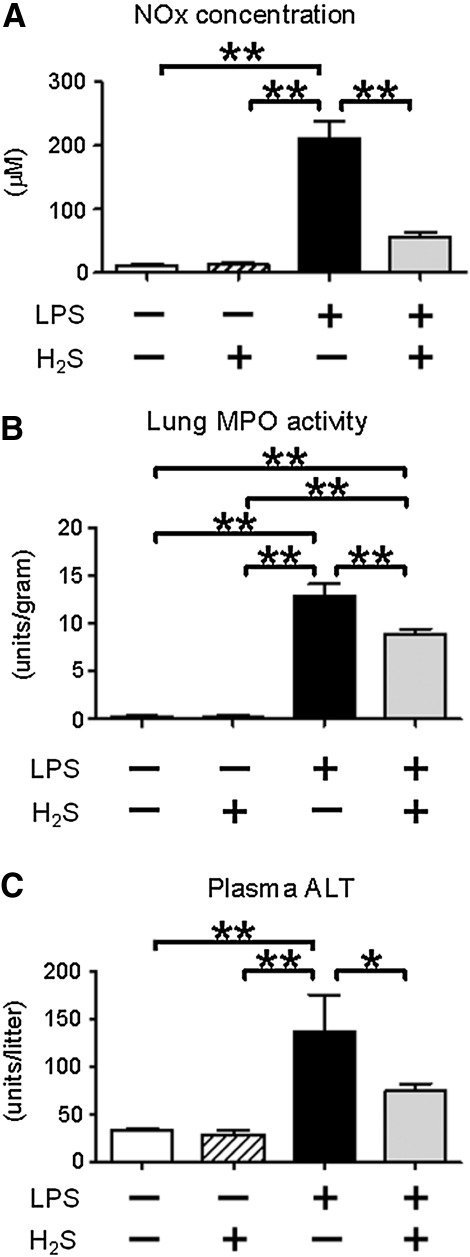
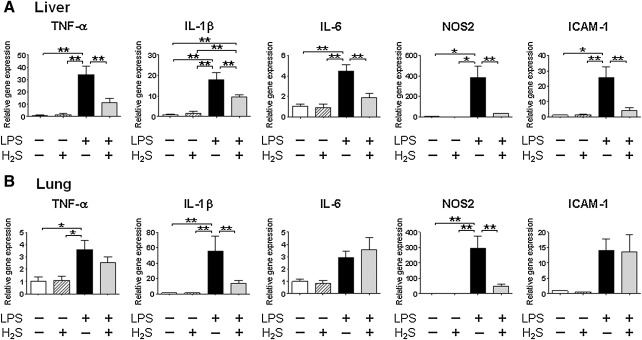
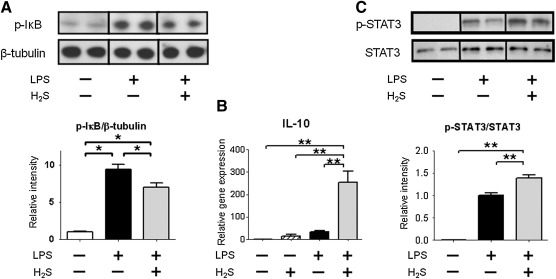
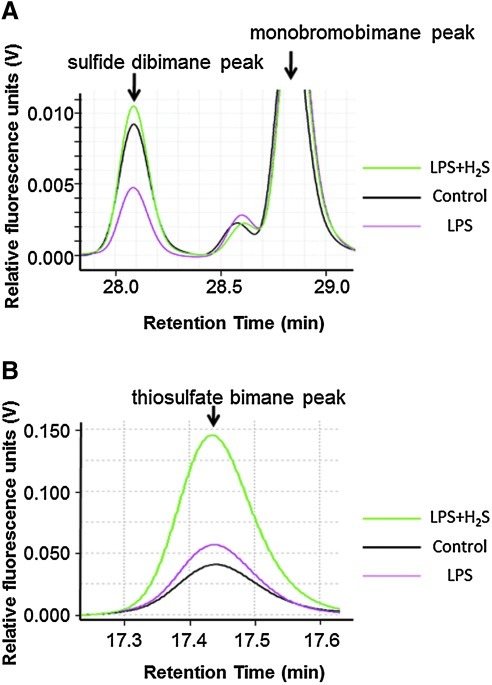
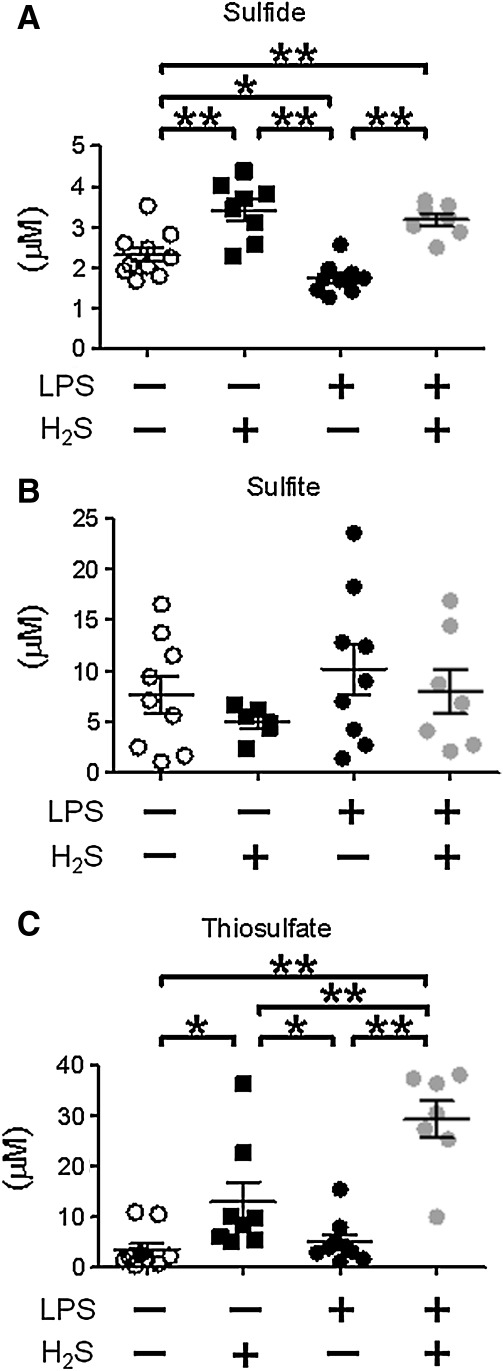
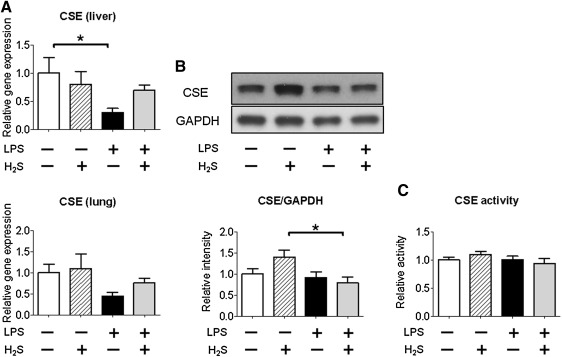
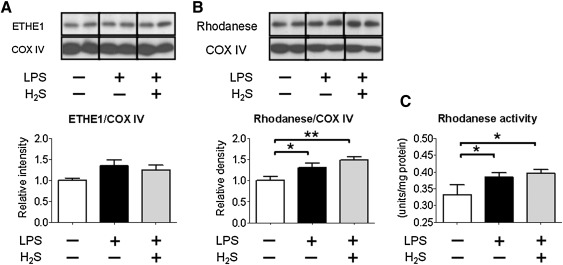
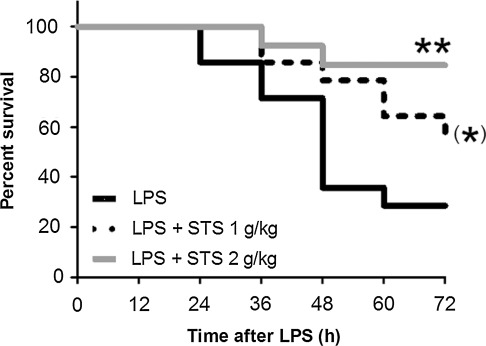
Results: Mice that breathed air alone exhibited decreased plasma sulfide levels and poor survival rate at 72 h after LPS challenge. Endotoxemia markedly increased alanine aminotransferase (ALT) activity and nitrite/nitrate (NOx) levels in plasma and lung myeloperoxidase (MPO) activity in mice that breathed air. In contrast, breathing air supplemented with 80 ppm of H(2)S for 6 h after LPS challenge markedly improved survival rate compared to mice that breathed air alone (p<0.05). H(2)S breathing attenuated LPS-induced increase of plasma ALT activity and NOx levels and lung MPO activity. Inhaled H(2)S suppressed LPS-induced upregulation of inflammatory cytokines, while it markedly induced anti-inflammatory interleukin (IL)-10 in the liver. Beneficial effects of H(2)S inhalation after LPS challenge were associated with restored sulfide levels and markedly increased thiosulfate levels in plasma. Increased thiosulfate levels after LPS challenge were associated with upregulation of rhodanese, but not cystathionine-γ-lyase (CSE), in the liver. Administration of sodium thiosulfate dose-dependently improved survival after LPS challenge in mice.
Innovation: By measuring changes in plasma levels of sulfide and sulfide metabolites using an advanced analytical method, this study revealed a critical role of thiosulfate in the protective effects of H(2)S breathing during endotoxemia.
Conclusion: These observations suggest that H(2)S breathing prevents inflammation and improves survival after LPS challenge by altering sulfide metabolism in mice.
Figures
References
-
- Cheng F. Xie S. Guo M. Fang H. Li X. Yin J. Lu G. Li Y. Ji X. Yu S. Altered glucose metabolism and preserved energy charge and neuronal structures in the brain of mouse intermittently exposed to hypoxia. J Chem Neuroanat. 2011;42:65–71. - PubMed
-
- Doeller JE. Isbell TS. Benavides G. Koenitzer J. Patel H. Patel RP. Lancaster JR., Jr. Darley-Usmar VM. Kraus DW. Polarographic measurement of hydrogen sulfide production and consumption by mammalian tissues. Anal Biochem. 2005;341:40–51. - PubMed
-
- Hayden MR. Goldsmith DJA. Sodium thiosulfate: New hope for the treatment of calciphylaxis. Semin Dial. 2010;23:258–262. - PubMed
-
- Hellman J. Roberts JD., Jr. Tehan MM. Allaire JE. Warren HS. Bacterial peptidoglycan-associated lipoprotein is released into the bloodstream in gram-negative sepsis and causes inflammation and death in mice. J Biol Chem. 2002;277:14274–14280. - PubMed
Publication types
MeSH terms
Substances
Grants and funding
LinkOut - more resources
Full Text Sources
Other Literature Sources
Research Materials
Miscellaneous
