Bacterial hydrolysis of host glycoproteins - powerful protein modification and efficient nutrient acquisition
- PMID: 22222876
- PMCID: PMC6741532
- DOI: 10.1159/000334775
Bacterial hydrolysis of host glycoproteins - powerful protein modification and efficient nutrient acquisition
Abstract
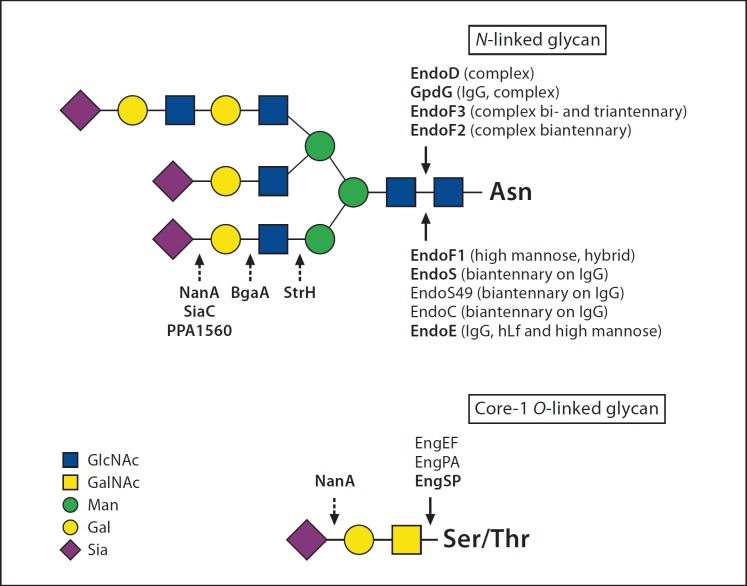
Glycoproteins are ubiquitous in nature and fundamental to most biological processes, including the human immune system. The glycoprotein carbohydrate moieties, or glycans, are very diverse in their structure and composition, and have major effects on the chemical, physical and biological properties of these glycoproteins. The hydrolysis of glycoprotein glycans by bacterial glycosidases can have dramatic effects on glycoprotein function and, thereby, be beneficial for the bacteria in different ways. This review gives an introduction to the expanding field of extracellular glycosidases from bacterial pathogens with activity on host glycoproteins, describes some known and proposed consequences for the host and the bacteria and discusses some evolutionary and regulatory aspects of bacterial glycosidases.
Copyright © 2012 S. Karger AG, Basel.
Figures

References
-
- Kobata A. Structures and functions of the sugar chains of glycoproteins. Eur J Biochem. 1992;209:483–501. - PubMed
-
- Dwek RA. Glycobiology: Toward understanding the function of sugars. Chem Rev. 1996;96:683–720. - PubMed
-
- Paulson J. Glycoproteins: what are the sugar chains for? Trends Biochem Sci. 1989:272–276. - PubMed
-
- Kim YJ, Varki A. Perspectives on the significance of altered glycosylation of glycoproteins in cancer. Glycoconj J. 1997;14:569–576. - PubMed
-
- Takai T. Roles of Fc receptors in autoimmunity. Nat Rev Immunol. 2002;2:580–592. - PubMed
Publication types
MeSH terms
Substances
LinkOut - more resources
Full Text Sources
Other Literature Sources