A comparative study of infusions of phenylephrine, ephedrine and phenylephrine plus ephedrine on maternal haemodynamics in elective caesarean section
- PMID: 22223901
- PMCID: PMC3249864
- DOI: 10.4103/0019-5049.90612
A comparative study of infusions of phenylephrine, ephedrine and phenylephrine plus ephedrine on maternal haemodynamics in elective caesarean section
Abstract
Introduction: This randomized double blind study was started with an objective of management of spinal anaesthesia-induced hypotension in elective caesarean section by combining two commonly used vasopressors - ephedrine and phenylephrine in half of their usual doses with an expectation of reducing their foetomaternal side effects.
Methods: One hundred and thirty two patients were randomized into three groups to receive either 100 μg/ml phenylephrine (group-P, n=31) or 3 μg/ml ephedrine (group-E, n=33) or 50 mg phenylephrine plus 1.5 mg ephedrine/ml (group-PE, n=29). Immediately after spinal injection the study solution was started prophylactically in every patient at the rate of 40 ml/h. A predefined algorithm was used to adjust the infusion rate according to the systolic blood pressure (SBP).
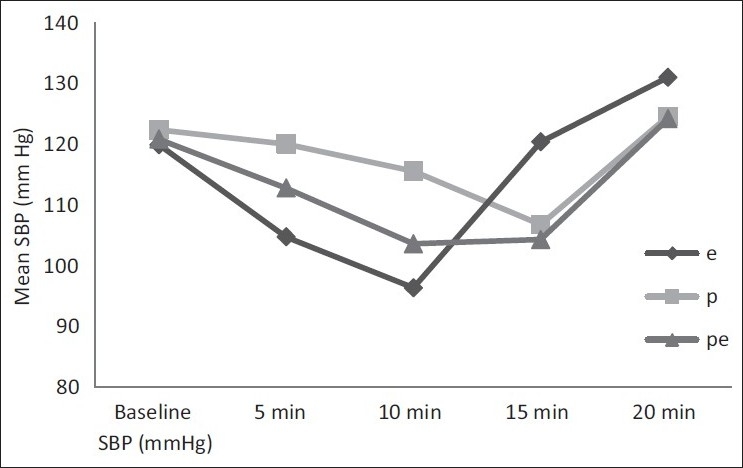
Results: Mean fall of SBP was significantly more in group-E than group-P (P=0.009) and group-PE (P=0.013). This was not significantly different when compared between group-P and group-PE (P=0.9). Episodes of hypotension and tachycardia were more in group-E than the other two groups. Statistically significant tachycardia was seen in Group-E than that in other two groups. Incidence of bradycardia and hypertension did not differ significantly among the groups. Maternal nausea and Apgar score were also comparable in three groups.
Conclusion: Current study claims that prophylactic phenylephrine 100 mg/ml is a better choice than ephedrine (3 mg/ml) or 50 mcg phenylephrine plus 1.5 mg ephedrine/ml in prevention of spinal anaesthesia-induced hypotension in elective caesarean section. Combination of two drugs in half the usual dose has no added advantage over phenylephrine, but this is better than ephedrine alone.
Keywords: Bradycardia; elective caesarean section; hypotension; spinal anaesthesia; vasopressors.
Conflict of interest statement
Figures
References
-
- Riley ET, Cohen SE, Macario A, Desai JB, Ratner EF. Spinal versus epidural anesthesia for cesarean section: A comparison of time efficiency, costs, charges, and complications. Anesth Analg. 1995;80:709–12. - PubMed
-
- Saravanan S, Kocarev M, Wilson RC, Watkins E, Columb MO, Lyons G. Equivalent dose of ephedrine and phenylephrine in the prevention of post-spinal hypotension in caesarean section. Br J Anaesth. 2006;96:95–9. - PubMed
-
- Stewart A, Fernando R, McDonald S, Hignett R, Jones T, Columb M. The dose-dependent effects of phenylephrine for elective cesarean delivery under spinal anesthesia. Anesth Analg. 2010;111:1230–7. - PubMed
-
- Lee A, Ngan Kee WD, Gin T. A quantitative, systematic review of randomized controlled trials of ephedrine versus phenylephrine for the management of hypotension during spinal anesthesia for cesarean delivery. Anesth Analg. 2002;94:920–6. - PubMed
-
- Cyna AM, Andrew M, Emmett RS, Middleton P, Simmons SW. Techniques for preventing hypotension during spinal anaesthesia for caesarean section. Cochrane Database Syst Rev. 2006;4:CD002251. - PubMed