


Ephrin-B2 and ephrin-B3 as functional henipavirus receptors
- PMID: 22227101
- PMCID: PMC3327611
- DOI: 10.1016/j.semcdb.2011.12.005
Ephrin-B2 and ephrin-B3 as functional henipavirus receptors
Abstract
Members of the ephrin cell-surface protein family interact with the Eph receptors, the largest family of receptor tyrosine kinases, mediating bi-directional signaling during tumorogenesis and various developmental events. Surprisingly, ephrin-B2 and -B3 were recently identified as entry receptors for henipaviruses, emerging zoonotic paramyxoviruses responsible for repeated outbreaks in humans and animals in Australia, Southeast Asia, India and Bangladesh. Nipah virus (NiV) and Hendra virus (HeV) are the only two identified members in the henipavirus genus. While the initial human infection cases came from contact with infected pigs (NiV) or horses (HeV), in the more recent outbreaks of NiV both food-borne and human-to-human transmission were reported. These characteristics, together with high mortality and morbidity rates and lack of effective anti-viral therapies, make the henipaviruses a potential biological-agent threat. Viral entry is an important target for the development of anti-viral drugs. The entry of henipavirus is initiated by the attachment of the viral G envelope glycoprotein to the host cell receptors ephrin-B2 and/or -B3, followed by activation of the F fusion protein, which triggers fusion between the viral envelop and the host membrane. We review recent progress in the study of henipavirus entry, particularly the identification of ephrins as their entry receptors, and the structural characterization of the ephrin/Henipa-G interactions.
Copyright © 2012 Elsevier Ltd. All rights reserved.
Figures
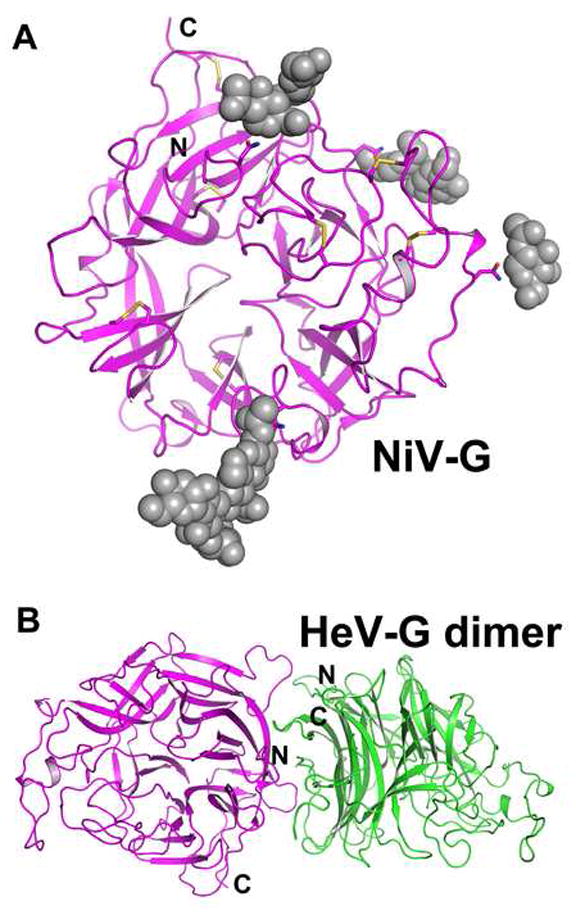
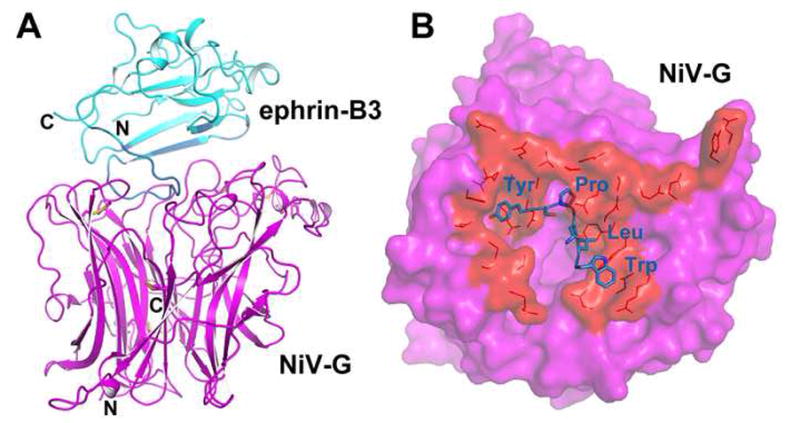
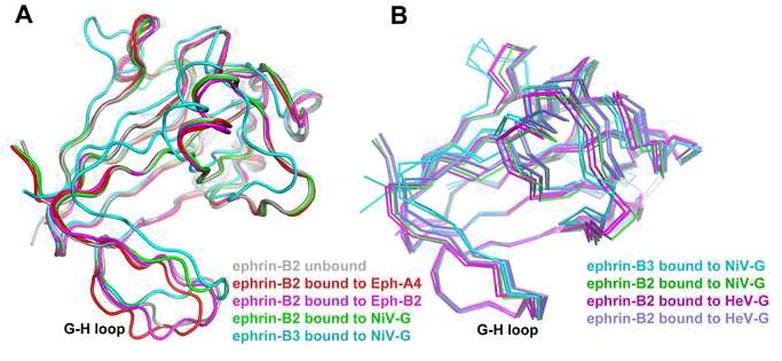

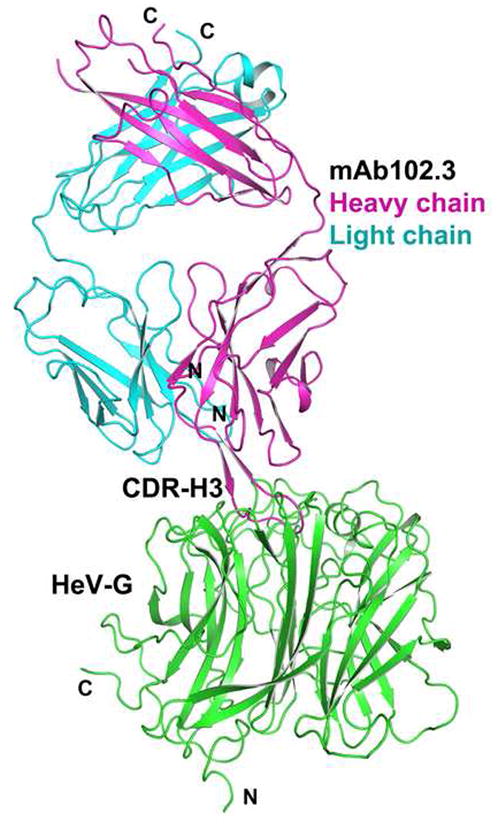
References
-
- Chua KB, Bellini WJ, Rota PA, Harcourt BH, Tamin A, Lam SK, et al. Nipah virus: a recently emergent deadly paramyxovirus. Science. 2000;288:1432–5. - PubMed
-
- Negrete OA, Levroney EL, Aguilar HC, Bertolotti-Ciarlet A, Nazarian R, Tajyar S, et al. EphrinB2 is the entry receptor for Nipah virus, an emergent deadly paramyxovirus. Nature. 2005;436:401–5. - PubMed
-
- Selvey LA, Wells RM, McCormack JG, Ansford AJ, Murray K, Rogers RJ, et al. Infection of humans and horses by a newly described morbillivirus. Med J Aust. 1995;162:642–5. - PubMed
Publication types
MeSH terms
Substances
Grants and funding
LinkOut - more resources
Full Text Sources
Miscellaneous
