


The renin-angiotensin system: a target of and contributor to dyslipidemias, altered glucose homeostasis, and hypertension of the metabolic syndrome
- PMID: 22227126
- PMCID: PMC3311482
- DOI: 10.1152/ajpheart.00796.2011
The renin-angiotensin system: a target of and contributor to dyslipidemias, altered glucose homeostasis, and hypertension of the metabolic syndrome
Abstract
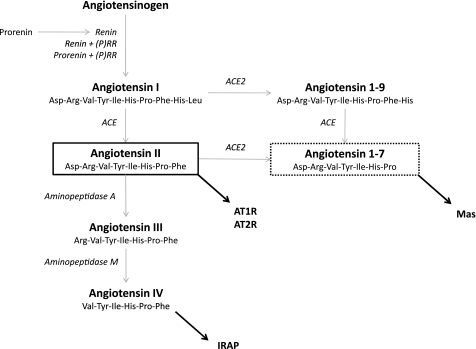
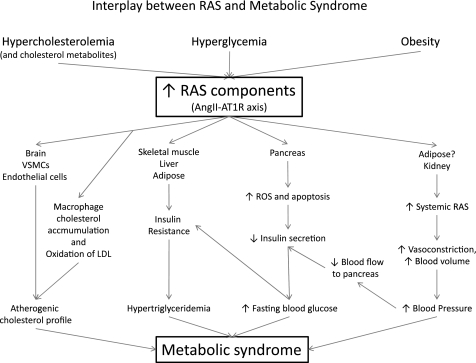
The renin-angiotensin system (RAS) is an important therapeutic target in the treatment of hypertension. Obesity has emerged as a primary contributor to essential hypertension in the United States and clusters with other metabolic disorders (hyperglycemia, hypertension, high triglycerides, low HDL cholesterol) defined within the metabolic syndrome. In addition to hypertension, RAS blockade may also serve as an effective treatment strategy to control impaired glucose and insulin tolerance and dyslipidemias in patients with the metabolic syndrome. Hyperglycemia, insulin resistance, and/or specific cholesterol metabolites have been demonstrated to activate components required for the synthesis [angiotensinogen, renin, angiotensin-converting enzyme (ACE)], degradation (ACE2), or responsiveness (angiotensin II type 1 receptors, Mas receptors) to angiotensin peptides in cell types (e.g., pancreatic islet cells, adipocytes, macrophages) that mediate specific disorders of the metabolic syndrome. An activated local RAS in these cell types may contribute to dysregulated function by promoting oxidative stress, apoptosis, and inflammation. This review will discuss data demonstrating the regulation of components of the RAS by cholesterol and its metabolites, glucose, and/or insulin in cell types implicated in disorders of the metabolic syndrome. In addition, we discuss data supporting a role for an activated local RAS in dyslipidemias and glucose intolerance/insulin resistance and the development of hypertension in the metabolic syndrome. Identification of an activated RAS as a common thread contributing to several disorders of the metabolic syndrome makes the use of angiotensin receptor blockers and ACE inhibitors an intriguing and novel option for multisymptom treatment.
Figures
References
-
- Achard V, Tassistro V, Boullu-Ciocca S, Grino M. Expression and nutritional regulation of the (pro)renin receptor in rat visceral adipose tissue. J Endocrinol Invest 2011. April 6 [Epub ahead of print.] - PubMed
-
- Al-Mallah M, Khawaja O, Sinno M, Alzohaili O, Samra AB. Do angiotensin converting enzyme inhibitors or angiotensin receptor blockers prevent diabetes mellitus? A meta-analysis. Cardiol J 17: 448–456, 2010 - PubMed
-
- Alberti KG, Eckel RH, Grundy SM, Zimmet PZ, Cleeman JI, Donato KA, Fruchart JC, James WP, Loria CM, Smith SC., Jr Harmonizing the metabolic syndrome: a joint interim statement of the International Diabetes Federation Task Force on Epidemiology and Prevention; National Heart, Lung, and Blood Institute; American Heart Association; World Heart Federation; International Atherosclerosis Society; and International Association for the Study of Obesity. Circulation 120: 1640–1645, 2009 - PubMed
-
- Alberti KG, Zimmet PZ. Definition, diagnosis and classification of diabetes mellitus and its complications. Part 1: diagnosis and classification of diabetes mellitus provisional report of a WHO consultation. Diabet Med 15: 539–553, 1998 - PubMed
-
- Alonso-Galicia M, Brands MW, Zappe DH, Hall JE. Hypertension in obese Zucker rats. Role of angiotensin II and adrenergic activity. Hypertension 28: 1047–1054, 1996 - PubMed
Publication types
MeSH terms
Substances
Grants and funding
LinkOut - more resources
Full Text Sources
Medical
Molecular Biology Databases
Miscellaneous
