


Influence of antibiotic susceptibility patterns on empiric antibiotic prescribing for children hospitalized with community-acquired pneumonia
- PMID: 22228236
- PMCID: PMC6419759
- DOI: 10.1097/INF.0b013e3182489cc4
Influence of antibiotic susceptibility patterns on empiric antibiotic prescribing for children hospitalized with community-acquired pneumonia
Abstract
Objective: The aim of this study was to determine the influence of pneumococcal penicillin-nonsusceptibility patterns on individual antibiotic prescription among 33 children's hospitals using a multilevel, random- intercept, logistic regression analysis.
Methods: It was a multilevel cross-sectional study. The participants were children, 1-18 years of age, with community-acquired pneumonia (CAP) who were discharged in 2006. Hospital antibiotic susceptibility data were collected from surveys, and patient data were obtained from an administrative database. The primary exposure was the proportion of penicillin-nonsusceptible pneumococcal isolates reported in 2005 by each hospital. A secondary exposure included using the proportion of penicillin-resistant pneumococcal isolates to determine whether a threshold of susceptibility existed. Receipt of broad-spectrum empiric antibiotic therapy in 2006 (ie, antibiotics other than penicillins or aminopenicillins) was the main outcome measure.
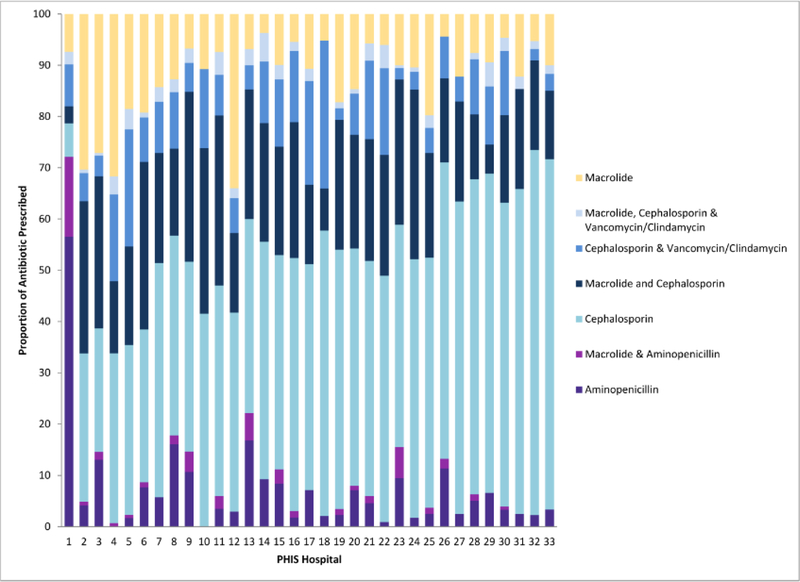
Results: Four thousand eight hundred eighty-eight children diagnosed with CAP were eligible. The proportion of penicillin-nonsusceptible isolates ranged from 9% to 70% across hospitals whereas the proportion of penicillin-resistant isolates ranged from 0% to 60%. Broad-spectrum antibiotics were prescribed to 93% of patients; 45% of patients received cephalosporin class antibiotics alone. There was no significant association between the proportion of pencillin-nonsusceptible pneumococcal isolates at individual hospitals and narrow-spectrum prescribing. However, every 10% increase in penicillin-resistant pneumococcal isolates was associated with a 39% increase in broad-spectrum antibiotic prescribing (adjusted odds ratio: 1.39; 95% confidence interval: 1.08-1.69).
Conclusions: There was substantial variability in empiric antibiotic prescribing for CAP among children's hospitals in the United States. High-levels (ie, resistant) but not modest-levels (ie, intermediate susceptibility) of penicillin resistance were associated with broad-spectrum antibiotic prescribing.
Conflict of interest statement
Conflict of Interest:
No conflict of interest exists for any of the authors.
Figures
References
-
- Nugent R, Back E, Beith A. The Race Against Drug Resistance. Washington D.C.: Center for Global, Development; 2010.
-
- Peters NK, Dixon DM, Holland SM, Fauci AS. The research agenda of the National Institute of Allergy and Infectious Diseases for antimicrobial resistance. J Infect Dis 2008;197:1087–93. - PubMed
-
- (IDSA) IDSoA. Bad bugs, No drugs. Alexandria, VA; 2004.
-
- Davey P, Brown E, Fenelon L, et al. Interventions to improve antibiotic prescribing practices for hospital inpatients (Review). The Cochrane Library 2009. - PubMed
-
- Lacy MK, Klutman NE, Horvat RT, Zapantis A. Antibiograms: New NCCLS Guidelines, Development, and Clinical Application. Hospital Pharmacy 2004;39:542–53.
Publication types
MeSH terms
Substances
Grants and funding
LinkOut - more resources
Full Text Sources
Medical
Miscellaneous
