


Health-related quality of life of african american breast cancer survivors compared with healthy African American women
- PMID: 22228394
- PMCID: PMC3326198
- DOI: 10.1097/NCC.0b013e3182393de3
Health-related quality of life of african american breast cancer survivors compared with healthy African American women
Abstract
Background: The diagnosis and treatment of breast cancer can result in an array of late cancer-specific side effects and changes in general well-being. Research has focused on white samples, limiting our understanding of the unique health-related quality of life outcomes of African American breast cancer survivors (BCSs). Even when African American BCSs have been targeted, research is limited by small samples and failure to include comparisons of peers without a history of breast cancer.
Objective: The purpose of this study was to compare health-related quality of life of African American female BCSs with that of African American women with no history of breast cancer (control group).
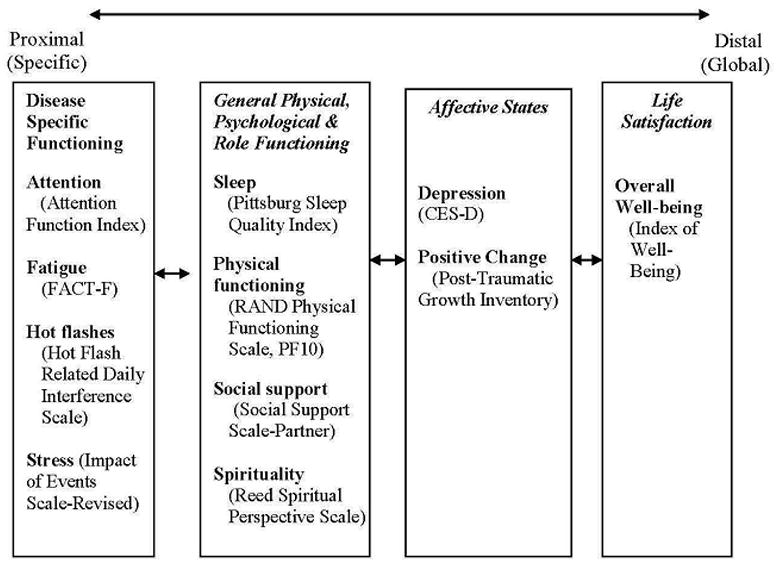
Methods: A total of 140 women (62 BCSs and 78 controls), 18 years or older and 2 to 10 years postdiagnosis, were recruited from a breast cancer clinic and cancer support groups. Participants provided informed consent and completed a 1-time survey based on the proximal-distal health-related quality of life model of Brenner et al (1995).
Results: After adjusting for age, education, income, and body mass index, results show that African American BCSs experienced more fatigue (P = .001), worse hot flashes (P < .001), and worse sleep quality (P < .001) but more social support from their partner (P = .028) and more positive change (P = .001) compared with African American female controls.
Conclusions: Our results suggest that African American female BCSs may experience unique health-related outcomes that transcend age, education, socioeconomic status, and body mass index.
Implications for practice: Findings suggest the importance of understanding the survivorship experience for particular racial and ethnic subgroups to proactively assess difficulties and plan interventions.
Conflict of interest statement
Figures
References
-
- Russell KM, Von Ah DM, Giesler RB, Storniolo AM, Haase JE. Quality of life of African American breast cancer survivors: how much do we know? Cancer Nurs. 2008;31(6):E36–45. - PubMed
-
- Brenner MH, Curbow B, Legro MW. The Proximal-Distal Continuum of Multiple Health Outcome Measures: The Case of Cataract Surgery. Med Care. 1995;33(4):AS236–AS244. - PubMed
-
- Giesler RB. Assessing the quality of life of patients with cancer. Vol. 24. St. Louis, MO: Mosby; 2000. - PubMed
-
- Testa MA, Simonson DC. Assessment of quality-of-life outcomes. N Engl J Med. 1996;334(13):835–840. - PubMed
-
- Ware JE., Jr The status of health assessment 1994. Annu Rev Public Health. 1995;16:327–354. - PubMed
Publication types
MeSH terms
Grants and funding
LinkOut - more resources
Full Text Sources
Medical
