


Attitudes toward diabetes affect maintenance of drug-free remission in patients with newly diagnosed type 2 diabetes after short-term continuous subcutaneous insulin infusion treatment
- PMID: 22228747
- PMCID: PMC3322723
- DOI: 10.2337/dc11-1638
Attitudes toward diabetes affect maintenance of drug-free remission in patients with newly diagnosed type 2 diabetes after short-term continuous subcutaneous insulin infusion treatment
Abstract
Objective: Short-term intensive insulin treatment in patients with newly diagnosed type 2 diabetes can improve β-cell function and insulin sensitivity, which results in long-term remission without need for further antidiabetes medication. Patient attitudes toward their disease were assessed using the Diabetes Care Profile (DCP) tool to evaluate the potential impact on maintaining long-term remission.
Research design and methods: Newly diagnosed patients with type 2 diabetes were recruited and treated with continuous subcutaneous insulin infusion (CSII) for 2-3 weeks. They were also invited to participate in diabetes self-management intervention during hospitalization and complete a DCP questionnaire on attitudes toward diabetes at baseline and 3, 6, and 12 months after suspension of CSII.
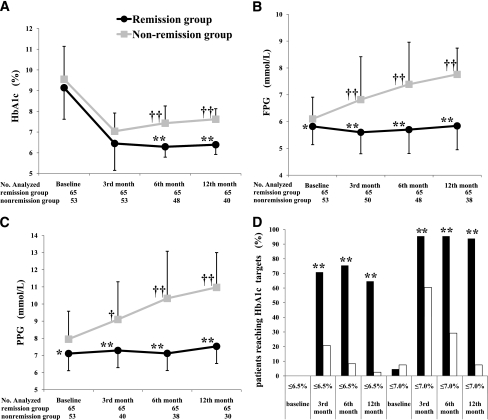
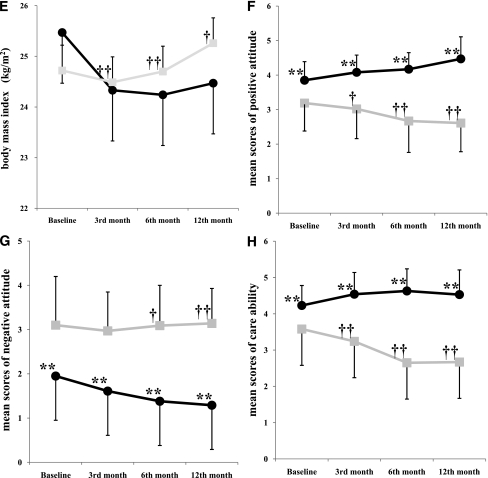
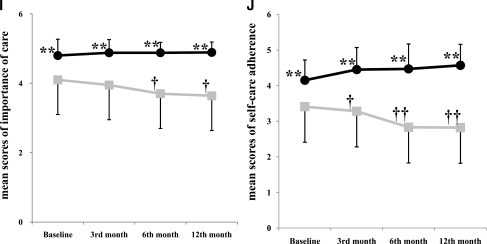
Results: Near normoglycemia was achieved by 118 patients after short-term CSII, with 65 remaining in drug-free remission for >1 year. They had significantly better glycemic control and greater restoration of acute insulin response after CSII as well as higher educational attainment compared with patients experiencing relapse. They also achieved higher scores in positive attitude, (belief in) importance of care, care ability, self-care adherence, and less negative attitude. Differences between the two groups became greater over time. Cox proportional hazards model analysis indicated that greater self-care adherence (hazard ratio 0.184, P < 0.001) and homeostasis model assessment of insulin resistance before treatment (0.854, P = 0.053) were independent predictors for long-term remission, whereas elevated 2-h postprandial plasma glucose after CSII (1.156, P = 0.015) was a risk factor for relapse.
Conclusions: Attitudes toward diabetes affect long-term drug-free remission in newly diagnosed patients with type 2 diabetes after short-term CSII.
Figures
References
-
- Nathan DM, Buse JB, Davidson MB, et al. ; American Diabetes Association; European Association for the Study of Diabetes Medical management of hyperglycaemia in type 2 diabetes mellitus: a consensus algorithm for the initiation and adjustment of therapy: a consensus statement from the American Diabetes Association and the European Association for the Study of Diabetes. Diabetologia 2009;52:17–30 - PubMed
-
- Li YB, Xu W, Liao ZH, et al. Induction of long-term glycemic control in newly diagnosed type 2 diabetic patients is associated with improvement of β-cell function. Diabetes Care 2004;27:2597–2602 - PubMed
-
- Weng JP, Li YB, Xu W, et al. Effect of intensive insulin therapy on β-cell function and glycaemic control in patients with newly diagnosed type 2 diabetes: a multicentre randomised parallel-group trial. Lancet 2008;371:1753–1760 - PubMed
-
- Ilkova H, Glaser B, Tunçkale A, Bagriaçik N, Cerasi E. Induction of long-term glycemic control in newly diagnosed type 2 diabetic patients by transient intensive insulin treatment. Diabetes Care 1997;20:1353–1356 - PubMed
Publication types
MeSH terms
Substances
LinkOut - more resources
Full Text Sources
Medical
Miscellaneous
